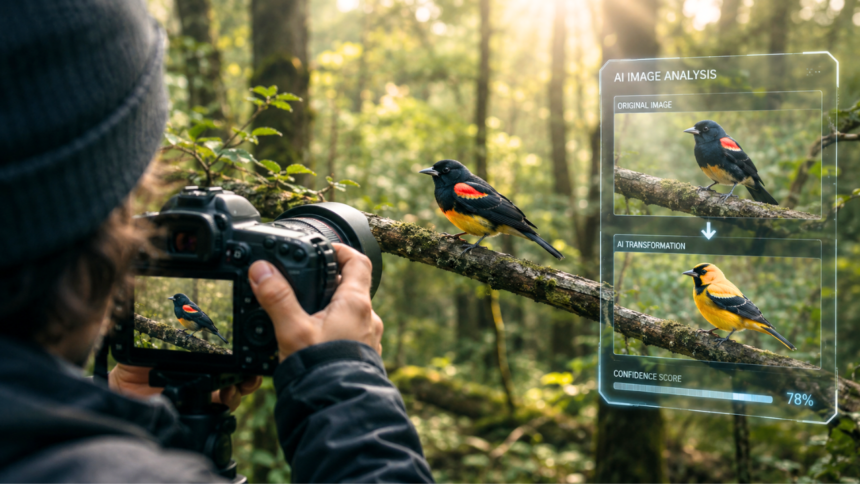
The rise of artificial intelligence in wildlife photography has revolutionized the way we capture and share images of birds, allowing us to enhance and refine our snaps with unprecedented ease. With just a few clicks, blurry images can be sharpened, distracting branches can be removed, and colours can be enhanced to make even the most lacklustre shots look like masterpieces. But as scientists warn, these AI-edited bird photos could have far-reaching consequences that go beyond the realm of social media, threatening the integrity of biodiversity research and conservation efforts.
First Section: The Unintended Consequences of AI-Edited Images
The use of AI in image editing has become increasingly prevalent in recent years, with many photographers and wildlife enthusiasts leveraging the technology to create stunning images that showcase the beauty of nature. However, this convenience comes with a cost, as edited images can be misinterpreted as factual records of bird sightings, leading to inaccurate data that can have far-reaching consequences for conservation efforts. For instance, if an edited image of a species is used to document a sighting, it could lead to the misidentification of a rare or endangered species, resulting in inadequate conservation measures being put in place.
Furthermore, AI-edited images can also create a false sense of security among birdwatchers, leading them to rely on edited images rather than actual sightings. This can result in a lack of engagement with the natural world, as people become more focused on capturing the perfect photo rather than observing and learning about the birds themselves. By relying on edited images, we risk losing touch with the very thing we’re trying to conserve – the natural world.
Second Section: The Impact on Biodiversity Research
Biodiversity research relies heavily on accurate data, including images of species, to inform conservation efforts and understand the impact of climate change on ecosystems. However, the use of AI-edited images can compromise the integrity of this data, leading to incorrect conclusions being drawn about species populations, habitats, and migration patterns. This, in turn, can result in inadequate conservation measures being put in place, ultimately threatening the very species we’re trying to protect.
Moreover, AI-edited images can also create a false narrative around species decline or extinction, leading to unnecessary alarm and panic among the public. This can have serious consequences for conservation efforts, as it can lead to a lack of funding and resources being allocated towards protecting the species. By relying on edited images, we risk perpetuating a false narrative that can have far-reaching consequences for the very species we’re trying to conserve.
Third Section: A Call to Action
So, what can be done to mitigate the impact of AI-edited bird photos on biodiversity research and conservation efforts? Firstly, scientists and conservationists must be more vigilant in verifying the accuracy of images used in research and conservation efforts. This can be achieved by using AI-detection tools that can identify edited images, or by relying on multiple sources of data to confirm the accuracy of a sighting. Secondly, photographers and wildlife enthusiasts must be more transparent about the use of AI in editing images, and must clearly label edited images as such to avoid any confusion.
By taking these steps, we can ensure that the use of AI in image editing does not compromise the integrity of biodiversity research and conservation efforts. Ultimately, it is our responsibility as scientists, conservationists, and photographers to ensure that the images we create and use are accurate, reliable, and honest representations of the natural world. Only then can we truly conserve and protect the species that call our planet home.