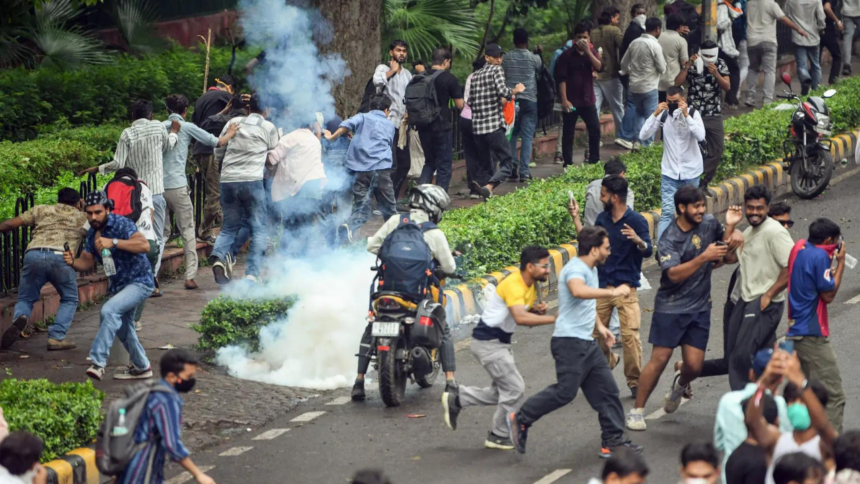
The Delhi Police has taken a significant step in leveraging technology to enhance security and identify potential threats by deploying Facial Recognition System (FRS) units at Jantar Mantar, a site of recent protests including those against the NEET exams. This move is aimed at identifying and tracking wanted criminals, absconders, and habitual offenders who might be attempting to blend into the crowds. The deployment of four FRS units around the protest site underscores the police’s commitment to utilizing advanced technology in maintaining law and order. The use of facial recognition technology in such a context highlights the evolving strategies of law enforcement agencies in preventing and investigating crimes.
Enhancing Security Measures
The decision to deploy facial recognition cameras at Jantar Mantar is part of a broader effort by the Delhi Police to enhance security measures, especially in areas that are prone to large gatherings and protests. By leveraging facial recognition technology, the police can quickly identify individuals who have outstanding warrants or are known to have been involved in criminal activities. This not only helps in preventing potential disturbances but also aids in the apprehension of criminals who might be hiding in plain sight among the crowds.
The deployment of such technology also reflects the police’s proactive approach to security, acknowledging that traditional methods of surveillance and identification may not be as effective in modern contexts. Facial recognition systems can process and compare facial data against existing databases rapidly, making them a valuable tool for law enforcement in real-time scenarios. Moreover, the use of this technology at a protest site like Jantar Mantar demonstrates the police’s readiness to adapt and innovate in response to the changing nature of public gatherings and protests.
Privacy Concerns and Legal Framework
The introduction of facial recognition technology in public spaces, particularly at sites of political and social expression like Jantar Mantar, raises important questions about privacy and the legal framework governing the use of such technology. Critics argue that the deployment of facial recognition cameras without clear regulations and safeguards could lead to misuse and erosion of privacy rights. The absence of a comprehensive data protection law in the country adds to these concerns, as it leaves unclear how the data collected through facial recognition will be stored, used, and protected.
Despite these concerns, law enforcement agencies argue that the use of facial recognition technology is a necessary measure to ensure public safety and prevent crime. They emphasize the need for a balanced approach that considers both the benefits of the technology in enhancing security and the potential risks to individual privacy. As the use of facial recognition technology becomes more widespread, there is an increasing need for a clear and robust legal framework that outlines the permissible uses of this technology, the protections that must be in place to prevent misuse, and the rights of individuals in relation to their biometric data.
Future of Law Enforcement and Technology
The deployment of facial recognition cameras at Jantar Mantar marks a significant milestone in the integration of technology into law enforcement strategies. As technology continues to evolve, it is likely that we will see more innovative applications of facial recognition and other surveillance technologies in the maintenance of law and order. The key challenge for law enforcement agencies and policymakers will be to ensure that the use of these technologies is aligned with the principles of justice, equality, and individual rights, and that their deployment contributes to a safer and more just society for all.
The future of law enforcement is increasingly intertwined with the development and application of technology. The successful use of facial recognition technology in identifying and apprehending criminals could pave the way for its adoption in other contexts, from enhancing border security to combating cybercrime. However, this must be accompanied by a vigilant approach to safeguarding individual rights and ensuring that technological advancements serve the broader interests of society.