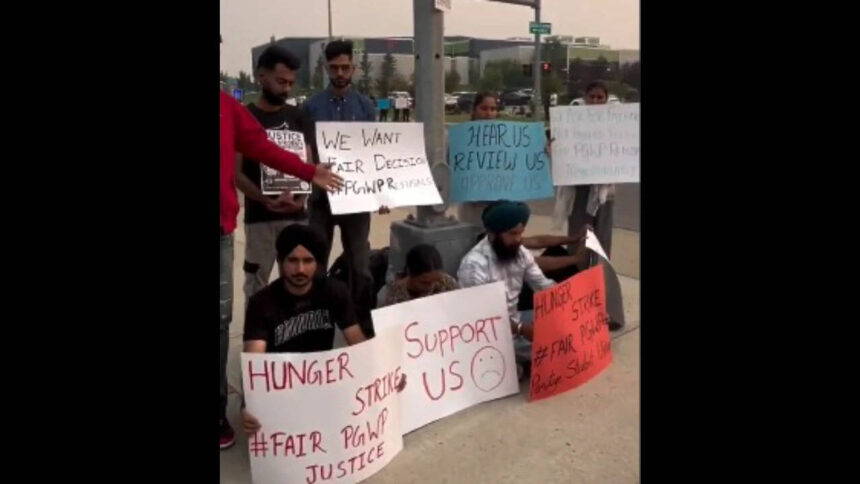
A group of Indian students in Canada has resorted to a hunger strike to protest the denial of post-graduation work permits, a crucial step towards gaining permanent residency in the country. The students, who have completed their studies in Canada, are frustrated by the rejection of their work permit applications, which they believe is unfair given their significant investment in the Canadian education system. With placards that read ‘We studied here, we deserve to work here,’ the students are demanding justice and a fair opportunity to contribute to the Canadian economy.
Background of the Issue
The students’ plight began when they received letters from Immigration, Refugees and Citizenship Canada (IRCC) stating that their post-graduation work permit applications had been rejected. The reason cited was that the students’ study programs were not deemed to be ‘full-time’ or ‘continuous,’ despite the fact that they had completed their degrees from recognized Canadian institutions. This decision has left many students in a state of limbo, unsure of their future in Canada and struggling to come to terms with the possibility of having to leave the country without being able to work.
The students argue that the IRCC’s decision is arbitrary and does not take into account the unique circumstances of each individual’s study program. Many of them have already completed their studies and are eager to start their careers, but the denial of work permits has put their plans on hold. The students are also concerned that the rejection of their work permit applications will have a negative impact on their future prospects, as it may be perceived as a negative mark on their immigration record.
Protest and Demands
The hunger strike, which began recently, is a desperate attempt by the students to draw attention to their cause. The students are demanding that the IRCC reconsider their work permit applications and provide a clear explanation for the rejection. They are also seeking a meeting with the Canadian government to discuss their concerns and find a solution to the issue. The students have received support from various community groups and organizations, who are urging the government to take a more compassionate approach to the situation.
The students’ demands are not only about their own futures but also about the broader implications of the IRCC’s decision. They argue that the denial of work permits to international students undermines the integrity of the Canadian education system and may deter future students from choosing Canada as their study destination. The students believe that they have made significant contributions to the Canadian economy and society, and it is only fair that they be given the opportunity to continue doing so.
Future Prospects and Implications
The outcome of the hunger strike and the students’ demands is uncertain, but one thing is clear: the issue highlights the need for a more streamlined and transparent immigration process. The students’ plight has sparked a wider debate about the treatment of international students in Canada and the need for a more compassionate approach to immigration. As the Canadian government considers the students’ demands, it must also think about the long-term implications of its decision and how it may impact the country’s reputation as a welcoming and inclusive society.
The students’ determination to fight for their rights is a testament to their resilience and commitment to their goals. As they continue their hunger strike, they remain hopeful that their voices will be heard and that they will be given the opportunity to contribute to the Canadian economy and society. The world is watching, and the Canadian government’s response to this crisis will have far-reaching implications for international students and the future of immigration in Canada.