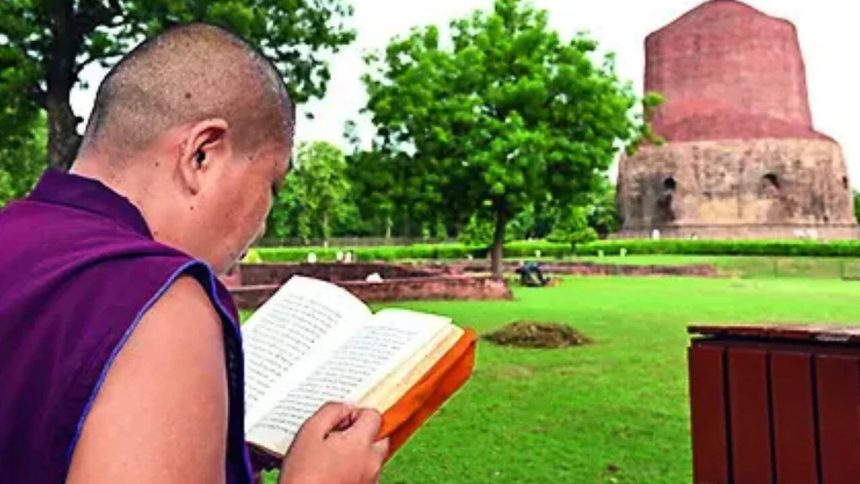
The scent of history wafts through the air, as Sarnath, one of India’s most revered ancient Buddhist sites, has been inscribed on the Unesco World Heritage List. This prestigious recognition, bestowed upon the ancient site, cements India’s stature as a guardian of the world’s rich cultural heritage, joining a distinguished list of 44 other Indian sites. As India ranks sixth globally and second in the Asia Pacific Region for the most number of ‘World Heritage Sites’, this achievement is a testament to the nation’s enduring legacy.
Unveiling the History of Sarnath
Located in the Uttar Pradesh state, Sarnath is a site steeped in history, dating back to the 6th century BCE when it was a significant hub for Buddhist thought and philosophy. The site is home to numerous ancient monasteries, stupas, and temples, each bearing testament to the profound impact of Buddhism on the region’s culture and society. As one of the most sacred sites in Buddhism, Sarnath is considered the place where Lord Buddha delivered his first sermon after attaining enlightenment, marking the beginning of the Buddhist era.
The Unesco World Heritage designation is a significant milestone for Sarnath, acknowledging its historical and cultural significance to not only India but to the world at large. The site’s rich heritage is a reflection of India’s profound contributions to the development of human civilization, and its recognition as a World Heritage Site underscores the importance of preserving this cultural legacy for future generations.
Conservation Efforts and the Road Ahead
With this designation comes a renewed emphasis on preserving and protecting the site, ensuring its continued integrity and authenticity. The Archaeological Survey of India (ASI) has been working tirelessly to conserve the site, conducting extensive restoration work to restore its ancient structures to their former glory. However, despite these efforts, Sarnath still faces numerous challenges, including encroachment, pollution, and climate change, which pose a significant threat to the site’s preservation.
Given the immense historical significance of Sarnath, it is crucial that concerted efforts are made to safeguard its future. Governments, local communities, and international organizations must collaborate to ensure that the site is protected from the forces of destruction, allowing future generations to experience its beauty and significance. The Unesco World Heritage designation serves as a powerful reminder of the importance of preserving our cultural heritage and the need for collective action to protect it.
The Significance of India’s World Heritage Sites
India’s rich cultural tapestry has yielded a staggering number of World Heritage Sites, each one a testament to the country’s enduring legacy. From the magnificent Taj Mahal to the ancient city of Varanasi, each site is a window into a bygone era, showcasing India’s profound contributions to the development of human civilization. As India continues to grow and evolve, its cultural heritage remains an integral part of its identity, serving as a reminder of its ancient roots and the values that have shaped its society.
India’s 45 World Heritage Sites are not merely a reflection of its cultural heritage but also a symbol of its commitment to preserving this legacy for future generations. As Sarnath joins this esteemed list, it underscores the importance of cultural preservation and the need for collective action to safeguard our shared cultural heritage.
As the world continues to grapple with the challenges of the 21st century, the Unesco World Heritage designation of Sarnath serves as a powerful reminder of the importance of preserving our cultural legacy. It is a testament to India’s enduring commitment to its cultural heritage and a beacon of hope for the preservation of our shared human history.