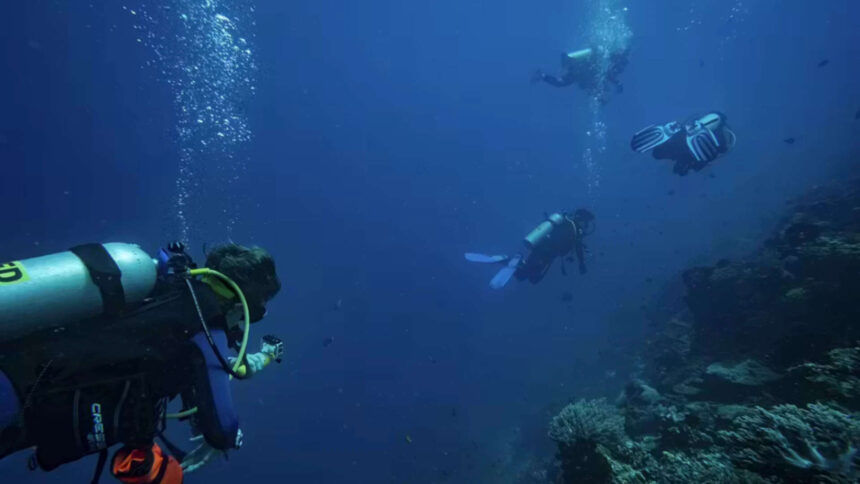
A staggering discovery has left the scuba diving community reeling, as a recent study reveals that nearly half of all physical contacts between divers and coral reefs result in visible damage to these delicate ecosystems. For years, divers have insisted that their interactions with the underwater world are harmless, but the stark reality is that even the slightest touch can have devastating consequences. The study, which tracked the interactions of hundreds of tourists with coral reefs, has shed new light on the unintended harm caused by these encounters, and has sparked a renewed call for greater awareness and responsibility among divers.
The Unseen Damage
Researchers employed a team of underwater observers to track the interactions between divers and coral reefs, and the results were alarming. More than 40 per cent of all physical contacts between divers and the reef resulted in visible damage to the coral, with some areas suffering damage that was irreparable. The study’s findings have significant implications for the long-term health of these ecosystems, as coral reefs are not only breathtakingly beautiful, but also provide a vital source of food and shelter for countless species of marine life.
The damage caused by divers is often unintentional, and can result from something as simple as a careless fin kick or an accidental brush against the reef. However, the cumulative effect of these interactions can be catastrophic, as the constant barrage of touches and kicks can cause the coral to become stressed, making it more susceptible to disease and predation. As the world’s oceans continue to face numerous threats, from climate change to overfishing, the preservation of coral reefs has never been more critical, and the diving community must take steps to minimize its impact on these fragile ecosystems.
A Call to Action
The study’s findings have sparked a renewed call for greater awareness and responsibility among divers, with many experts advocating for improved training and education programs that emphasize the importance of reef conservation. By teaching divers how to interact with the reef in a more sustainable way, the diving community can play a critical role in preserving these ecosystems for future generations. This can involve simple measures such as improving buoyancy control, avoiding contact with the reef, and never touching or standing on the coral.
Furthermore, the study highlights the need for greater regulation and enforcement of diving practices in areas with fragile coral reefs. This can involve the implementation of stricter guidelines and regulations for dive operators, as well as increased monitoring and enforcement of diver behavior. By working together, the diving community, governments, and conservation organizations can help to minimize the impact of diving on coral reefs and preserve these incredible ecosystems for years to come.
A Path Forward
As the diving community comes to terms with the unintended harm caused by its interactions with coral reefs, there is a growing sense of determination and commitment to change. By acknowledging the problem and taking concrete steps to address it, divers can help to mitigate the damage that has already been done and work towards a more sustainable future for these ecosystems. This will require a fundamental shift in the way that divers interact with the reef, as well as a greater awareness of the potential consequences of their actions.
Ultimately, the preservation of coral reefs requires a collective effort, and the diving community has a critical role to play in this endeavor. As we move forward, it is essential that we prioritize the health and well-being of these ecosystems, and work towards a future where divers can coexist with coral reefs in a way that is both sustainable and responsible. By doing so, we can help to ensure the long-term preservation of these incredible ecosystems, and preserve the beauty and wonder of the underwater world for generations to come.