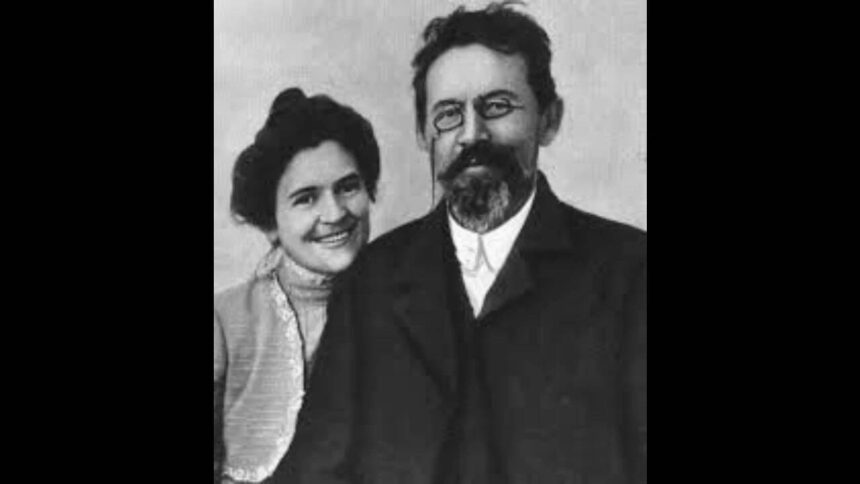
When it comes to relationships, few quotes have had as lasting an impact as Anton Chekhov’s famous line: ‘If you are afraid of loneliness, don’t marry.’ On the surface, it appears to be a straightforward warning about the perils of matrimony, a cautionary tale about the inevitable heartache that awaits in the wake of wedding bells. But scratch beneath the surface, and one begins to realize that there’s more to this quote than meets the eye.
Loneliness and Attachment: A Complex Relationship
Recent studies have shown that, far from being a straightforward cause-and-effect phenomenon, loneliness is actually deeply intertwined with attachment. In fact, research suggests that those who are most afraid of loneliness are often the same individuals who are most prone to attachment anxiety – a condition characterized by an intense fear of rejection and abandonment. This paradoxical relationship between loneliness and attachment is precisely what Chekhov’s quote is getting at, and it raises a number of important questions about the nature of human relationships.
One way to understand this relationship is to think about the ways in which we use relationships to cope with feelings of loneliness. For many of us, the prospect of being alone can be a daunting one, and so we turn to partners, friends, and family as a means of warding off the pangs of isolation. But in doing so, we often become increasingly attached to these relationships, and as a result, we become more and more vulnerable to the very thing we were trying to avoid in the first place – loneliness.
The Paradox of Partnership
So what does this mean for our understanding of marriage and relationships? On the one hand, it suggests that the idea of marriage as a way to avoid loneliness is a bit of a myth. Rather, marriage is often a source of connection and intimacy, but it is also a source of tension and conflict – and it is precisely this tension that can lead to feelings of loneliness. Furthermore, the idea that we can avoid loneliness by avoiding marriage is also a myth – for the simple reason that loneliness is a universal human experience that can strike anyone, regardless of their relationship status.
And yet, despite these paradoxes, there is still something to be said for Chekhov’s quote. For in a world where so many of us are afraid of loneliness, and where we often turn to relationships as a means of avoiding it, Chekhov’s warning is a timely reminder of the importance of self-awareness and emotional resilience. Rather than viewing marriage as a way to avoid loneliness, perhaps we should be viewing it as a way to cultivate greater emotional intelligence and connection with ourselves and others.
A New Perspective on Human Psychology
Chekhov’s quote may seem like a simplistic warning, but it actually speaks to a much deeper truth about human psychology. For in a world where we are increasingly interconnected, and where our relationships are more complex and multifaceted than ever before, we need a new perspective on what it means to be human. We need to recognize that loneliness is not something to be feared or avoided, but rather something to be acknowledged and understood – and that this understanding can be a key to greater emotional intelligence and connection with others.
Ultimately, Chekhov’s quote is not just a warning about the perils of marriage, but a call to action – a reminder to be more mindful and self-aware in our relationships, and to cultivate a greater sense of emotional intelligence and connection with ourselves and others. As we navigate the complexities of modern life, it is a message that is more relevant than ever – and one that we would do well to heed.