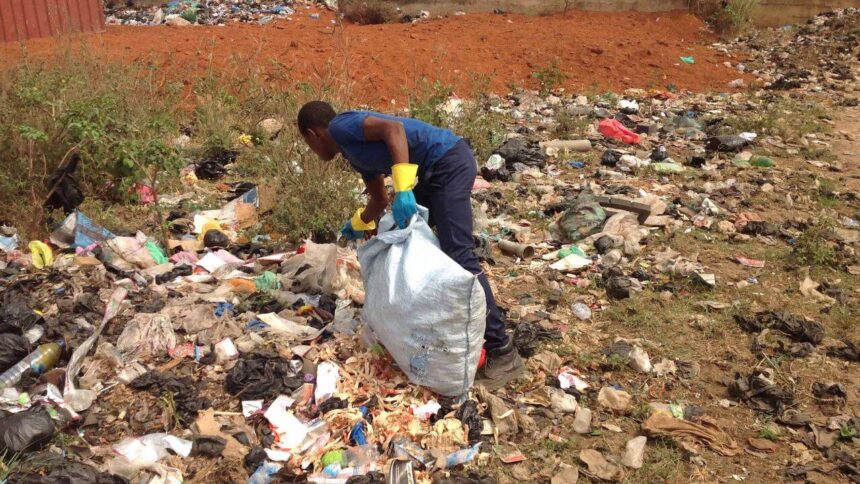
In the heart of Ghana’s capital city, Accra, lies a peculiar paradox – the city generates an astonishing 300 tons of plastic waste daily. However, with a determined spirit, Accra is turning a significant portion of its plastic problem into a promising solution – paving blocks for its roads. This bold initiative is the mastermind of Nelson Boateng, a computer network engineer by education, who dared to challenge conventional wisdom and transform plastic waste into flooring materials.
From Plastic Bags to Paving Blocks
Nelson Boateng, 45, took an unconventional journey into entrepreneurship after graduating with a degree in computer network engineering. He started by manufacturing plastic bags and then took it a step further by experimenting with converting the same material into flooring. This innovative idea, though untested, eventually led him to create a startup, Paving Stones Ghana, which now produces over 100,000 paving blocks every month. These blocks are not only made from plastic waste but are also cheaper than traditional concrete blocks, with an average price of $1.5 per block compared to $2.5 per concrete block.
Boateng’s vision is to make paving blocks accessible to even the smallest of communities, reducing the economic burden on low-income residents. He believes that by leveraging the abundance of plastic waste in Ghana, he can create a sustainable solution that benefits the environment and the community. His products are made from a mix of plastic waste, sand, and cement, with a unique blend that ensures durability and longevity.
A Path to Environmental Sustainability
The environmental benefits of this initiative are multifaceted. By recycling plastic waste, Accra reduces its carbon footprint, prevents further pollution of landfills, and minimizes the risk of plastic waste entering the waterways. Moreover, the production process itself generates employment opportunities for local residents, creating a ripple effect of economic growth. Boateng estimates that his startup has created over 500 jobs, both directly and indirectly, since its inception.
Paving Stones Ghana has also partnered with the local government to implement a recycling program, which ensures that all plastic waste collected is processed into paving blocks. This collaboration has not only reduced the city’s waste management costs but has also increased community awareness about the importance of proper waste disposal.
A New Path to Infrastructure Development
The impact of Paving Stones Ghana’s innovative solution is resonating across Accra, with plans to construct over 100 kilometers of roads in the next two years. Boateng’s vision is to cover the entire city with environmentally-friendly paving blocks, making it a model for other cities to follow. As the city looks to the future, this initiative is poised to redefine the way infrastructure development is approached, prioritizing sustainability and community engagement.
As Accra continues to navigate its plastic waste challenge, Nelson Boateng’s pioneering spirit has emerged as a beacon of hope. By transforming waste into a valuable resource, he is not only creating a more sustainable future but also inspiring a new generation of entrepreneurs to think outside the box and challenge conventional norms.