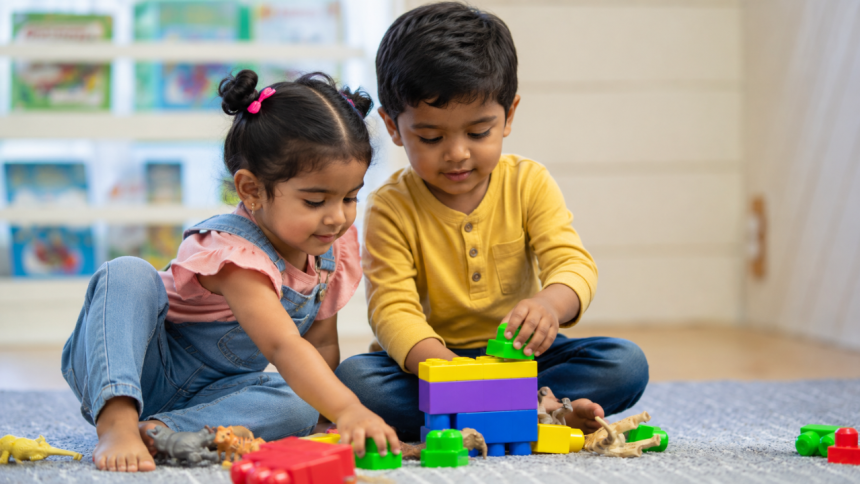
Imagine a world where children’s playtime isn’t dictated by the latest gadgets or carefully curated activities. A world where they’re free to create, explore, and imagine without the constant supervision of adults. For two six-year-olds, this world became a reality last week, as they spent hours constructing and rebuilding a fort using nothing but a pile of wooden boards and their vivid imagination.
The scene was a testament to the power of unstructured play, a concept that’s gaining traction in the field of psychology. Experts suggest that allowing children to play on their own, without the influence of adults, can have a profound impact on their cognitive, emotional, and social development. It’s a philosophy that’s rooted in the idea that children are capable of learning and growing through self-directed play, rather than relying on external guidance.
One of the key benefits of unstructured play is its ability to foster creativity and problem-solving skills. When children are left to their own devices, they’re forced to think creatively and come up with their own solutions to problems. This approach is reflected in the way the two six-year-olds constructed their fort, using nothing but a few wooden boards and a lot of imagination. As they worked, they experimented with different designs, tested their limits, and learned from their mistakes.
Unstructured Play and Emotional Intelligence
Unstructured play also has a profound impact on a child’s emotional intelligence. By allowing children to play on their own, parents are giving them the opportunity to develop essential life skills, such as self-regulation, empathy, and self-confidence. When children are left to their own devices, they’re able to navigate complex emotions and develop strategies for managing stress and anxiety.
This approach is reflected in the way the two six-year-olds interacted with each other during their playtime. They worked together seamlessly, supporting each other and celebrating each other’s successes. As they played, they developed a sense of empathy and understanding, learning to appreciate each other’s perspectives and needs.
The Benefits of Unsupervised Play in a Busy World
In a world that’s increasingly fast-paced and technology-driven, unstructured play is more important than ever. As parents become increasingly busy and schedules become more packed, the opportunity for unsupervised play is dwindling. However, experts suggest that this trend is having a negative impact on children’s development, with many struggling to cope with the pressures of modern life.
By allowing children to play on their own, parents can provide them with the skills and confidence they need to navigate the challenges of modern life. Whether it’s coping with stress, building relationships, or developing problem-solving skills, unstructured play is a powerful tool that can have a lasting impact on a child’s development.
The Future of Play: A New Approach to Parenting
As the world continues to evolve, it’s clear that the way we approach play is due for a revolution. By embracing unstructured play and giving children the freedom to create and explore, we can provide them with the skills and confidence they need to thrive in a rapidly changing world.
For the two six-year-olds who spent hours constructing their fort, the experience was a testament to the power of unstructured play. As they worked, they developed essential life skills, fostered creativity and problem-solving skills, and learned to appreciate each other’s perspectives and needs. As we look to the future, it’s clear that this approach to play is one that we should all be embracing.
By allowing children to play on their own, we’re giving them the gift of freedom, creativity, and self-determination. We’re giving them the tools they need to navigate the challenges of modern life, to build meaningful relationships, and to develop a sense of purpose and direction.