The Red Corridor, a swathe of land that has been plagued by Maoist insurgency for over six decades, is finally witnessing the dawn of peace. The once-feared guerrilla war is slowly losing its grip, and the people are breathing a sigh of relief. As the Maoist movement that has left a trail of destruction and bloodshed gradually comes to an end, the people of the Red Corridor are looking forward to a brighter future.
Section 1: The Long and Bloody Road
The Red Corridor, which spans across several states in India, has been a hotbed of Maoist activity for over 60 years. The movement, which began as a rebellion against the government, slowly morphed into a full-blown insurgency. The Maoists, with their sophisticated communication networks and well-organized cadres, posed a significant challenge to the security forces. The region was plagued by violence, with Maoist attacks on security personnel, civilians, and infrastructure becoming a norm. The people lived in fear, with many forced to flee their homes and take refuge in safer areas.
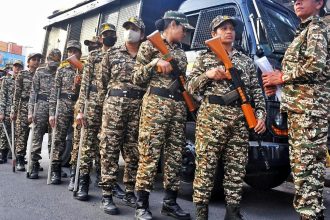
The security forces fought back, but the Maoists seemed invincible. They would often launch surprise attacks on security personnel and then melt away into the forests, leaving behind a trail of destruction. The people were caught in the middle, and many lost their lives in the crossfire. The Red Corridor became a no-go area, with even the bravest of security personnel hesitant to venture into the Maoist strongholds.
Section 2: The Turning Point
But things began to change around a decade ago. The security forces, with their improved tactics and equipment, started to gain the upper hand. They launched targeted operations, eliminating key Maoist leaders and disrupting their communication networks. The people, emboldened by the security forces’ successes, started to return to their homes. The economy began to pick up, with farmers returning to their fields and traders resuming their businesses. The Maoists, sensing their grip on the region slipping, tried to adapt, but it was too late.
As the security forces closed in, the Maoists began to surrender in large numbers. They realized that their struggle had been in vain, and that the government was determined to bring peace to the region. The people, who had lived in fear for so long, began to see a glimmer of hope. They started to participate in the peace process, with many joining the government’s rehabilitation programs. The Red Corridor, once a hotbed of violence, was slowly transforming into a peaceful region.
Section 3: A New Era Dawns
The ending of the Maoist insurgency marks a significant milestone in the history of the Red Corridor. The people are finally free from the fear of violence and intimidation. They are looking forward to a brighter future, where they can live without the constant threat of Maoist attacks. The government, too, is breathing a sigh of relief, knowing that the peace process is finally bearing fruits.
The road ahead will not be easy, but the people are determined to rebuild their lives. They will work towards creating a more prosperous and peaceful region, where everyone has access to education, healthcare, and economic opportunities. The Red Corridor, once a symbol of violence and bloodshed, will now be remembered as a testament to the power of peace and perseverance.
The fall of the Red Corridor’s Maoist insurgency is a reminder that even the most seemingly intractable conflicts can be resolved. It shows that with determination, hard work, and a willingness to compromise, even the most entrenched problems can be overcome.
As the Red Corridor enters a new era of peace and prosperity, the people are looking forward to a brighter future. They know that the road ahead will be long and challenging, but they are determined to succeed. The Red Corridor’s story is one of hope and resilience, a reminder that even in the darkest of times, there is always a way forward.
The curtain may be falling on the Red Corridor’s long and bloody road, but a new chapter is about to begin. The people are ready to take on the challenges ahead, armed with a newfound sense of hope and determination.
Closing…