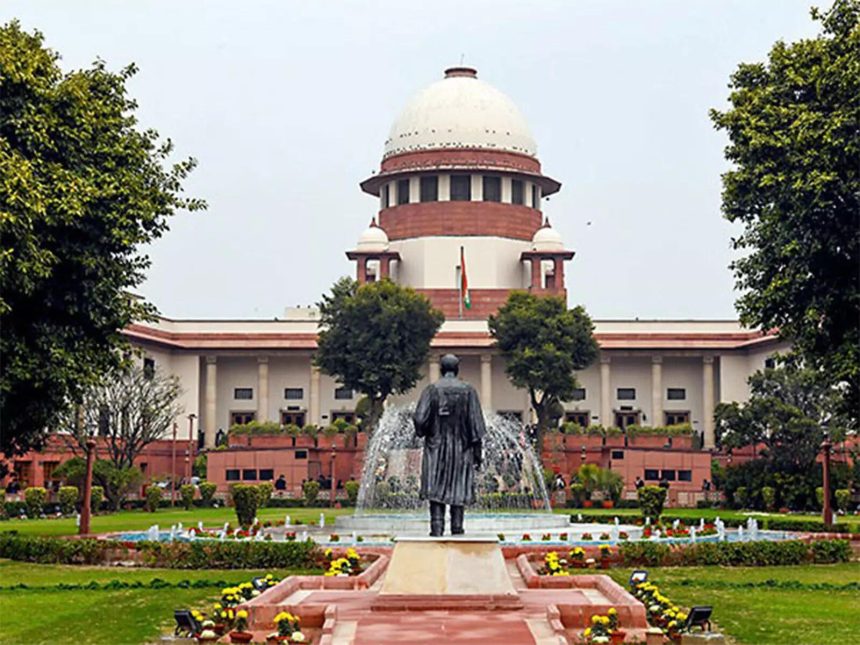
The Supreme Court has set a landmark precedent with its recent decision to allow banks to label bank accounts as fraud without conducting a personal oral hearing. This ruling has been met with both relief and criticism from various stakeholders in the financial sector, as it is expected to reduce the burden on banks while also ensuring that legitimate accounts are not wrongly flagged. The apex court’s verdict aims to strike a balance between the need to prevent financial crimes and the need to protect the rights of account holders.
Impact on the Financial Sector
The ruling is expected to have a significant impact on the financial sector, particularly for banks that have been struggling to cope with the increasing number of fraudulent transactions. By allowing banks to label accounts as fraud without a personal hearing, they will be able to respond more swiftly to suspicious transactions and prevent further losses. However, this move has also raised concerns among customer rights activists, who argue that it may lead to innocent account holders being wrongly accused of fraud.
According to industry experts, the decision is in line with the Reserve Bank of India’s (RBI) efforts to strengthen the country’s banking system and prevent financial crimes. The RBI has been pushing banks to adopt more stringent measures to detect and prevent fraud, and the Supreme Court’s ruling is seen as a key step in this direction. While the ruling has been welcomed by the banking sector, it is likely to be met with resistance from customer rights groups, who will argue that it undermines the rights of account holders.
Concerns Over Customer Rights
The Supreme Court’s decision has also raised concerns among customer rights activists, who argue that it may lead to innocent account holders being wrongly accused of fraud. They point out that a personal oral hearing is an essential safeguard against wrongful accusations, and that its absence may lead to a culture of suspicion and mistrust. While the banking sector argues that the decision will help to prevent financial crimes, customer rights activists will argue that it is a slippery slope that may lead to a erosion of customer rights.
Customer rights activists will also argue that the Supreme Court’s decision may disproportionately affect vulnerable sections of society, such as the elderly and those who are not tech-savvy. These individuals may be more likely to be wrongly accused of fraud, and may not have the resources or knowledge to defend themselves. In this context, the decision has been criticized as being overly broad and lacking in safeguards for customer rights.
Way Forward
The Supreme Court’s decision has set the stage for a major overhaul of the banking sector’s approach to detecting and preventing fraud. While the decision is expected to reduce the burden on banks, it also raises concerns among customer rights activists about the erosion of customer rights. As the banking sector grapples with the implications of this decision, it will be important for all stakeholders to work together to ensure that customer rights are protected while also preventing financial crimes. The way forward will be shaped by a delicate balance between these competing interests, and will require a nuanced approach that takes into account the needs and concerns of all stakeholders.
Ultimately, the Supreme Court’s decision is a reminder that the banking sector is a complex and dynamic space that requires a multifaceted approach to address the challenges of financial crimes. By working together, all stakeholders can ensure that the banking sector is a safe and secure space for all customers, while also preventing financial crimes and protecting the interests of all stakeholders.