{“title”:”The Visionary Behind the Machines: Unpacking Norbert Wiener’s 1950 Prediction”,”content”:”
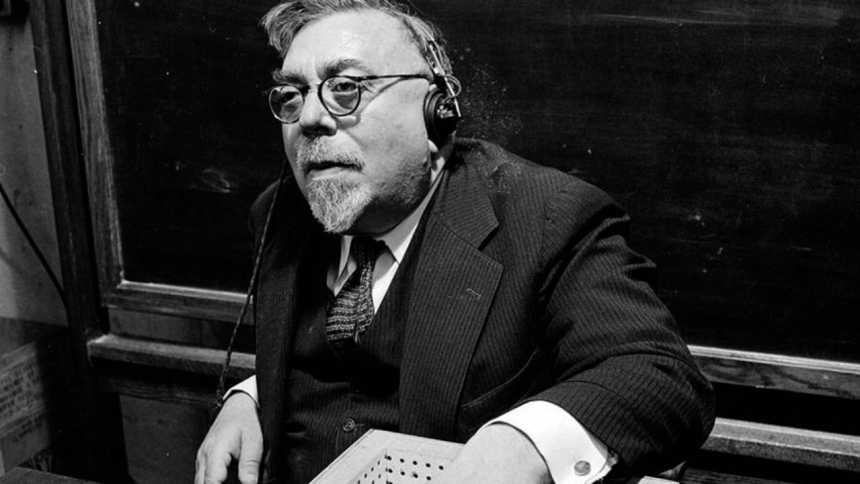
On a typical day in 1950, a renowned mathematician sat pondering the future of humanity, his mind racing with visions of an era where machines would be the dominant force. Norbert Wiener, a child prodigy turned MIT professor, had spent his career studying the intersection of mathematics and philosophy. His work had already earned him recognition as a pioneer in the field of cybernetics, a term he coined to describe the study of control and communication in machines and living beings. Yet, it was his prediction that machines would one day make decisions for humans that would prove to be one of his most profound and prophetic insights.
From Child Prodigy to Cybernetic Visionary
Norbert Wiener’s life was a testament to his boundless intellectual curiosity and innate talent. Born in 1894, Wiener graduated from Tufts University at the tender age of 14, a feat that earned him a spot at Harvard University, where he earned his PhD in mathematics at just 18. His academic prowess was matched only by his passion for understanding the human experience. As Wiener delved deeper into the realms of mathematics, physics, and philosophy, he began to see the world as a complex system, governed by intricate webs of cause and effect. His work on communication theory, in particular, laid the foundation for modern telecommunications and paved the way for the development of computers.
Wiener’s interest in the relationship between humans and machines was not merely academic; it was deeply personal. His experiences during World War II, where he worked on military communication systems, had left an indelible mark on his psyche. He began to wonder whether machines could be designed to mimic human thought and behavior, and whether such an achievement would necessarily be a good thing. In his 1948 book, “Cybernetics: Or Control and Communication in the Animal and the Machine,” Wiener sounded the alarm, warning that the unchecked rise of machines could lead to a loss of human agency and autonomy.
The 1950 Prediction: A Vision of the Future
Wiener’s prediction that machines would one day make decisions for humans was first articulated in a 1950 article titled “The Human Use of Human Beings.” In it, he wrote, “We find ourselves in the position of being able to build machines which are capable of competing with men in many fields of endeavor… We are rapidly reaching the point where we shall be forced either to find a place for these machines in our social and economic structure or to find a way of stopping their development.” Wiener’s warning was not about the potential benefits of automation, but rather the dangers of unchecked technological progress. He foresaw a future where machines would be used to control and manipulate human behavior, rather than to augment or enhance it.
Wiener’s prediction was not without its critics. Some saw his warnings as overly pessimistic, while others dismissed his ideas as the ramblings of a mad scientist. Yet, Wiener’s vision of a future where machines made decisions for humans was remarkably prescient. Today, we live in a world where algorithms and artificial intelligence systems wield immense power over our daily lives, from social media platforms to financial markets. It is a world that Wiener could hardly have imagined in his wildest dreams.
The Legacy of Norbert Wiener
Norbert Wiener’s legacy extends far beyond his prediction about machines making decisions for humans. His work on cybernetics paved the way for the development of modern computing and communication systems. His ideas about the interconnectedness of living systems and machines continue to inspire researchers and scientists today. Wiener’s commitment to understanding the human condition and his willingness to challenge the status quo have left an indelible mark on the world of science and philosophy.
As we hurtle towards a future where machines increasingly shape our lives, Wiener’s prediction serves as a timely reminder of the importance of critically evaluating the consequences of our technological advancements. His work challenges us to consider the potential risks and benefits of a world where machines make decisions for humans, and to think carefully about the kind of society we want to create.
Norbert Wiener’s prediction may have been made over 70 years ago, but its relevance to our modern world is undeniable. As we navigate the complexities of the digital age, Wiener’s vision serves as a powerful reminder of the need for accountability, transparency, and human agency in the face of technological progress.
In the end, Wiener’s prediction was not just about machines; it was about us – about our capacity for self-reflection, our willingness to confront the consequences of our actions, and our determination to create a world that is worthy of our highest aspirations.
“,”excerpt”:”Renowned mathematician Norbert Wiener predicted in 1950 that machines would make decisions for humans, a vision that has become eerily prescient in today’s digital age. “,”tags”:[“science”,”mathematics”,”cybernetics”,”prediction”,”future”],”meta_description”:”Discover the fascinating story of Norbert Wiener, the mathematician who predicted machines would make decisions for humans in 1950, and explore the implications for our modern world.”}