{“title”:””Dead Waters”: The Gulf of Mexico’s Hidden Threat to a Way of Life”,”content”:”
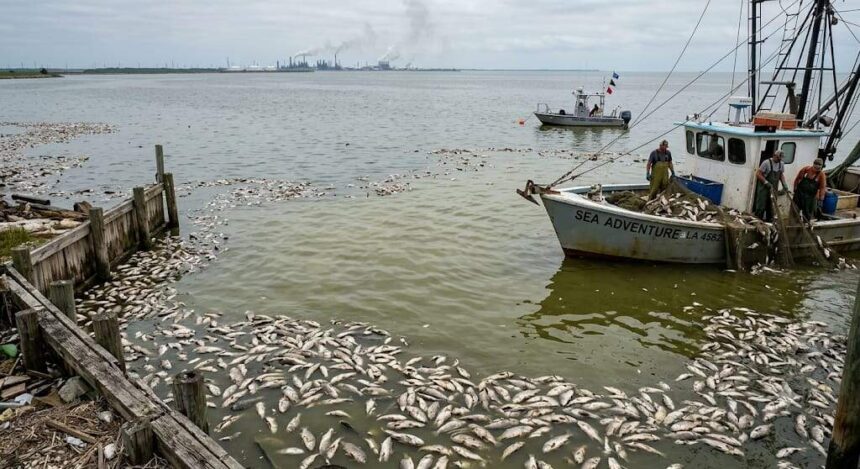
The Gulf of Mexico’s summer ‘dead zone’ has long been a source of concern for marine biologists and coastal communities alike. But beneath the surface of this lifeless expanse lies a far more sinister threat: a toxic stew of pollutants and chemicals that imperils the livelihoods of countless people and the very fabric of the ecosystem. Every summer, a vast stretch of the Gulf transforms into a seemingly barren wasteland, devoid of the vibrant marine life that once thrived there. Fish flee, shrimp and crabs succumb to the ‘hell waters,’ and the once-thriving commercial fisheries that rely on the Gulf’s bounty are left reeling. This is no ordinary ‘dead zone’; it’s a harbinger of a far more insidious problem.
The Poison in Our Waters
At the heart of this crisis lies a toxic soup of pollutants, including oil spills, agricultural runoff, and industrial waste. These chemicals seep into the Gulf’s waters, often through human carelessness or neglect, and wreak havoc on the delicate balance of the ecosystem. The most insidious culprit is likely nitrogen runoff from agricultural fertilizers, which has become a major contributor to the dead zone’s growth. As nitrogen-rich water flows into the Gulf, it stimulates an explosive growth of algae, which in turn consumes oxygen and creates a ‘dead’ environment. It’s a vicious cycle that has been exacerbated by decades of human activity and inaction.
Other pollutants, such as the remnants of the 2010 Deepwater Horizon oil spill, also lurk beneath the surface, threatening to unleash a new wave of devastation. While the oil spill was a notorious disaster, it represents just one symptom of a larger problem. The fact that similar spills have continued to occur, often with little fanfare or consequence, speaks to a broader failure of regulatory oversight and accountability.
The Human Cost
The impact of the dead zone and its attendant pollutants is far-reaching and devastating. Commercial fisheries, which generate billions of dollars in revenue for the US economy, are being steadily depleted. Shrimp and oyster fisheries, in particular, have been hit hard, with many fishermen struggling to make a living in the face of dwindling catches and increasing competition. Meanwhile, the people who call the Gulf Coast home – from fishermen and restaurateurs to small business owners and families – are left to bear the brunt of this environmental disaster.
As the dead zone expands and its effects become more pronounced, a growing coalition of scientists, activists, and community leaders is sounding the alarm. They argue that the time for inaction is over and that immediate, sustained action is required to address this crisis. This may include everything from tighter regulations on agricultural runoff to increased investment in marine conservation and restoration efforts.
A Call to Action
The Gulf of Mexico’s dead zone is more than just a scientific curiosity or an environmental statistic – it’s a stark reminder of our own complicity in the destruction of our planet. As we confront the consequences of our actions, we are forced to ask: what kind of future do we want for the Gulf, for its people, and for the marine life that calls it home? The answer lies not just in policy or technology, but in our collective willingness to change course and prioritize the health of our planet.
For the people of the Gulf Coast, the stakes are clear: their livelihoods, their traditions, and their very way of life hang in the balance. As we stand at the precipice of this crisis, it’s time to choose a different path – one that prioritizes the health of our waters, our communities, and the planet we share.
“,”excerpt”:”A vast ‘dead zone’ in the Gulf of Mexico poses a hidden threat to marine biodiversity, commercial fisheries, and the livelihoods of thousands of people along the US Gulf Coast. As pollutants and chemicals imperil the ecosystem, a growing coalition of scientists and community leaders is sounding the alarm, calling for immediate action to address this crisis.”,”tags”:[“science”,”environment”,”conservation”,”Gulf of Mexico”,”dead zone”,”pollution”,”fisheries”,”oceanography”],”meta_description”:”The Gulf of Mexico’s ‘dead zone’ is a toxic stew of pollutants and chemicals that imperils marine life, commercial fisheries, and the livelihoods of thousands of people along the US Gulf Coast.”}