{“title”:”Kangana Ranaut’s Radical Shift: From Moderate to ‘Awakened’ Hindu, She Blames Islamists for Leftist Leanings”,”content”:”
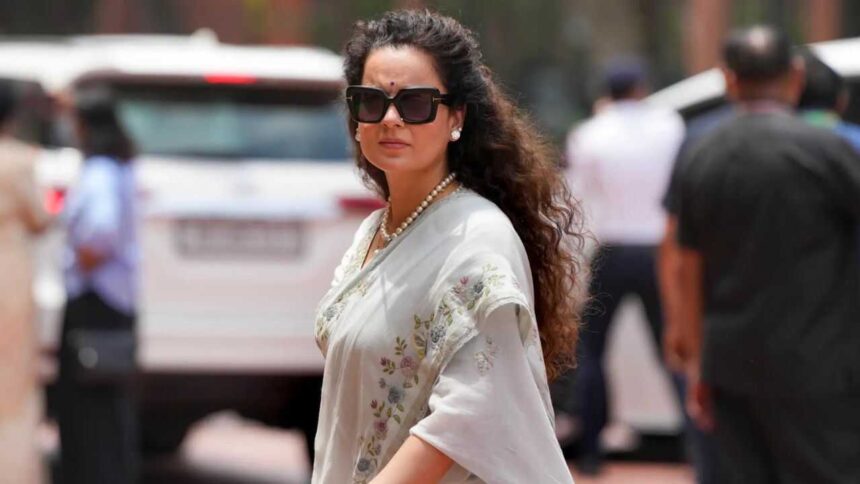
Actor and BJP MP Kangana Ranaut has made headlines once again with her unapologetic views on politics and society. In a recent video posted on X, Ranaut claimed that people are often swayed towards leftist ideologies after interacting with Islamists, sparking a heated debate on social media. The Mandi MP’s statement has reignited conversations about the factors influencing people’s political leanings, the role of religion in shaping opinions, and Ranaut’s own ideological journey.
Ranaut’s assertion that ‘people become Leftist after meeting Islamists’ is a stark departure from her past views, which she claims were more moderate. In her latest video, she recounts how her interactions with individuals from different backgrounds and ideologies led her to question her own perspectives and eventually adopt a more assertive stance. The actor-turned-politician credits her newfound understanding of Hinduism as an ‘awakened Hindu,’ stating that she now sees the world through a different lens and is more aware of the importance of preserving cultural heritage.
Her comments have sparked a mix of reactions, with some supporting her views and others accusing her of fostering divisiveness. Critics have pointed out that her assertion appears to be a sweeping generalization, ignoring the complexities and nuances of individual experiences. Others have praised Ranaut for challenging dominant narratives and speaking her mind, even if it means going against the grain.
A Complex Web of Ideology and Perception
Ranaut’s assertion that Islamists are a significant factor in shaping leftist ideologies is not new. Some argue that interactions with individuals from a particular faith or background can indeed influence one’s worldview, especially if those interactions are perceived as challenging or threatening to one’s existing beliefs. However, critics argue that this is an oversimplification of a complex issue, ignoring the role of education, socioeconomic factors, and personal experiences in shaping political leanings.
A closer examination of Ranaut’s own journey reveals a complex web of influences and perceptions. As a public figure, she has long been open about her struggles with mental health and her experiences with trauma. Her transition from a moderate to an ‘awakened Hindu’ may be a personal response to the challenges she has faced, as well as a desire to reclaim her cultural heritage. While her views may be polarizing, they also speak to a deeper desire for connection and meaning in a rapidly changing world.
The debate surrounding Ranaut’s views highlights the ongoing struggle to reconcile individual experiences with collective narratives. As we navigate the complexities of identity, faith, and politics, it is essential to engage with diverse perspectives and challenge our own assumptions. By doing so, we may uncover new insights into the human experience and the factors that shape our worldviews.
The Role of Social Media in Shaping Public Discourse
Ranaut’s comments have also sparked discussions about the role of social media in shaping public discourse. As a platform for self-expression and connection, social media has created new avenues for individuals to share their views and engage with others. However, it also amplifies divisive rhetoric and can create echo chambers where opposing views are dismissed or marginalized.
The ease with which Ranaut can access a massive audience on X has allowed her to disseminate her views quickly and widely. While this has sparked intense debate, it also raises questions about the responsibility that comes with social media platforms. As we rely on these platforms to engage with the world, we must also consider the impact of our online interactions on public discourse and the way we perceive reality.
A Reflection of the Nation’s Complex Identity</hassistant
{“title”:”Kangana Ranaut’s Radical Shift: From Moderate to ‘Awakened’ Hindu, She Blames Islamists for Leftist Leanings”,”content”:”
Actor and BJP MP Kangana Ranaut has made headlines once again with her unapologetic views on politics and society. In a recent video posted on X, Ranaut claimed that people are often swayed towards leftist ideologies after interacting with Islamists, sparking a heated debate on social media. The Mandi MP’s statement has reignited conversations about the factors influencing people’s political leanings, the role of religion in shaping opinions, and Ranaut’s own ideological journey.
Ranaut’s assertion that ‘people become Leftist after meeting Islamists’ is a stark departure from her past views, which she claims were more moderate. In her latest video, she recounts how her interactions with individuals from different backgrounds and ideologies led her to question her own perspectives and eventually adopt a more assertive stance. The actor-turned-politician credits her newfound understanding of Hinduism as an ‘awakened Hindu,’ stating that she now sees the world through a different lens and is more aware of the importance of preserving cultural heritage.
Her comments have sparked a mix of reactions, with some supporting her views and others accusing her of fostering divisiveness. Critics have pointed out that her assertion appears to be a sweeping generalization, ignoring the complexities and nuances of individual experiences. Others have praised Ranaut for challenging dominant narratives and speaking her mind, even if it means going against the grain.
A Complex Web of Ideology and Perception
Ranaut’s assertion that Islamists are a significant factor in shaping leftist ideologies is not new. Some argue that interactions with individuals from a particular faith or background can indeed influence one’s worldview, especially if those interactions are perceived as challenging or threatening to one’s existing beliefs. However, critics argue that this is an oversimplification of a complex issue, ignoring the role of education, socioeconomic factors, and personal experiences in shaping political leanings.
A closer examination of Ranaut’s own journey reveals a complex web of influences and perceptions. As a public figure, she has long been open about her struggles with mental health and her experiences with trauma. Her transition from a moderate to an ‘awakened Hindu’ may be a personal response to the challenges she has faced, as well as a desire to reclaim her cultural heritage. While her views may be polarizing, they also speak to a deeper desire for connection and meaning in a rapidly changing world.
The debate surrounding Ranaut’s views highlights the ongoing struggle to reconcile individual experiences with collective narratives. As we navigate the complexities of identity, faith, and politics, it is essential to engage with diverse perspectives and challenge our own assumptions. By doing so, we may uncover new insights into the human experience and the factors that shape our worldviews.
The Role of Social Media in Shaping Public Discourse
Ranaut’s comments have also sparked discussions about the role of social media in shaping public discourse. As a platform for self-expression and connection, social media has created new avenues for individuals to share their views and engage with others. However, it also amplifies divisive rhetoric and can create echo chambers where opposing views are dismissed or marginalized.
The ease with which Ranaut can access a massive audience on X has allowed her to disseminate her views quickly and widely. While this has sparked intense debate, it also raises questions about the responsibility that comes with social media platforms. As we rely on these platforms to engage with the world, we must also consider the impact of our online interactions on public discourse and the way we perceive reality.
A Reflection of the Nation’s Complex Identity
Ranaut’s assertion has also sparked a broader conversation about India’s complex identity and the role of religion in shaping public discourse. As the country grapples with issues of diversity, inclusivity, and social justice, it is essential to engage with the complexities of faith, identity, and politics. By doing so, we may uncover new insights into the human experience and the factors that shape our worldviews.
The debate surrounding Ranaut’s views highlights the need for nuanced and informed discussions about the factors influencing people’s political leanings. As we navigate the complexities of identity, faith, and politics, it is essential to engage with diverse perspectives and challenge our own assumptions. By doing so, we may uncover new insights into the human experience and the factors that shape our worldviews.
Ultimately, Ranaut’s comments serve as a reflection of the nation’s complex identity and the ongoing struggle to reconcile individual experiences with collective narratives. As we move forward, it is essential to engage with diverse perspectives, challenge our own assumptions, and strive for a deeper understanding of the human experience.
“,”excerpt”:”Actor Kangana Ranaut claims that interacting with Islamists leads people to adopt leftist ideologies, sparking a heated debate on social media. The Mandi MP’s comments have reignited conversations about the factors influencing people’s political leanings and her own ideological journey.”,”tags”:[“Kangana Ranaut”,”Islamism”,”Leftist Ideologies”,”Hindu Nationalism”,”Social Media”,”Public Discourse”],”meta_description”:”Actor Kangana Ranaut’s comments on social media have sparked a heated debate about the factors influencing people’s political leanings and her own ideological journey.”}