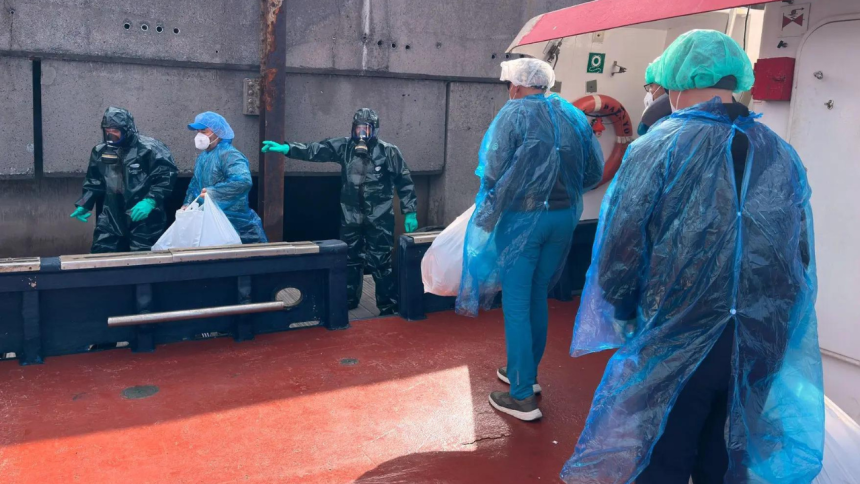
The global health community remains on high alert as a hantavirus outbreak on a quarantined cruise ship off the coast of Spain has sparked international concern. The ship, carrying over 1,000 passengers and crew members, was placed under quarantine earlier this week after several cases of the virus, which is typically found in rodents, were reported. As the passengers and crew members began disembarking on Sunday, authorities in Spain are taking all necessary precautions to ensure that everyone is checked for symptoms of the virus.
Passengers Begin Disembarking Amid Fears of Hantavirus Spread
Passengers started disembarking the ship on Sunday, with many expressing relief to finally be off the vessel. However, the reality of the situation is far from comforting, as everyone disembarking will undergo a thorough medical examination to check for any symptoms of hantavirus. The process is expected to be lengthy and may take several days to complete, with passengers being taken to designated facilities for screening and potential treatment. The Spanish authorities have assured that all necessary precautions are being taken to prevent the spread of the virus, including providing medical teams and equipment to the facilities where passengers will be taken.
The hantavirus outbreak has raised concerns about the potential for the virus to spread beyond the cruise ship, and authorities are taking all necessary steps to mitigate this risk. The virus is typically spread through contact with rodent droppings, urine, or saliva, and can also be transmitted through contact with contaminated surfaces or air. As a precautionary measure, all passengers and crew members will be provided with protective gear, including masks, gloves, and eye protection, to prevent any potential transmission of the virus.
Medical Teams Deployed to Handle Hantavirus Cases
A team of medical experts from Spain’s National Institute of Health has been deployed to the region to assist in the handling of hantavirus cases. The team includes infectious disease specialists, virologists, and other medical professionals who are experienced in dealing with outbreaks of infectious diseases. They will work closely with local healthcare providers to identify and treat individuals who may be infected with the virus, as well as to provide guidance on how to prevent the spread of the virus to others.
The medical teams will also be responsible for collecting and analyzing samples from patients suspected of having hantavirus, as well as for conducting contact tracing to identify individuals who may have been exposed to the virus. This will help to identify any potential clusters of cases and to take targeted measures to prevent the spread of the virus.
Global Health Community on High Alert
The hantavirus outbreak on the cruise ship has sent shockwaves around the world, with the global health community on high alert. The World Health Organization (WHO) has been closely monitoring the situation and has issued guidelines for healthcare providers on how to identify and treat hantavirus cases. The WHO has also advised countries to take precautions to prevent the spread of the virus, including enhancing surveillance and monitoring for cases, as well as providing guidance on how to prevent the virus from spreading to others.
As the situation continues to unfold, it remains to be seen how the hantavirus outbreak will be contained and whether it will have any long-term impact on global health. However, one thing is clear: the global health community is taking the situation very seriously and is doing everything in its power to prevent the spread of the virus and to protect public health.
Passengers who have been disembarking the cruise ship will undergo thorough medical examination and treatment, and those who are found to have been infected with hantavirus will receive medical attention and care. As the situation continues to unfold, it is essential that the public remains vigilant and takes all necessary precautions to prevent the spread of the virus. By working together, it is possible to contain this outbreak and prevent any further spread of the virus.