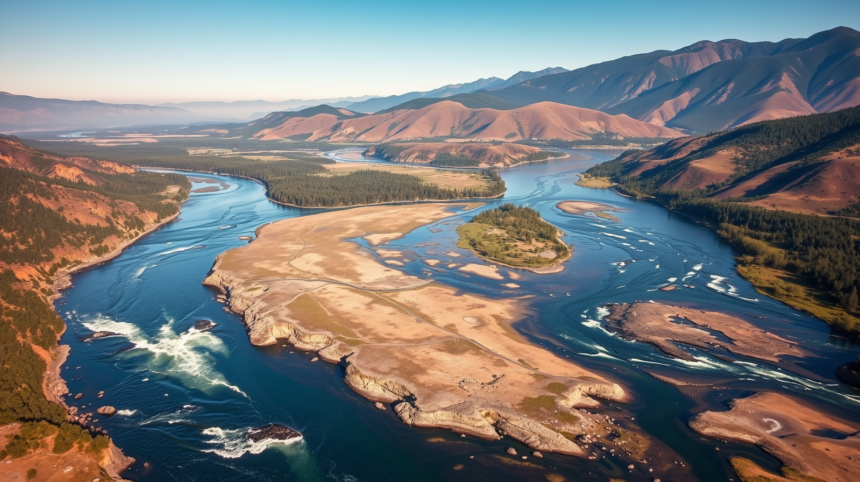
The once-mighty reservoirs behind four ageing hydroelectric dams on the Klamath River have been drained in recent months, a consequence of a massive dam removal project aimed at restoring the waterway’s natural flow and ecosystem. But as the reservoirs disappear, a new challenge has emerged for wildfire crews battling blazes across the rugged, drought-prone Klamath Basin straddling the Oregon-California border. The dams’ reservoirs had long served as a reliable source of water for helicopters and fire crews, and their loss is sparking concerns about the region’s ability to fight future fires.
Water Shortages and Firefighting Challenges
For decades, the reservoirs behind the dams on the Klamath River had been a vital water source for firefighters in the region. The water was used to refill helicopters and tankers, and to support ground crews battling wildfires. But with the reservoirs drained, the region is facing a significant shortage of water for firefighting efforts. The situation is further complicated by the drought-prone nature of the Klamath Basin, where wildfires are a frequent occurrence.
The Klamath Basin is home to some of the most rugged and remote landscapes in the western United States, making it difficult and expensive to access and fight wildfires. The loss of the reservoirs behind the dams has exacerbated these challenges, leaving firefighters without a reliable source of water to support their efforts. As a result, crews are having to rely on longer and more arduous trips to refill their water supplies, which is putting a strain on their resources.
Alternative Water Sources and Emergency Planning
Firefighters and emergency planners are working to identify alternative water sources to mitigate the impact of the dam removal. This includes drawing on groundwater supplies, as well as transporting water from nearby towns and cities. However, these solutions come at a significant cost and may not be sufficient to meet the needs of firefighters in the region.
The Klamath Basin’s emergency management officials are also working to develop contingency plans for future wildfires, taking into account the loss of the reservoirs behind the dams. This includes identifying areas where water can be safely stored and transported, as well as developing strategies for coordinating firefighting efforts with neighboring agencies.
Long-term Implications and the Future of Firefighting
The dam removal project on the Klamath River was always going to be a complex and multifaceted undertaking, with implications for the river’s ecosystem, local communities, and the region’s firefighting capabilities. As the reservoirs disappear and the region adjusts to the new reality, one thing is clear: the challenges facing wildfire crews in the Klamath Basin will only continue to grow.
The long-term implications of the dam removal are still unclear, but it is likely that the region will need to rely more heavily on advanced technologies and innovative strategies to support its firefighting efforts. This could include the use of drones, satellite imaging, and other emerging tools to help identify and contain wildfires more effectively.
As the people of the Klamath Basin look to the future, they are facing a daunting challenge: how to balance the benefits of restoring the river’s natural flow with the very real needs of their communities, including the need for reliable water supplies to support firefighting efforts.
The answer will require careful planning, innovative thinking, and a deep understanding of the complex relationships between the region’s ecosystems, its people, and the fires that threaten their livelihoods.