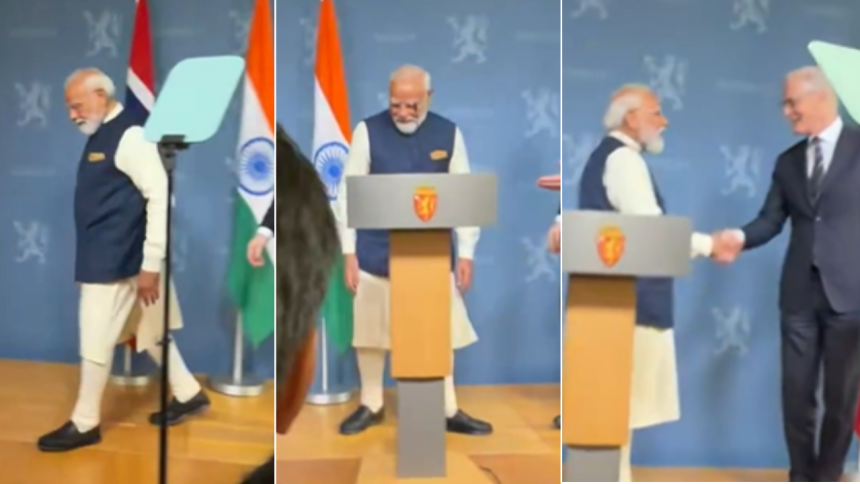
Indian Prime Minister Narendra Modi’s recent visit to Norway has made headlines worldwide, but not for the reasons he might have hoped. A video clip showing the Prime Minister walking away from a Norwegian journalist who asked him to answer questions has sparked a global conversation about transparency and accountability in governance. The incident has been widely shared on social media, with many criticising the Prime Minister’s behaviour as evasive and dismissive.
Political Reactions in India
Lok Sabha Leader of Opposition Rahul Gandhi was quick to seize on the opportunity, sharing the video on social media and accusing the Prime Minister of being unable to face tough questions. Gandhi’s tweet sparked a flurry of reactions from supporters and critics alike, with many weighing in on the implications of the incident for Indian democracy. The opposition has long accused the Modi government of being secretive and unresponsive to criticism, and this latest incident has only added fuel to the fire.
The incident has also highlighted the differences in media culture between India and Norway. While Indian journalists often face intense pressure and intimidation, their Norwegian counterparts are known for their fearlessness and willingness to ask tough questions. The fact that a Norwegian journalist felt empowered to ask the Prime Minister to account for his actions is a testament to the strength of Norway’s democratic institutions and its free press.
Global Implications
The video clip has been viewed millions of times around the world, with many international observers expressing surprise and dismay at the Prime Minister’s behaviour. The incident has sparked a global conversation about the importance of a free press and the need for leaders to be accountable to their citizens. As India seeks to assert its influence on the world stage, incidents like this one can damage its reputation and undermine its credibility as a democratic power.
The Norwegian journalist’s question was reportedly about India’s human rights record, a topic that has been the subject of intense international scrutiny in recent years. The fact that the Prime Minister was unwilling to engage with the question has only added to concerns about India’s commitment to democratic values and human rights. As the country seeks to build its reputation as a responsible global player, it will need to do more to address these concerns and demonstrate its willingness to engage with criticism and dissent.
Conclusion and Future Implications
The incident in Norway is a reminder that leaders must be willing to face tough questions and criticism if they are to be taken seriously on the world stage. As India continues to grow and evolve as a democratic power, it will need to find ways to balance its desire for international influence with its need to maintain transparency and accountability at home. The country’s leaders must be willing to engage with criticism and dissent, and to demonstrate their commitment to democratic values and human rights.
The future implications of this incident are far-reaching and complex. It remains to be seen how the Indian government will respond to the fallout, and what steps it will take to address the concerns that have been raised. One thing is certain, however: the incident has highlighted the need for greater transparency and accountability in Indian governance, and the importance of a free press in holding leaders to account. As the country moves forward, it will be important to keep these values at the forefront of its development and growth.