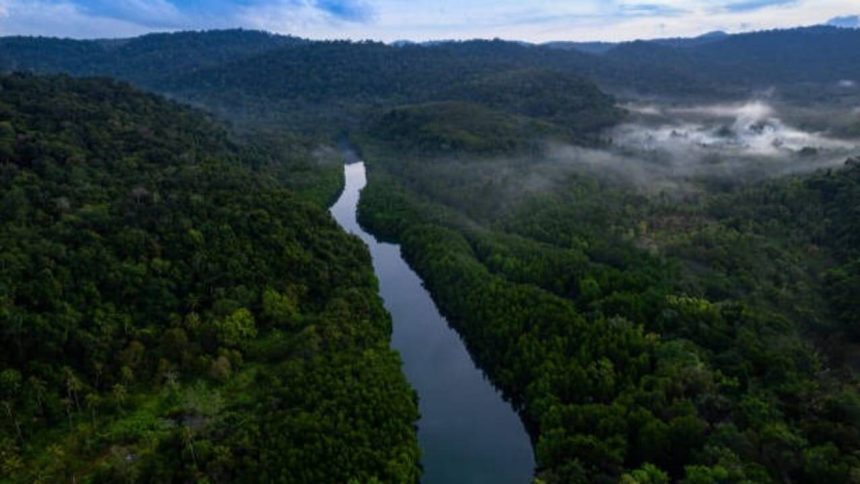
Tropical forests, often referred to as the lungs of the planet, are facing a new challenge in the face of rising global temperatures. As the Earth continues to warm at an unprecedented rate, millions of hectares of tropical forests are being forced out of their climatic comfort zones, leading to a decline in their ability to undergo photosynthesis.
Photosynthesis is the process by which trees absorb carbon dioxide from the atmosphere and release oxygen, a vital function that enables them to grow and thrive. However, as temperatures rise, the delicate balance of this process is disrupted, resulting in inefficient photosynthesis and reduced tree growth. This phenomenon has been observed in tropical forests across the globe, including those in the Amazon and Congo basins, where temperatures are reaching levels that are outside the normal operating range for these forests.
The study, published in the Proceedings of the National Academy of Sciences, reveals that 57 million hectares of tropical forests are experiencing temperatures that interfere with photosynthesis. This area is equivalent to nearly 10% of the world’s tropical forests, a staggering figure that highlights the severity of the issue. As a result, these forests are no longer able to absorb carbon dioxide at the same rate as they once did, exacerbating the problem of climate change.
A Threat to Global Ecosystems
Tropical forests are not only critical for maintaining global ecosystems, but they also play a vital role in regulating the climate. They are home to a vast array of plant and animal species, many of which are found nowhere else on Earth. The loss of these forests would not only have devastating consequences for biodiversity, but it would also lead to the release of massive amounts of stored carbon into the atmosphere, further accelerating climate change.
The study’s findings have significant implications for our understanding of the impact of global warming on tropical forests. As temperatures continue to rise, it is likely that even more hectares of forest will be forced out of their comfort zones, leading to a decline in photosynthesis and reduced tree growth. This would have far-reaching consequences for global ecosystems, including the loss of biodiversity and an increase in greenhouse gas emissions.
The research highlights the need for urgent action to protect tropical forests from the impacts of global warming. This can be achieved through a combination of conservation efforts, such as reforestation and reduced deforestation, as well as the implementation of policies to reduce greenhouse gas emissions. By taking action now, we can help to safeguard the world’s tropical forests and ensure their continued ability to absorb carbon dioxide and regulate the climate.
Consequences for Human Health
The loss of tropical forests would also have significant consequences for human health. These forests are a vital source of medicine, with many plant species found within them having the potential to provide new treatments for a range of diseases. The reduction in photosynthesis would also lead to a decrease in oxygen production, having a direct impact on human health and well-being.
Furthermore, the loss of tropical forests would also lead to a decline in the production of fruits, nuts, and other essential food sources, exacerbating the problem of food insecurity and malnutrition. This would have far-reaching consequences for human health, particularly in areas where access to nutritious food is already limited.
The study’s findings serve as a stark reminder of the urgent need for action to protect tropical forests from the impacts of global warming. By taking action now, we can help to safeguard the world’s tropical forests and ensure their continued ability to absorb carbon dioxide and regulate the climate, ultimately protecting human health and well-being.
A Call to Action
The study’s findings are a wake-up call for governments, conservation organizations, and individuals to take action to protect tropical forests from the impacts of global warming. This can be achieved through a combination of conservation efforts, policy changes, and individual actions to reduce our carbon footprint.
By working together, we can help to safeguard the world’s tropical forests and ensure their continued ability to absorb carbon dioxide and regulate the climate. This is not just a moral imperative, but a critical step in mitigating the impacts of climate change and protecting human health and well-being.
As we move forward, it is essential that we prioritize the protection of tropical forests and take urgent action to address the impacts of global warming. This can be achieved through a combination of short-term and long-term strategies, including the implementation of policies to reduce greenhouse gas emissions, the establishment of protected areas, and the promotion of sustainable land-use practices.
The future of tropical forests is in our hands, and it is time for us to take action to safeguard their future. By working together, we can protect these vital ecosystems and ensure their continued ability to absorb carbon dioxide and regulate the climate, ultimately protecting human health and well-being.
As the Earth continues to warm, it is clear that tropical forests are facing a new challenge. However, with urgent action, we can help to safeguard their future and ensure their continued ability to absorb carbon dioxide and regulate the climate. The time for action is now.