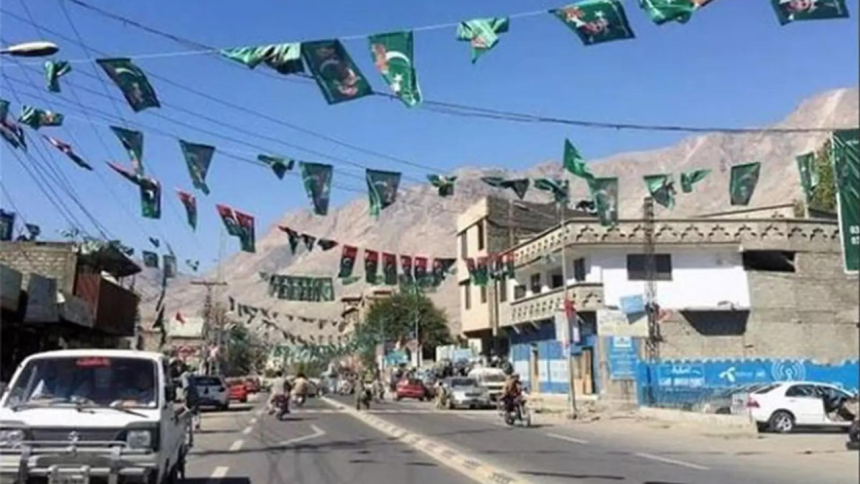
India has strongly protested against Pakistan’s decision to hold general elections in the Gilgit-Baltistan assembly, a region that is part of the disputed Pakistan-occupied Kashmir territory. The Ministry of External Affairs lodged a formal complaint on Friday, reiterating India’s claim over the region and stating that any elections held there would be considered null and void. The move is seen as an attempt by Pakistan to solidify its control over the region, which has been a point of contention between the two nations for decades.
Historical Context
The Gilgit-Baltistan region has been a source of tension between India and Pakistan since the partition of India in 1947. The region was initially part of the princely state of Jammu and Kashmir, but was annexed by Pakistan in 1947. Since then, India has maintained that the region is an integral part of its territory, while Pakistan has claimed it as its own. The region has been governed by Pakistan through a federal council, but the elections planned for this year would mark a significant shift in the region’s governance structure.
The Indian government has consistently opposed any attempts by Pakistan to alter the status of the region, and the latest move is seen as a provocation. The Ministry of External Affairs has stated that any elections held in Gilgit-Baltistan would be considered illegitimate and would not be recognized by India. The move is also seen as an attempt by Pakistan to deflect attention from its own human rights record in the region, where there have been reports of oppression and suppression of the local population.
Geopolitical Implications
The decision by Pakistan to hold elections in Gilgit-Baltistan has significant geopolitical implications. The region is strategically located, bordering China’s Xinjiang province and Afghanistan. The Chinese government has invested heavily in the region, including the construction of the China-Pakistan Economic Corridor, which passes through Gilgit-Baltistan. The Indian government is concerned that the elections could pave the way for increased Chinese influence in the region, which would be detrimental to India’s national security interests.
The move is also seen as an attempt by Pakistan to strengthen its claim over the region, which could have implications for the larger Kashmir dispute. The Indian government has long maintained that the Kashmir issue can only be resolved through bilateral talks with Pakistan, but the latest move is seen as an attempt to undermine this position. The international community has been urged to take note of the situation and to recognize India’s legitimate claims over the region.
Diplomatic Fallout
The decision by Pakistan to hold elections in Gilgit-Baltistan is likely to have significant diplomatic fallout. The Indian government has already summoned the Pakistani high commissioner to protest the move, and there are reports of increased tensions between the two nations. The move is also likely to affect India’s relations with other nations, including China, which has significant economic interests in the region.
The Indian government has called on the international community to recognize the illegitimacy of the elections and to support India’s position on the Kashmir issue. The move is seen as a test of India’s diplomatic strength, and the government is likely to face significant challenges in the coming weeks and months. As the situation continues to unfold, one thing is clear: the dispute over Gilgit-Baltistan is far from over, and the region is likely to remain a point of contention between India and Pakistan for years to come.
The latest developments in the region have significant implications for regional stability and security. The Indian government has reiterated its commitment to protecting the country’s national interests and has warned Pakistan against any further attempts to alter the status of the region. As the situation continues to unfold, the world will be watching with bated breath, wondering what the future holds for this disputed region and the millions of people who call it home. The Indian government’s strong stance on the issue is a clear indication of its resolve to protect the country’s territorial integrity, and it remains to be seen how Pakistan will respond to the latest developments.