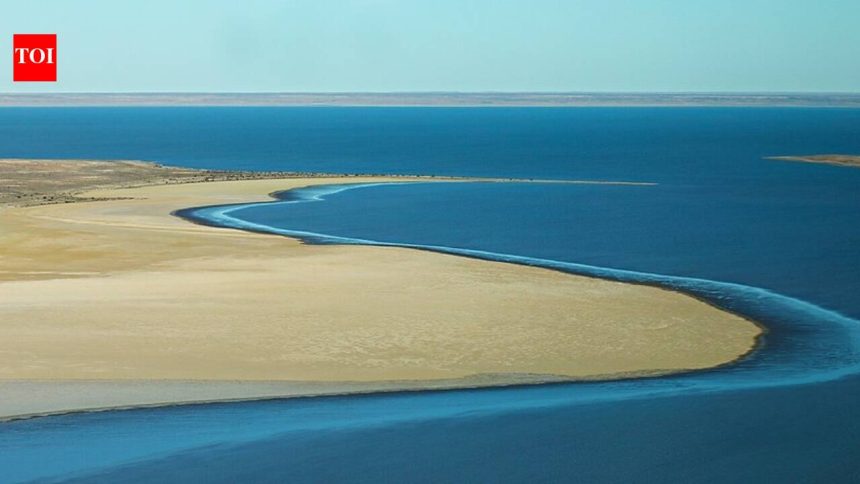
The vast expanse of Kati Thanda-Lake Eyre, a seemingly endless salt lake in the parched heart of Australia, has long fascinated generations of dreamers and engineers. For decades, the lake has inspired ambitious proposals to bring much-needed water to the arid interior, with the ultimate goal of reviving a once-thriving ecosystem. One such vision, proposed in the 1950s, involved constructing a 320-kilometer ocean canal to flood the lake with seawater. The idea was to capitalize on the lake’s unique geography, lying about 15 meters below sea level, and its proximity to the coast, making it an attractive recipient of seawater from the nearby ocean.
Engineering a Miracle?
At first glance, the plan seemed logical and even brilliant. The lake’s low elevation and proximity to the coast made it seem well-suited to receive seawater, which would then flow into the lake and quench the thirst of the surrounding landscape. However, as engineers began to explore the feasibility of the project, they soon discovered that the water would evaporate rapidly, negating the very purpose of the endeavour. The harsh Australian climate, characterized by scorching temperatures and strong winds, would cause the seawater to evaporate at an alarming rate, leaving the lake dry and barren once again.
The project’s proponents had overlooked a crucial aspect of the Australian environment – the extreme climate. The engineers had underestimated the rate at which the water would evaporate, failing to consider the long-term implications of their plan. As a result, the proposal was met with skepticism and eventually abandoned, a testament to the challenges of engineering in a hostile and unforgiving environment.
Legacy of a Lost Vision
Despite the failure of the seawater proposal, the legacy of the project lives on, serving as a reminder of the complexities and challenges of environmental engineering in Australia. The story of Lake Eyre’s would-be saviour serves as a cautionary tale, highlighting the importance of considering the long-term implications of large-scale projects. The proposal’s abandonment also underscores the need for careful consideration and planning in the face of uncertainty and unpredictability.
Today, Lake Eyre remains a symbol of Australia’s arid and unforgiving landscape, a constant reminder of the challenges that lie ahead in the pursuit of environmental sustainability. While the seawater proposal may have been a bold and ambitious idea, its failure serves as a valuable lesson in the importance of careful planning and consideration in the face of environmental uncertainty.
A Path Forward?
As Australia continues to grapple with the challenges of drought and environmental sustainability, the story of Lake Eyre’s would-be saviour serves as a reminder of the importance of innovative and forward-thinking solutions. While the seawater proposal may have been a lost cause, it has inspired a new generation of engineers and environmentalists to explore alternative solutions, such as cloud seeding and water harvesting, that can help mitigate the effects of drought in the region. By learning from the past and embracing a more nuanced understanding of the Australian environment, we may yet find a way to revive the parched landscape and bring life back to the arid interior.
As we look to the future, it is clear that the challenges facing Australia are complex and multifaceted. However, by embracing a spirit of innovation and experimentation, we may yet find a way to overcome the obstacles that lie ahead and create a more sustainable and resilient future for generations to come.