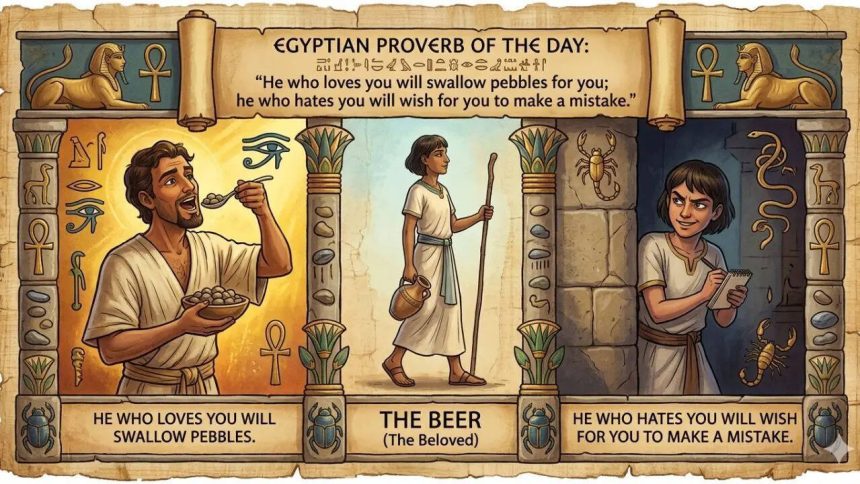
The Egyptian proverb ‘He who loves you will swallow pebbles for you; he who hates you will extract milk from you’ is a striking reminder of the depths of human devotion and the harsh realities of loyalty. This ancient saying has been passed down for generations, offering a glimpse into the complexities of human relationships and the sacrifices we make for those we care about. At its core, the proverb highlights the selfless nature of love and the often-painful consequences of hatred, forcing us to confront the duality of human emotions and the true meaning of loyalty.
Loyalty and Sacrifice
The first part of the proverb, ‘He who loves you will swallow pebbles for you,’ suggests that true love and devotion require a willingness to endure difficulties and make sacrifices for the benefit of the other person. This can involve putting someone else’s needs before our own, even if it means suffering or experiencing discomfort. The image of swallowing pebbles is a powerful metaphor for the idea that love can compel us to overcome even the most challenging obstacles. By examining this aspect of the proverb, we can gain a deeper understanding of the ways in which loyalty and sacrifice are intertwined, and how these values are essential for building strong, lasting relationships.
Moreover, the concept of sacrifice is closely tied to the idea of loyalty, as it demonstrates a commitment to prioritizing the needs of others above our own. When we are willing to make sacrifices for someone we love, we are, in effect, demonstrating our loyalty and devotion to that person. This can take many forms, from making small sacrifices in our daily lives to making more significant, long-term commitments. By exploring the complexities of sacrifice and loyalty, we can gain a richer understanding of the ways in which these values shape our relationships and inform our interactions with others.
The Dark Side of Human Nature
The second part of the proverb, ‘he who hates you will extract milk from you,’ reveals a darker aspect of human nature, one in which people seek to exploit and harm others for their own gain. The image of extracting milk is a stark contrast to the idea of swallowing pebbles, as it suggests a desire to take without giving, to profit from someone else’s suffering. This part of the proverb serves as a warning, reminding us that not everyone has our best interests at heart and that some people may seek to harm us, even if it means disguising their intentions behind a mask of kindness or friendship.
This aspect of the proverb also highlights the importance of being cautious in our relationships and of being aware of the potential for exploitation or harm. By recognizing the ways in which others may seek to take advantage of us, we can take steps to protect ourselves and to cultivate healthier, more positive relationships. Furthermore, by acknowledging the darker aspects of human nature, we can work to create a more compassionate and empathetic world, one in which people are valued and respected for who they are, rather than being seen as means to an end.
Lessons for Modern Times
The Egyptian proverb offers valuable lessons for modern times, reminding us of the importance of loyalty, sacrifice, and compassion in our relationships. In an era where self-interest and exploitation often seem to dominate, this ancient saying encourages us to re-examine our values and to prioritize the well-being of others. By embracing the principles of loyalty and sacrifice, we can build stronger, more meaningful relationships and create a more just and equitable society. As we navigate the complexities of human relationships, the proverb serves as a powerful reminder of the transformative power of love and devotion, and the importance of cultivating these values in our own lives.
Ultimately, the Egyptian proverb ‘He who loves you will swallow pebbles for you; he who hates you will extract milk from you’ is a powerful reminder of the enduring power of human emotions and the importance of cultivating loyalty, compassion, and empathy in our relationships. As we reflect on the wisdom of this ancient saying, we are invited to consider the ways in which we can apply its lessons to our own lives, and to strive for a deeper understanding of the complexities of human nature. By doing so, we can work to create a more just, compassionate, and loving world, one that values the well-being and dignity of all people.