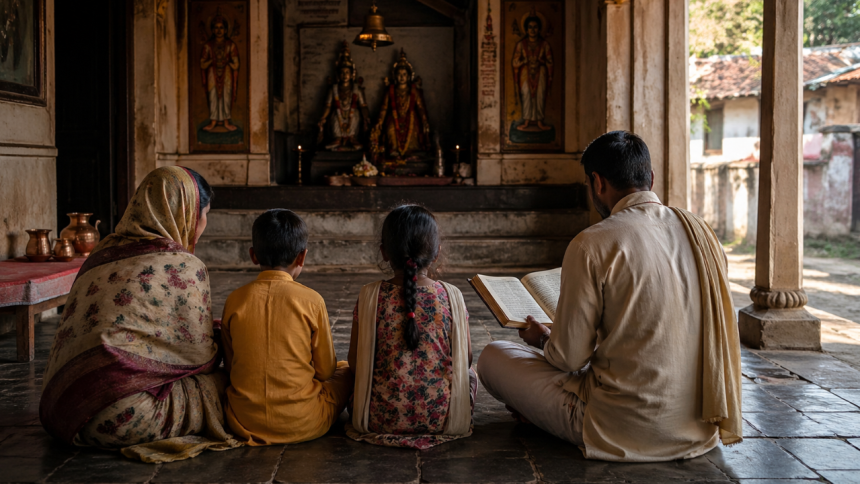
Parenting is an art that requires patience, love, and wisdom. It’s not just about setting rules and boundaries, but also about shaping a child’s character, teaching them how to think, respond to pressure, and interact with others. One ancient text that has stood the test of time in providing valuable guidance for parents is the Bhagavad Gita. This sacred Hindu scripture offers profound wisdom on duty, discipline, courage, self-control, and emotional balance – qualities essential for a child’s growth and development. By incorporating these timeless lessons into their parenting approach, parents can help their children become stronger, steadier, and more resilient individuals.
Lesson 1: Embracing Duty and Responsibility
The Bhagavad Gita teaches that duty is a fundamental aspect of life, and that every individual has a role to play in contributing to the greater good. For children, this means learning to take responsibility for their actions and their place in the world. Parents can encourage their children to participate in community service, volunteer work, or other activities that promote a sense of duty and social responsibility. By doing so, children develop a strong work ethic, empathy, and a deeper understanding of their place in society.
One way to instill a sense of duty in children is by involving them in household chores and encouraging them to take ownership of their tasks. This helps them develop a sense of responsibility and teaches them the value of contributing to the family. As they grow older, this sense of duty can extend to their academic and professional pursuits, enabling them to become confident, capable, and contributing members of society.
Lesson 2: Cultivating Discipline and Self-Control
The Bhagavad Gita emphasizes the importance of self-control and discipline in achieving one’s goals. For children, this means learning to regulate their emotions, behaviors, and desires. Parents can help their children develop self-control by setting clear boundaries, encouraging mindfulness and self-awareness, and modeling healthy behaviors themselves. By doing so, children learn to manage their impulses, make wise decisions, and develop a strong sense of self-discipline.
One effective way to promote self-control in children is by teaching them mindfulness techniques, such as deep breathing, meditation, or yoga. These practices help children develop greater awareness of their thoughts, feelings, and actions, enabling them to make more informed choices and respond to challenges with greater ease and resilience.
Lesson 3: Embracing Courage and Resilience
The Bhagavad Gita teaches that courage is a vital quality for overcoming obstacles and achieving success. For children, this means learning to face their fears, take calculated risks, and persevere in the face of adversity. Parents can encourage their children to develop courage by modeling resilience themselves, encouraging them to try new things, and providing a supportive environment for them to take risks and learn from their mistakes.
One way to foster courage in children is by encouraging them to participate in sports, music, or other activities that promote a sense of accomplishment and confidence. By doing so, children develop a growth mindset, learn to overcome obstacles, and build the resilience they need to navigate life’s challenges.
By incorporating these timeless lessons from the Bhagavad Gita into their parenting approach, parents can help their children become stronger, steadier, and more resilient individuals. By teaching them the value of duty, discipline, courage, self-control, and emotional balance, parents can empower their children to thrive in an ever-changing world and make a positive impact on their communities.