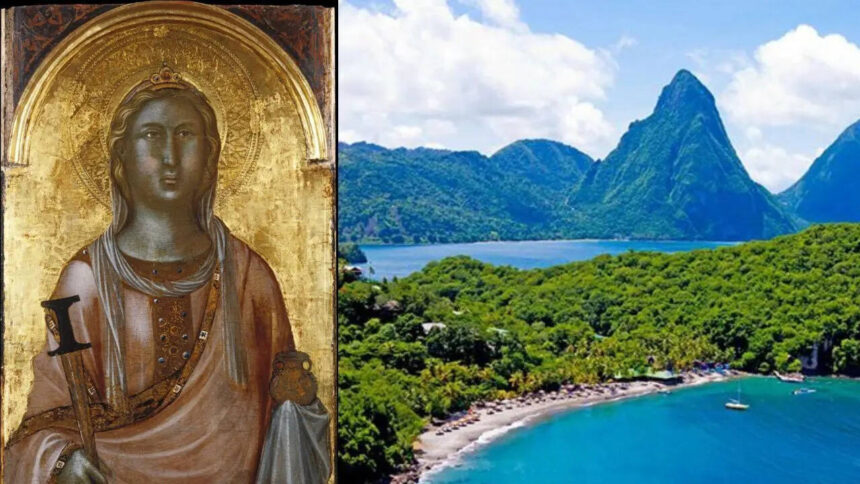
The world is home to 193 countries, each with its own unique history and cultural heritage. However, only one of these countries bears the name of a real woman – Saint Lucia, a small island nation located in the eastern Caribbean Sea. The story of how this country came to be named after a woman begins nearly 1,700 years ago, and it is a fascinating tale that weaves together threads of history, religion, and geography.
The Historical Context
The country of Saint Lucia is named after Saint Lucy, a Christian martyr who lived in the 4th century AD. Born in Syracuse, Sicily, Lucy was a beautiful and devout young woman who dedicated her life to serving the poor and the sick. Her kindness and generosity earned her a reputation as a holy woman, and she was eventually canonized as a saint by the Catholic Church. The story of Saint Lucy’s life and death has been passed down through the centuries, and it is a testament to the enduring power of faith and compassion.
The island of Saint Lucia was discovered by European explorers in the 15th century, and it was named after the saint by French colonizers. The French established a settlement on the island, which they called Sainte-Lucie, and it quickly became a strategic outpost in the Caribbean. Over time, the island changed hands several times, with the British eventually gaining control of it in the 19th century. Despite the changes in ownership, the name of the island remained the same, a lasting tribute to the saint who had inspired it.
The Cultural Significance
Today, the country of Saint Lucia is a vibrant and diverse nation, with a rich cultural heritage that reflects its history and geography. The island is home to a mix of African, European, and indigenous peoples, and this diversity is reflected in its music, art, and cuisine. The Saint Lucians are proud of their history and their cultural traditions, and they celebrate their heritage with a series of festivals and events throughout the year. The most important of these festivals is the Saint Lucia Day celebration, which takes place on December 13th and honors the life and legacy of the saint.
The cultural significance of Saint Lucia extends beyond its borders, as well. The country has become a popular tourist destination, attracting visitors from around the world with its stunning natural beauty and rich cultural heritage. The island is home to a range of historic sites, including the famous twin volcanic peaks, the Pitons, and the historic town of Soufrière. Visitors can also experience the local culture by attending a festival or event, or by visiting one of the many museums and cultural centers on the island.
The Lasting Legacy
As we reflect on the story of Saint Lucia, we are reminded of the lasting power of history and culture to shape our lives and our identities. The country’s namesake, Saint Lucy, was a woman of remarkable faith and compassion, and her legacy continues to inspire people around the world. The island of Saint Lucia is a testament to the enduring impact of her life and teachings, and it remains a source of pride and inspiration for its people.
The story of Saint Lucia is also a reminder of the importance of preserving our cultural heritage and honoring the memories of those who have come before us. As we look to the future, we must also remember the past and the people who have shaped our world. The country of Saint Lucia is a shining example of this, and it continues to inspire us with its rich history, vibrant culture, and stunning natural beauty. As we celebrate the life and legacy of Saint Lucy, we are also celebrating the power of faith, compassion, and cultural heritage to transform our lives and our world.