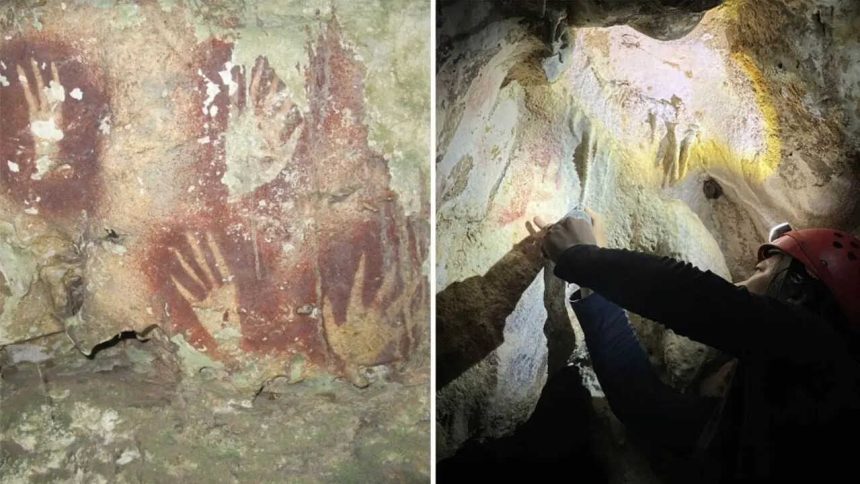
The discovery of 67,800-year-old cave art in a limestone cave on Muna Island in southeastern Indonesia has sent shockwaves through the academic community, as it sheds new light on the evolution of human creativity and expression. The faint set of markings on the stone, which can only be fully appreciated when the light catches it from a specific angle, has been recognized by Guinness World Records as the oldest known cave art. This remarkable find has sparked intense interest among scholars, who are eager to unravel the secrets of this ancient artwork and its significance in the context of human history.
The Discovery and Its Significance
The cave art, which features a series of pigmented markings, was discovered by a team of archaeologists who were conducting a thorough examination of the cave. The team used advanced dating techniques to determine the age of the artwork, which was found to be significantly older than previously thought. The discovery has major implications for our understanding of human evolution, as it suggests that early humans were capable of complex thought and creative expression much earlier than previously believed.
The cave art is a testament to the ingenuity and creativity of our ancient ancestors, who used available materials to create intricate and meaningful designs. The fact that this artwork has survived for thousands of years is a remarkable testament to the enduring power of human creativity and the importance of preserving our cultural heritage. As scholars continue to study the cave art, they are gaining a deeper understanding of the lives and experiences of early humans, and the ways in which they interacted with their environment.
The Cultural Context of Cave Art
Cave art is a universal phenomenon that can be found in many parts of the world, from the caves of Lascaux in France to the rock art of Australia. These ancient artworks provide a unique window into the lives and cultures of early humans, and offer valuable insights into their spiritual and artistic practices. The Indonesian cave art is particularly significant, as it is one of the oldest and most well-preserved examples of cave art in the world.
The discovery of the Indonesian cave art has also sparked interest in the cultural context in which it was created. Scholars are working to reconstruct the lives and experiences of the people who created the artwork, and to understand the symbolic and spiritual significance of the designs. This research has the potential to shed new light on the history and culture of the region, and to provide a deeper understanding of the ways in which early humans interacted with their environment.
Preserving Our Cultural Heritage
The discovery of the Indonesian cave art is a powerful reminder of the importance of preserving our cultural heritage. The artwork is a fragile and irreplaceable part of our shared human history, and it is essential that we take steps to protect and conserve it for future generations. This requires a coordinated effort from scholars, conservationists, and policymakers, who must work together to ensure that the artwork is properly preserved and protected.
The recognition of the Indonesian cave art by Guinness World Records is a major milestone in the preservation of our cultural heritage. It highlights the importance of this artwork and the need to protect it for future generations. As we continue to learn more about the cave art and its significance, we are reminded of the power of human creativity and the importance of preserving our cultural heritage. The discovery of the Indonesian cave art is a remarkable find that has the potential to rewrite the history of human evolution and creativity, and it is essential that we take steps to protect and conserve it for generations to come.