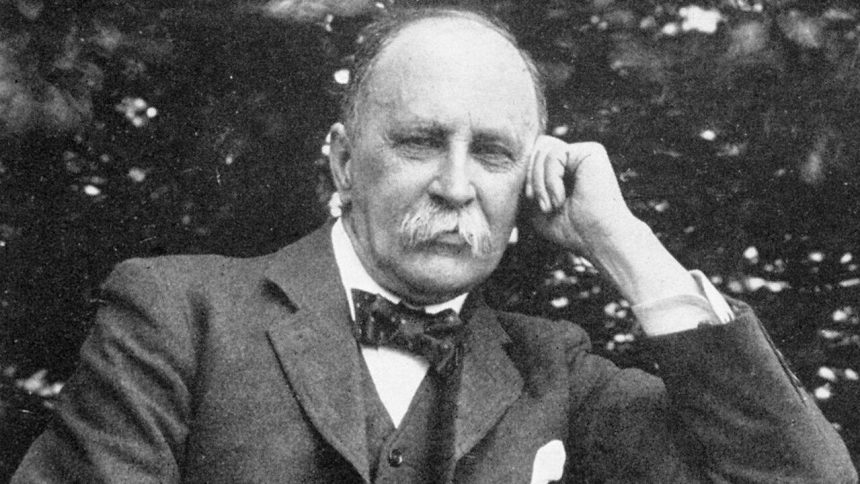
The world of science is often marked by a profound irony: those who pioneer groundbreaking ideas are not always the ones who receive the credit. This phenomenon is aptly captured by the words of Canadian physician Sir William Osler, who once said, ‘In science the credit goes to the man who convinces the world, not to the man to whom the idea first occurs.’ This quote highlights the harsh reality that history is replete with individuals who conceived brilliant concepts, only to have someone else later articulate them more clearly, champion them more vigorously, and ultimately claim the fame. The tale of Rosalind Franklin and James Watson, for instance, is a stark reminder of how the scientific community can overlook the contributions of its most innovative minds.
The Overlooked Pioneers
One of the most striking examples of this phenomenon is the story of Rosalind Franklin, a British biophysicist and X-ray crystallographer who made significant contributions to the understanding of the structure of DNA. Her data and photographs, particularly ‘Photograph 51,’ were instrumental in James Watson and Francis Crick’s development of the double helix model of DNA. However, Franklin’s role in this discovery was largely marginalized, and it was not until many years later that her contributions were fully acknowledged. This episode serves as a poignant reminder of how the scientific community can overlook the contributions of its most innovative minds, often due to factors such as gender, race, or social status.
The case of Franklin is not an isolated incident. Throughout history, numerous scientists have been denied the recognition they deserved for their pioneering work. The story of Antoine Lavoisier, who first identified the elements oxygen and hydrogen, is another example. Although Lavoisier’s discoveries revolutionized the field of chemistry, his contributions were not fully recognized until after his death. Similarly, the work of Mary Anning, a British paleontologist who discovered several important fossils, was often attributed to her male counterparts, highlighting the pervasive nature of this problem in the scientific community.
The Politics of Scientific Discovery
The reasons behind this phenomenon are complex and multifaceted. One major factor is the politics of scientific discovery, where the ability to communicate and promote one’s ideas can be just as important as the ideas themselves. In many cases, scientists who are more skilled at self-promotion or have greater access to resources and networks are more likely to receive credit for their work. This can lead to a situation where the most charismatic or well-connected scientist, rather than the most brilliant or innovative one, receives the lion’s share of the recognition.
Another factor is the social and cultural context in which scientific discoveries are made. In many fields, there is a pervasive bias towards recognizing the contributions of certain groups or individuals over others. For example, women and minorities have historically been underrepresented in many scientific fields, and their contributions have often been overlooked or undervalued. This can create a self-perpetuating cycle, where the lack of recognition for certain groups or individuals reinforces their marginalization and makes it even more difficult for them to receive the credit they deserve.
Rethinking the Narrative of Scientific Progress
So, how can we work to create a more inclusive and equitable narrative of scientific progress? One approach is to actively seek out and recognize the contributions of overlooked scientists, particularly those from underrepresented groups. This can involve reexamining the historical record, acknowledging the role of unseen collaborators, and highlighting the achievements of marginalized scientists. By doing so, we can work to create a more nuanced and accurate understanding of the scientific process, one that reflects the diverse contributions and perspectives of all scientists.
Ultimately, the story of science is one of human curiosity and ingenuity, driven by the contributions of countless individuals from all walks of life. By recognizing and celebrating the achievements of all scientists, regardless of their background or circumstances, we can work to create a more just and equitable scientific community, one that truly reflects the power and diversity of human knowledge and innovation. As we move forward, it is essential that we remember the words of Sir William Osler and strive to create a world where credit is given to those who deserve it, regardless of their ability to convince the world.