{“title”:”The Simple Truth: Unpacking the Genius of Isaac Newton’s Elegant Philosophy”,”content”:”
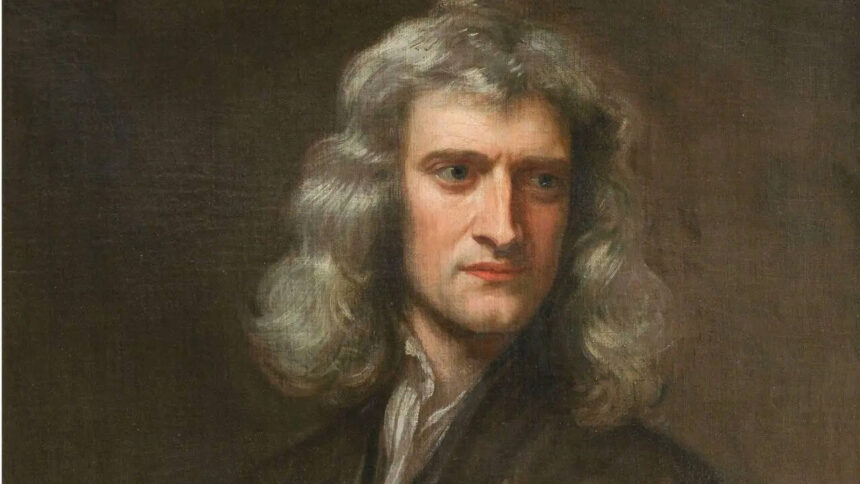
No one would argue that Sir Isaac Newton was a man of great complexity. His groundbreaking contributions to the fields of mathematics and physics continue to inspire scientists and thinkers to this day. Yet, despite his towering intellect, Newton’s greatest legacy may not be his theories of universal gravitation or calculus, but rather his profound insight into the nature of truth itself. In one simple yet profound sentence, Newton encapsulated the essence of his philosophy: “Truth is ever to be found in simplicity, and not in the multiplicity of causes or the crammed womb of compounded and artificial labyrinths.” These words, penned over three centuries ago, remain as relevant today as they were when first written, challenging us to reexamine our assumptions about the nature of knowledge and the path to understanding.
The Tyranny of Complexity
Our culture often prizes complexity over simplicity. We seek out elaborate explanations, layered narratives, and sophisticated terminology. We assume that the smartest answer must be the most complicated one, replete with jargon and technical details. But Newton’s philosophy suggests that this is a misguided approach. In fact, the more complex our explanations, the less likely we are to grasp the underlying truth. This is because complexity often obscures rather than illuminates, hiding the essential simplicity of a concept behind a veil of unnecessary detail. By contrast, simplicity is a key to unlocking the secrets of the universe. It allows us to see the world in its raw, unvarnished form, unencumbered by the artificial constructs of our own making.
Consider, for example, the concept of gravity. We often think of gravity as a mysterious, otherworldly force that warps the fabric of space-time. But Newton saw gravity as a simple, elegant phenomenon, a manifestation of the natural world that operates according to clear and well-defined laws. This perspective is not only more intuitive, but also more powerful, allowing us to predict and understand the behavior of celestial bodies with unprecedented accuracy. By stripping away the complexity, we reveal the underlying simplicity of the universe, and it is this simplicity that holds the key to true understanding.
The Power of Elegant Explanations
Newton’s emphasis on simplicity is not only a philosophical position, but also a practical guide for scientists and thinkers. When we seek to explain complex phenomena, we often resort to convoluted theories and elaborate models. But these approaches are not only cumbersome, but also often misleading. By contrast, elegant explanations – those that are simple, clear, and concise – are far more effective. They do not obscure the underlying truth, but rather reveal it in all its glory. This is because elegant explanations are based on a deep understanding of the subject matter, and are therefore more likely to capture the essential character of the phenomenon being described. As a result, they are not only more intuitive, but also more powerful, allowing us to see the world in a new and unexpected way.
Consider, for example, the theory of evolution. We often think of evolution as a complex, multi-faceted process that operates according to a wide range of mechanisms. But Charles Darwin’s elegant explanation of evolution through natural selection is a beautiful example of how simplicity can be used to illuminate the underlying truth. By stripping away the complexity, Darwin revealed the simple, yet profound, mechanism of evolution, and it is this mechanism that has allowed us to understand the diversity of life on Earth in unprecedented detail.
The Legacy of Newton’s Philosophy
Newton’s philosophy of simplicity has had a profound impact on the development of modern science. By emphasizing the importance of clear, concise explanations, Newton encouraged scientists to seek out the underlying truth, rather than getting bogged down in unnecessary complexity. This approach has been adopted by scientists across a wide range of disciplines, from physics and mathematics to biology and chemistry. It has allowed us to make progress at an unprecedented rate, and has revealed the underlying simplicity of the universe in ways that were previously unimaginable.
But Newton’s philosophy of simplicity is not limited to science. It has implications for our understanding of the world, and our place within it. By seeking out the simple, elegant explanations that underlie complex phenomena, we are able to see the world in a new and unexpected way. We are able to appreciate the beauty and wonder of the natural world, and to understand our own place within it. This is the greatest legacy of Newton’s philosophy, and it is one that continues to inspire scientists and thinkers to this day.
As we look to the future, we would do well to remember Newton’s words: “Truth is ever to be found in simplicity, and not in the multiplicity of causes or the crammed womb of compounded and artificial labyrinths.” By embracing the simplicity of Newton’s philosophy, we may yet unlock the secrets of the universe, and reveal the underlying truth that lies at the heart of all things.
“,”excerpt”:”Isaac Newton’s philosophy of simplicity has had a profound impact on the development of modern science. By emphasizing the importance of clear, concise explanations, Newton encouraged scientists to seek out the underlying truth, rather than getting bogged down in unnecessary complexity.”,”tags”:[“science”,”philosophy”,”simpllicity”,”elegant explanations”,”Isaac Newton”],”meta_description”:”Discover how Isaac Newton’s philosophy of simplicity has shaped the course of modern science and continues to inspire scientists and thinkers today.”}