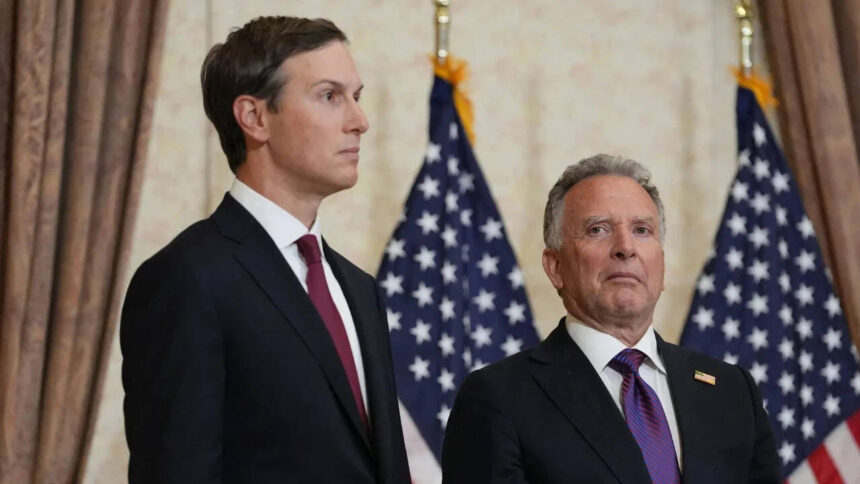
The diplomatic efforts between the United States and Iran hit a snag in Doha, Qatar on Tuesday, where top US envoys Steve Witkoff and Jared Kushner held meetings with Qatari mediators. While the two sides had initially hinted at the possibility of direct talks, Tehran and Doha swiftly contradicted the notion, sparking uncertainty over the fate of these negotiations. The conflicting accounts have left many questioning the sincerity of the diplomatic push, which has been ongoing for months.
Qatari Mediation Faces Challenge
The Qatari government has played a crucial role in facilitating these high-stakes negotiations, hosting multiple rounds of talks between US and Iranian officials. However, their efforts appear to have hit a roadblock, with Tehran insisting that there will be no direct or high-level meetings between the two sides. The Iranian Foreign Ministry reiterated this stance, saying that any further talks would need to be conducted through Qatari mediators. This development has raised concerns that the talks may be heading towards a stalemate.
The Qatari government’s role in the negotiations has been pivotal, given their historical ties with both the US and Iran. Qatar’s Foreign Minister, Mohammed bin Abdulrahman Al Thani, has been instrumental in brokering the talks, which aim to address key issues such as Iran’s nuclear program and regional security concerns. Despite the current impasse, diplomats remain hopeful that the negotiations can still yield positive results.
Tensions Run High Amid US-Iran Standoff
The lack of direct talks between US and Iranian officials has not gone unnoticed by international observers, who point to the ongoing tensions between the two nations. The US has long been critical of Iran’s nuclear program, while Tehran has accused Washington of interfering in its internal affairs. The situation has been further complicated by the presence of US troops in the region, which has fueled Iranian concerns about military intervention. The diplomatic impasse has also raised fears of a potential escalation in the region.
The presence of US envoys in Doha underscores the importance of these negotiations, which have the potential to ease tensions between the two nations. However, the conflicting accounts from Tehran and Doha have cast a shadow over the talks, leaving many to wonder whether a breakthrough is possible. Diplomats are urging caution, emphasizing that the negotiations are complex and multifaceted. Despite the obstacles, they remain optimistic that a mutually beneficial agreement can be reached.
A Delicate Balancing Act
The Doha talks have been marked by a delicate balancing act, with both sides seeking to navigate the complexities of the negotiations. The US is under pressure from its regional allies, particularly Israel, to take a tougher stance on Iran’s nuclear program. Meanwhile, Tehran is facing domestic opposition from hardline factions, which have long been critical of any concessions to the US. The Qatari mediators are walking a tightrope, trying to balance the competing interests of both sides while maintaining the momentum of the talks.
The diplomatic efforts in Doha are a testament to the enduring nature of the US-Iran standoff. Despite the setbacks, diplomats remain committed to finding a peaceful resolution to the crisis. As the talks continue, the international community will be watching closely, hoping that a breakthrough can be achieved. The stakes are high, but the potential reward is a significant reduction in tensions between two nations that have been locked in a cycle of animosity for decades.
The diplomatic push in Doha has been marked by a mix of optimism and caution, as both sides seek to navigate the complexities of the negotiations. While the conflicting accounts have raised concerns, diplomats remain hopeful that a mutually beneficial agreement can be reached. The Qatari mediators will continue to play a crucial role in facilitating the talks, which aim to address key issues such as Iran’s nuclear program and regional security concerns. As the talks progress, the international community will be watching closely, hoping that a breakthrough can be achieved.