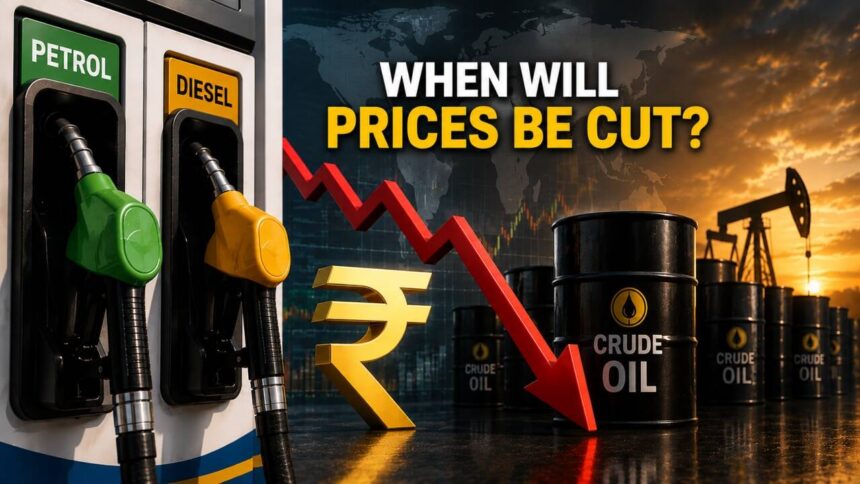
The global crude oil market has witnessed a significant downturn, with prices plummeting to a four-month low. The recent crash has been largely attributed to the US-Iran ceasefire and the subsequent reopening of the Strait of Hormuz, a critical waterway that accounts for nearly a third of the world’s seaborne oil exports. As a result, crude oil prices have dropped dramatically, from around $120 per barrel to near $70 per barrel, sparking hopes of a potential decrease in petrol and diesel prices. The development has sent shockwaves across the energy sector, with many experts predicting a positive impact on the global economy.
Impact on Global Economy
The decline in crude oil prices is expected to have far-reaching consequences for the global economy. With oil being a major component of production costs, a decrease in oil prices can lead to a reduction in manufacturing expenses, thereby increasing profit margins for companies. This, in turn, can boost economic growth, as businesses are likely to invest their increased profits in expansion and job creation. Furthermore, lower oil prices can also lead to a decrease in inflation, as the cost of production and transportation decreases, making goods and services more affordable for consumers.
The impact of the oil price slump will be particularly significant for countries that rely heavily on oil imports. For instance, countries like India, which imports over 80% of its oil requirements, can expect to save billions of dollars on oil imports, which can be utilized to fund developmental projects and social welfare schemes. Similarly, the decrease in oil prices can also lead to a reduction in the cost of air travel, as fuel accounts for a significant portion of an airline’s operating expenses.
Effect on Petrol and Diesel Prices
The decline in crude oil prices has raised hopes of a potential decrease in petrol and diesel prices. With oil prices accounting for a significant portion of the retail price of fuel, a decrease in oil prices can lead to a corresponding decrease in fuel prices. However, the extent to which fuel prices will decrease remains uncertain, as it depends on various factors, including taxes, refining costs, and distribution expenses. Nevertheless, many experts predict that fuel prices will decrease, albeit marginally, in the coming weeks.
The potential decrease in fuel prices will be a welcome relief for consumers, who have been bearing the brunt of high fuel prices for months. A decrease in fuel prices can lead to a decrease in transportation costs, making goods and services more affordable for consumers. Additionally, it can also lead to an increase in consumer spending, as people will have more disposable income to spend on other goods and services.
Future Outlook
While the decline in crude oil prices has sparked hopes of a potential decrease in fuel prices, the future outlook remains uncertain. The oil market is notoriously volatile, and prices can fluctuate rapidly in response to geopolitical developments and changes in global demand. Furthermore, the Organization of the Petroleum Exporting Countries (OPEC) may intervene to stabilize oil prices, which could mitigate the impact of the price slump.
Despite the uncertainty, many experts predict that oil prices will remain low in the near term, driven by a combination of factors, including increased oil production, decreased demand, and the ongoing US-Iran ceasefire. As a result, fuel prices may decrease, albeit marginally, in the coming weeks. However, consumers should remain cautious, as the oil market can be unpredictable, and prices can fluctuate rapidly in response to changing market conditions. The development is likely to have significant implications for the energy sector, and consumers will be watching the situation closely, hoping for a decrease in fuel prices.