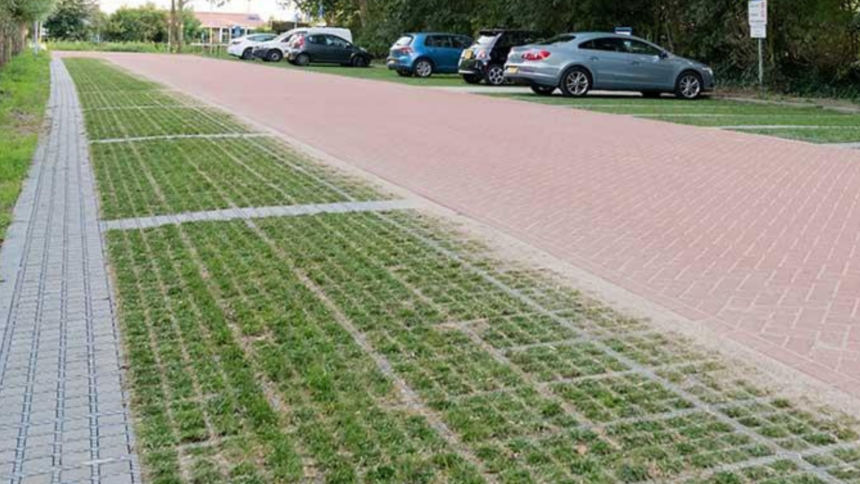
The Netherlands is renowned for its innovative approach to urban planning, and its latest experiment is taking the concept of green spaces to a whole new level. By replacing traditional concrete surfaces with grass-filled permeable paving blocks, Dutch cities are not only enhancing the aesthetic appeal of their streets but also providing a sustainable solution to manage rainwater and mitigate the urban heat island effect. This pioneering approach is being implemented in various cities across the country, transforming urban areas into more livable and environmentally friendly spaces.
Benefits of Grass-Filled Paving Blocks
The specially designed blocks contain open spaces where grass can grow, while gaps in the surface allow rainwater to pass through rather than immediately flowing into drains. This unique design enables the blocks to act as a natural filter, reducing the amount of pollutants and sediments that enter the water system. Furthermore, the grass-filled blocks help to lower the urban temperature by providing shade and promoting evapotranspiration, which can decrease the temperature by as much as 2-3 degrees Celsius.
The implementation of these blocks also has a positive impact on the urban ecosystem. By providing a habitat for plants and animals, the blocks help to increase biodiversity in urban areas. Additionally, the reduced stormwater runoff decreases the burden on urban drainage systems, minimizing the risk of flooding and related infrastructure damage. As the world grapples with the challenges of climate change, this innovative approach to urban planning serves as a model for other cities to follow.
Implementation and Maintenance
The implementation of grass-filled paving blocks requires careful planning and execution. The blocks must be installed on a porous base to ensure adequate drainage, and the grass must be regularly maintained to prevent overgrowth. However, the benefits of these blocks far outweigh the additional maintenance requirements. The city of Amsterdam, for example, has already seen significant reductions in stormwater runoff and urban temperatures since the introduction of these blocks.
Moreover, the use of grass-filled paving blocks can also help to reduce traffic noise and improve air quality. The blocks’ porous surface helps to absorb sound waves, reducing the noise level in urban areas. The grass also absorbs pollutants and particulate matter from the air, contributing to a healthier environment for residents. As the demand for sustainable and eco-friendly solutions continues to grow, the adoption of grass-filled paving blocks is likely to become more widespread.
Future Prospects and Global Applications
The success of grass-filled paving blocks in Dutch cities has sparked interest from urban planners and policymakers around the world. As cities continue to urbanize and grapple with the challenges of climate change, the need for innovative and sustainable solutions has never been more pressing. The implementation of these blocks can be adapted to various urban contexts, from residential streets to commercial areas and public parks.
The potential for global application is vast, and the benefits of grass-filled paving blocks can be replicated in cities with similar urban planning challenges. By embracing this innovative approach, cities can reduce their environmental footprint, improve the quality of life for residents, and create more sustainable and resilient urban ecosystems. As the world looks to the future of urban planning, the example set by Dutch cities serves as a beacon of hope for a greener, more sustainable tomorrow.