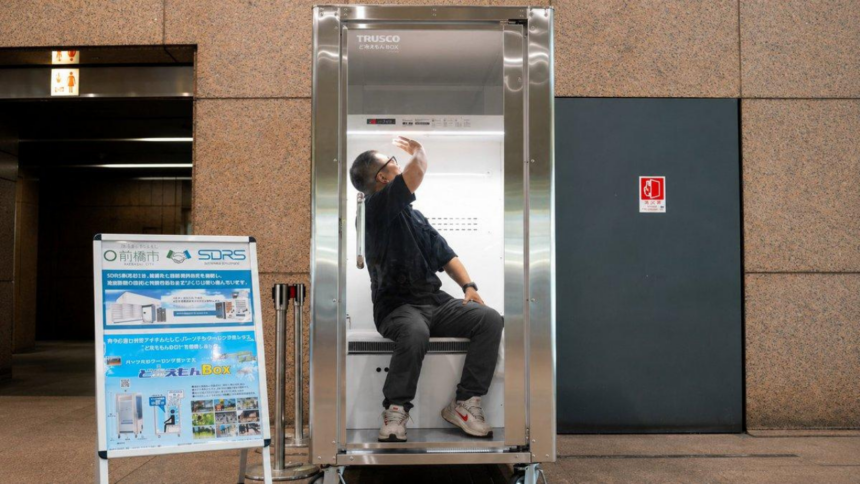
The scorching heat of summer has become a familiar foe for outdoor workers worldwide, with record-breaking temperatures posing a significant threat to their health and well-being. As the world grapples with the challenges of climate change, Japan has unveiled an innovative solution to this pressing issue: a ‘human refrigerator’ that can cool the body in just 5 minutes. This remarkable technology has the potential to transform the way workers beat extreme heat, and its implications are far-reaching.
How it Works
The ‘human refrigerator’ is essentially a specialized chamber that uses advanced cooling technology to rapidly lower the body temperature of individuals who have been exposed to extreme heat. This is achieved through a combination of cold air and water mist, which work in tandem to cool the body down quickly and efficiently. The device is designed to be portable and can be easily transported to different locations, making it an ideal solution for outdoor workers who are often required to work in remote or hard-to-reach areas.
One of the key benefits of the ‘human refrigerator’ is its ability to provide rapid relief from heat stress, which can be a major concern for workers who are engaged in physically demanding activities. By cooling the body down quickly, the device can help to prevent heat-related illnesses, such as heat exhaustion and heat stroke, which can be debilitating and even life-threatening. The technology has already been tested in various settings, including construction sites and agricultural fields, and the results have been overwhelmingly positive.
Real-World Applications
The potential applications of the ‘human refrigerator’ are vast and varied, and the device has the potential to make a significant impact in a range of different industries. For example, it could be used to support emergency responders, such as firefighters and paramedics, who often work in extreme heat and are at risk of heat-related illnesses. It could also be used in sporting events, such as marathons and triathlons, where athletes may be exposed to high temperatures for extended periods.
In addition to its practical applications, the ‘human refrigerator’ also has the potential to contribute to a broader cultural shift in the way we think about heat safety. By providing a reliable and effective means of cooling the body, the device could help to raise awareness about the importance of heat safety and encourage individuals to take steps to protect themselves from the dangers of extreme heat. This could include simple measures, such as staying hydrated and taking regular breaks, as well as more complex strategies, such as implementing heat safety protocols in the workplace.
Future Prospects
As the ‘human refrigerator’ continues to gain attention and recognition, it is likely that we will see further developments and innovations in this area. For example, researchers may explore the use of advanced materials and technologies, such as phase change materials and evaporative cooling systems, to improve the efficiency and effectiveness of the device. We may also see the development of new applications and uses for the technology, such as in the military or in space exploration, where the ability to regulate body temperature is critical.
The ‘human refrigerator’ is a powerful example of the impact that technology can have on our daily lives, and its potential to transform the way we work and interact with the world around us. As we look to the future and the challenges that it will bring, it is clear that innovations like this will play a critical role in helping us to adapt and thrive in a rapidly changing world. The ‘human refrigerator’ is a testament to human ingenuity and the boundless potential of the human spirit, and its impact will be felt for years to come.