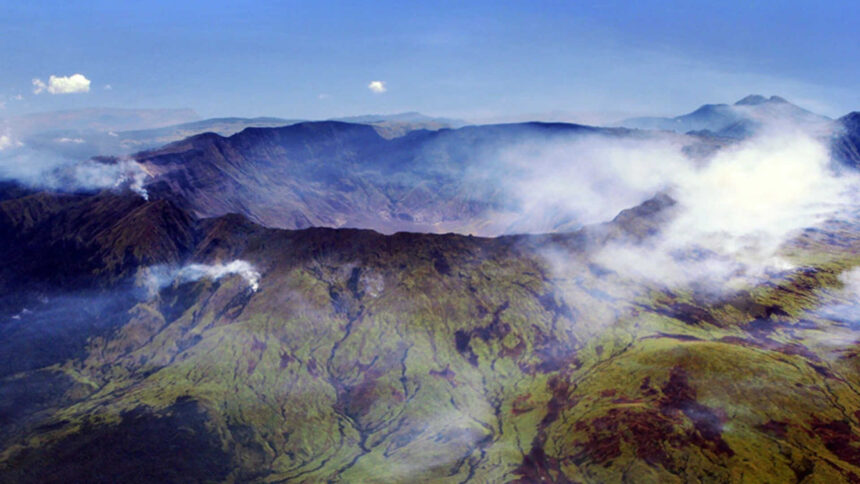
The summer of 1816 was one for the history books, but not for the reasons you might think. Instead of warm weather and long days, people in the Northern Hemisphere woke up to snow in June, watched as their crops withered and died, and felt an unshakeable chill that seemed to seep into every aspect of their lives. The cause of this phenomenon was not a sudden shift in the Earth’s orbit or a drastic change in the planet’s atmospheric conditions, but rather a massive volcanic eruption that took place over 10,000 miles away in Indonesia. The eruption of Mount Tambora, one of the most powerful in recorded history, had a profound impact on the global climate, causing widespread destruction and chaos in its wake.
The Eruption and Its Aftermath
The eruption of Mount Tambora occurred on April 10, 1815, and was so massive that it could be heard and felt over 1,500 miles away. The explosion was equivalent to 80,000 Hiroshima-sized atomic bombs and threw massive amounts of ash, sulfur dioxide, and other gases into the atmosphere. This had a profound impact on the global climate, causing a global cooling effect that lasted for several years. The ash and sulfur dioxide particles in the atmosphere reflected sunlight, cooling the planet and causing extreme weather conditions. The effects of the eruption were felt as far away as Europe and North America, where crops failed, and people struggled to survive the harsh conditions.
The aftermath of the eruption was devastating, with widespread famine and disease affecting millions of people. The lack of food and warm clothing made people more susceptible to illness, and the harsh weather conditions made it difficult for them to survive. The effects of the eruption were felt for several years, with many areas experiencing extreme weather conditions, including droughts, floods, and heatwaves. The eruption of Mount Tambora was a wake-up call for the world, highlighting the power of nature and the importance of being prepared for natural disasters.
The Impact on Society
The eruption of Mount Tambora had a profound impact on society, affecting everything from agriculture to art. The lack of food and warm clothing made people more susceptible to illness, and the harsh weather conditions made it difficult for them to survive. Many areas experienced extreme poverty and famine, with people struggling to make ends meet. The effects of the eruption were felt for several years, with many areas experiencing extreme weather conditions, including droughts, floods, and heatwaves. The eruption also had an impact on the arts, with many famous writers and artists, including Mary Shelley and Lord Byron, drawing inspiration from the extreme weather conditions.
The eruption of Mount Tambora also had an impact on the global economy, with trade and commerce being severely disrupted. The lack of food and other essential goods made it difficult for people to survive, and the harsh weather conditions made it difficult for merchants to transport goods. The effects of the eruption were felt for several years, with many areas experiencing economic hardship and poverty. The eruption of Mount Tambora was a major setback for the global economy, highlighting the importance of being prepared for natural disasters and having a plan in place to mitigate their effects.
Lessons Learned
The eruption of Mount Tambora was a major wake-up call for the world, highlighting the power of nature and the importance of being prepared for natural disasters. The eruption showed that even a single event could have a profound impact on the global climate, causing widespread destruction and chaos. The effects of the eruption were felt for several years, with many areas experiencing extreme weather conditions, including droughts, floods, and heatwaves. The eruption of Mount Tambora was a reminder that nature is a powerful force that demands respect, and that we must be prepared to face its fury.
Today, we are more aware of the importance of being prepared for natural disasters, and we have developed strategies to mitigate their effects. We have early warning systems in place, and we have developed technologies to help us predict and prepare for natural disasters. The eruption of Mount Tambora was a major turning point in our understanding of the natural world, and it has had a lasting impact on our society. As we look to the future, we must remember the lessons of the past, and we must continue to work towards a world that is more resilient and better prepared to face the challenges of the natural world.