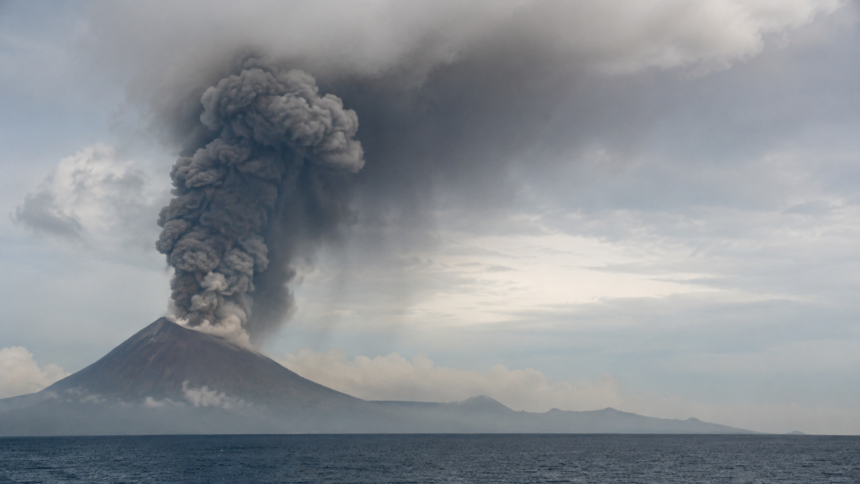
The Earth’s climate has always been a complex and intriguing puzzle, with various factors contributing to its ever-changing landscape. Recent findings have shed new light on the significant role that the Pacific Ring of Fire, a 40,000-kilometer horseshoe-shaped belt of volcanoes circling the Pacific Ocean, may have played in shaping our planet’s past climate. The discovery that some of the largest volcanic eruptions of the past 12,000 years, many originating from this seismically active region, align closely with major glacial advances and centennial-scale cold spells during the Holocene has sparked intense interest among scientists and researchers.
Unveiling the Pacific Ring of Fire’s Volcanic History
The Pacific Ring of Fire is home to over 75% of the world’s active volcanoes, with a long history of powerful eruptions that have left an indelible mark on the Earth’s climate. By studying the layers of ash and other volcanic deposits found in ice cores and sedimentary rocks, scientists have been able to reconstruct a detailed record of the region’s volcanic activity over the past 12,000 years. This record reveals a striking correlation between the timing of large volcanic eruptions and significant climate shifts, including the expansion of glaciers and the onset of prolonged cold spells.
One of the most significant eruptions to have occurred in the Pacific Ring of Fire is the massive explosion of the Okmok volcano in Alaska around 2050 BCE. This eruption, which was so powerful that it could be heard and felt thousands of kilometers away, is believed to have released enormous amounts of ash and sulfur dioxide into the atmosphere, blocking out sunlight and leading to a prolonged period of cooling. Similar eruptions, such as the one that occurred at the Taupo volcano in New Zealand around 230 CE, have also been linked to significant climate shifts, highlighting the important role that the Pacific Ring of Fire has played in shaping the Earth’s climate.
Understanding the Mechanisms Behind Volcanic Cooling
So, how exactly do volcanic eruptions in the Pacific Ring of Fire lead to cooling of the Earth’s climate? The answer lies in the complex interactions between the atmosphere, oceans, and land surfaces. When a large volcano erupts, it releases massive amounts of ash, sulfur dioxide, and other gases into the atmosphere, which can reflect sunlight and reduce the amount of solar radiation that reaches the Earth’s surface. This reduction in solar radiation can lead to a decrease in global temperatures, as well as changes in precipitation patterns and ocean currents.
Furthermore, the sulfur dioxide released by volcanoes can react with water vapor in the atmosphere to form sulfate aerosols, which can remain suspended in the air for months or even years after an eruption. These aerosols can have a profound impact on the Earth’s climate, as they can scatter sunlight and reduce the amount of heat that is absorbed by the planet. By studying the properties and behavior of these aerosols, scientists can gain a better understanding of the mechanisms behind volcanic cooling and how it has shaped the Earth’s climate over time.
Implications for Our Understanding of Climate Change
The discovery of the Pacific Ring of Fire’s role in shaping the Earth’s climate has significant implications for our understanding of climate change. By recognizing the importance of volcanic eruptions in influencing global temperatures and precipitation patterns, scientists can improve their models of the climate system and better predict how the Earth’s climate may change in the future. Additionally, the study of past volcanic eruptions and their impact on the climate can provide valuable insights into the potential consequences of future eruptions, allowing us to prepare for and mitigate their effects.
The Earth’s climate is a complex and dynamic system, and the Pacific Ring of Fire’s volcanic activity is just one of many factors that have shaped its history. As scientists continue to unravel the mysteries of the Earth’s climate, they are reminded of the awe-inspiring power and complexity of the natural world, and the importance of ongoing research and discovery in our quest to understand and protect our planet.