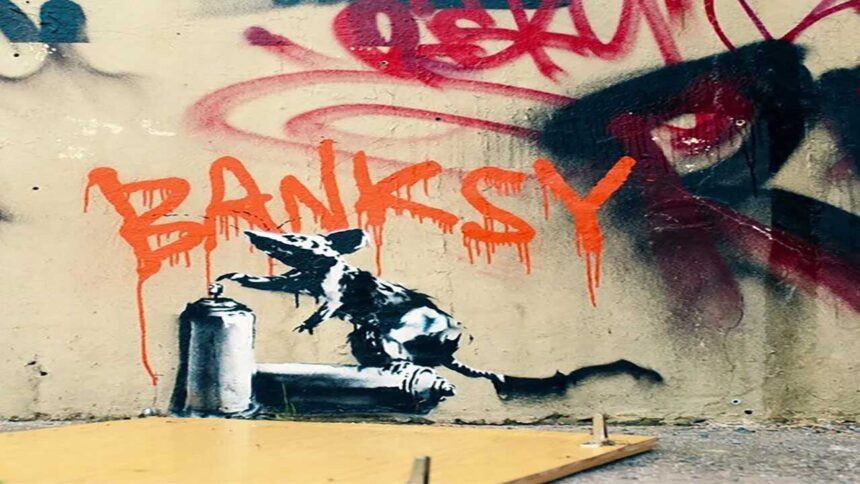
The art world and beyond have long been fascinated by the enigmatic persona and unapologetic commentary of Banksy, the elusive street artist whose works often leave us pondering the complexities of modern society. Recently, he shared an insightful quote that has resonated deeply with many, and for good reason: ‘I don’t know why people are so keen to put the details of their private life in public; they forget that invisibility is a superpower.’ In a world where social media has made it easier than ever to share our lives with the world, Banksy’s words serve as a poignant reminder of the value of discretion and self-preservation in the digital age.
The Allure of Invisibility
On the surface, Banksy’s statement may seem counterintuitive in a culture that celebrates transparency and openness. We live in an era where sharing our experiences and thoughts is often seen as a sign of confidence and authenticity. But what happens when this desire for validation and connection becomes an all-consuming force that erodes our boundaries and sense of self? By choosing to remain invisible, individuals can reclaim their agency and maintain a sense of control over their lives, free from the pressure to constantly perform and present themselves to the world.
Furthermore, invisibility can be a powerful tool for social commentary and change. By staying under the radar, artists like Banksy can avoid the scrutiny and criticism that often accompanies their work, allowing them to focus on the message rather than the messenger. This approach has enabled Banksy to tackle some of the most pressing issues of our time, from the Israeli-Palestinian conflict to the exploitation of the working class, without fear of reprisal or censorship.
The Trade-Offs of Excess Visibility
On the other hand, living in a hyper-visible world has its own set of drawbacks. The constant sharing of our lives can lead to feelings of anxiety, inadequacy, and disconnection. We curate our online personas to project a perfect image, hiding our flaws and insecurities from the world. But what happens when the façade begins to crack, and the pressure to maintain this illusion becomes too much to bear? The consequences can be severe, from mental health struggles to damaged relationships and a loss of authenticity.
Moreover, the cult of visibility has created a culture of comparison and competition, where individuals are pitted against one another in a never-ending quest for likes, followers, and validation. This has led to a rise in cyberbullying, online harassment, and the erosion of empathy and kindness. By choosing to remain invisible, we can break free from this toxic cycle and focus on building meaningful connections with others, rather than constantly seeking validation from the digital masses.
Embracing the Power of Invisibility
So what does it mean to truly embody the spirit of invisibility in a world that values visibility above all else? It means being intentional with our online presence and mindful of the information we share. It means setting boundaries and prioritizing our own needs and well-being. And it means embracing the beauty of mystery and enigma, rather than feeling the need to constantly reveal ourselves to the world.
In a world that often prioritizes spectacle over substance, Banksy’s quote serves as a powerful reminder of the value of discretion and self-preservation. By choosing what not to share, we can reclaim our agency, maintain our sense of self, and live more authentic, meaningful lives. As Banksy so eloquently puts it, invisibility is indeed a superpower – one that we would do well to harness and wield in our own lives.