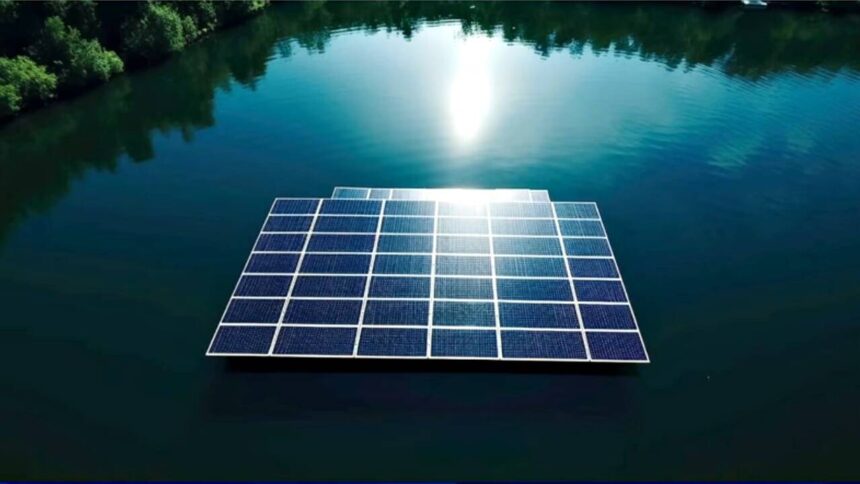
The Indian government has taken a significant step towards increasing its solar energy generation capacity with the approval of the Pradhan Mantri Surya Sarovar Yojana (PM-SSY) scheme. The scheme, which was approved by the cabinet led by Prime Minister Narendra Modi, aims to establish 5,000 MW of Floating Solar PV (FSPV) capacity in the country. This move is expected to provide a major boost to the country’s renewable energy sector and help reduce its dependence on fossil fuels. The scheme has been allocated a budget of Rs 5,070 crore and is expected to be completed over the next few years.
Benefits of Floating Solar Projects
The PM-SSY scheme is expected to have a number of benefits, including the ability to generate clean and renewable energy, reduce water evaporation from reservoirs, and provide energy access to remote and rural areas. Floating solar projects also have the advantage of being able to be built on existing water bodies, such as lakes and reservoirs, which reduces the need for land acquisition and helps to preserve natural habitats. Additionally, the scheme is expected to create new job opportunities in the renewable energy sector and stimulate local economies.
The Indian government has set ambitious targets for increasing its use of renewable energy, and the PM-SSY scheme is a key part of this effort. The government aims to generate 40% of its electricity from non-fossil fuels by 2030, and the PM-SSY scheme is expected to play a major role in helping to achieve this goal. The scheme will also help to reduce the country’s greenhouse gas emissions and contribute to global efforts to combat climate change.
Implementation and Challenges
The implementation of the PM-SSY scheme is expected to be a complex process, and there are a number of challenges that will need to be addressed. These include the need to identify suitable locations for the floating solar projects, the development of new technologies and materials, and the need to ensure that the projects are economically viable. The government will also need to work with state governments and other stakeholders to ensure that the scheme is successfully implemented and that the benefits are shared equitably.
Despite these challenges, the PM-SSY scheme has the potential to make a major contribution to India’s renewable energy sector. The scheme will help to increase the country’s energy security, reduce its dependence on fossil fuels, and contribute to global efforts to combat climate change. The government’s commitment to the scheme is a positive step towards achieving its renewable energy targets, and it is likely to have a significant impact on the country’s energy landscape in the years to come.
Future Prospects and Opportunities
The PM-SSY scheme is a significant step towards increasing India’s use of renewable energy, and it is expected to have a major impact on the country’s energy sector. The scheme will help to create new job opportunities, stimulate local economies, and contribute to global efforts to combat climate change. The government’s commitment to the scheme is a positive step towards achieving its renewable energy targets, and it is likely to have a significant impact on the country’s energy landscape in the years to come.
The approval of the PM-SSY scheme is a significant development for India’s renewable energy sector, and it is expected to have a major impact on the country’s energy landscape. The scheme will help to increase the country’s energy security, reduce its dependence on fossil fuels, and contribute to global efforts to combat climate change. With the scheme’s implementation, India is poised to become a leader in the global renewable energy market, and the PM-SSY scheme is expected to play a major role in helping the country achieve its ambitious renewable energy targets.