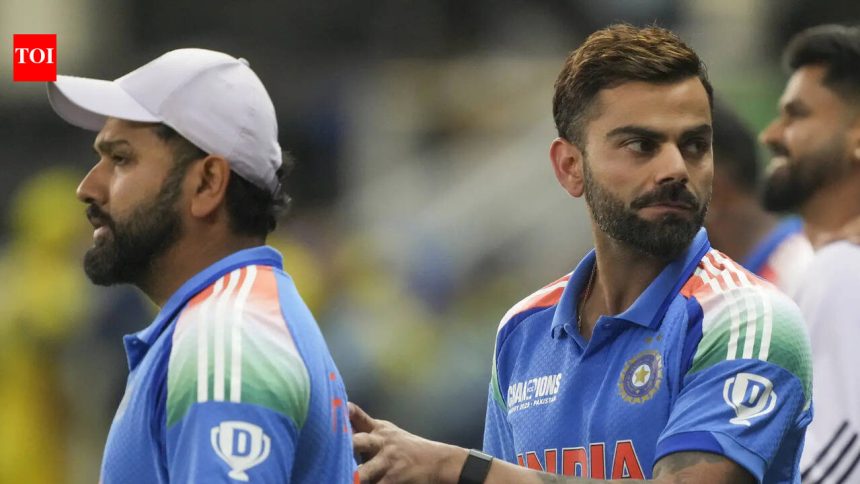
The world of Indian cricket has been abuzz with a fresh controversy, courtesy of Yograj Singh’s sharp jibe at two of the game’s biggest stars – Virat Kohli and Rohit Sharma. The former India cricketer’s comments have sparked a heated debate around longevity and relevance in the sport, leaving fans and pundits alike wondering if it’s time for the old guard to make way for the new. The fact that Singh chose to target two of India’s most successful players has added fuel to the fire, with many questioning the motives behind his outburst.
Legends Under Fire
Yograj Singh’s comments are not just a personal attack on Kohli and Sharma, but also a reflection of the changing landscape of Indian cricket. As the team continues to evolve and new talent emerges, the question on everyone’s mind is – how long can the legends of the game continue to dominate? Kohli and Sharma have been the backbone of the Indian team for years, but with their form dipping in recent times, the pressure is mounting. The fact that Singh, a former player himself, has chosen to speak out against them has added weight to the argument that it’s time for a change.
The debate around longevity and relevance is not new in Indian cricket. We’ve seen it before with the likes of Sachin Tendulkar, Rahul Dravid, and VVS Laxman, who all struggled to come to terms with their own mortality in the sport. However, the fact that Singh has targeted two players who are still relatively young and have a lot to offer has raised eyebrows. Is this a case of sour grapes, or is there a genuine concern about the direction of the team? Only time will tell, but one thing is certain – the clock is ticking for India’s cricket legends.
The Bigger Picture
Yograj Singh’s comments may have been directed at Kohli and Sharma, but they have far-reaching implications for the entire Indian team. The fact that the team is struggling to find consistency and form has raised questions about the leadership and the selection process. The Indian Premier League (IPL) has also played a role in changing the dynamics of the team, with young players emerging and making a name for themselves. The likes of Shubman Gill, Ishan Kishan, and Rishabh Pant have all made a strong case for themselves, and it’s only a matter of time before they become regulars in the team.
The challenge for the selectors and the team management is to find a balance between experience and youth. While Kohli and Sharma have been the pillars of the team, they cannot continue to carry the burden alone. The team needs to blood new players and give them the opportunity to grow and develop. This is where Singh’s comments come into play – is it time for the old guard to make way for the new, or can they still contribute to the team’s success? The answer lies somewhere in between, and it’s up to the team management to find the right balance.
What Next?
As the debate rages on, one thing is certain – the Indian team is at a crossroads. The team needs to find a way to move forward, and that may involve making some tough decisions. While Kohli and Sharma are still two of the best players in the world, they cannot continue to dominate the team’s selection process. The team needs to look to the future and give young players the opportunity to grow and develop. This may involve phasing out some of the older players, but it’s a necessary step in the right direction.
The clock is ticking for India’s cricket legends, and it’s up to them to respond. Can they find a way to regain their form and contribute to the team’s success, or will they become relics of the past? Only time will tell, but one thing is certain – the future of Indian cricket is bright, and it’s up to the team to make the most of it. As the team looks to the future, one thing is clear – it’s time for a change, and the clock is ticking.
The Indian team’s next few matches will be crucial in determining the fate of Kohli and Sharma. If they can find a way to regain their form and contribute to the team’s success, they may still have a few years left in them. However, if they continue to struggle, it may be time for them to hang up their boots. The team needs to find a way to move forward, and that may involve making some tough decisions. The clock is ticking, and it’s up to the team to respond.