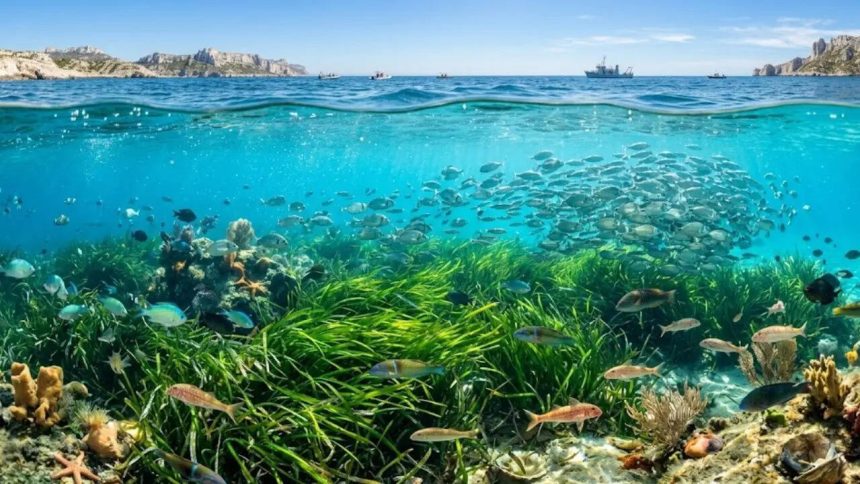
The sun-drenched Mediterranean coastline of Marseille, France, has long been a source of pride for the city’s residents. But beneath the surface, the waters had fallen victim to decades of pollution, with the once-thriving Posidonia oceanica seagrass meadows – a vital component of the marine ecosystem – all but disappearing. However, a remarkable transformation is underway, and the Marseille miracle is a testament to the power of restoration and the resilience of the natural world.
Restoring a Lost Ecosystem
Posidonia oceanica seagrass is one of the most valuable and diverse marine ecosystems on the planet. These underwater meadows provide a habitat for countless species, from juvenile fish to sea turtles, and play a critical role in maintaining the health of the Mediterranean Sea. But by the 1990s, Marseille’s seagrass beds had been ravaged by pollution, with only a few scattered patches remaining. The causes were multifaceted: sewage, industrial waste, and agricultural runoff had all taken their toll, leading to the degradation of the water quality and the eventual disappearance of the seagrass.
However, in the early 2000s, local authorities and conservation groups began to take action. A comprehensive restoration program was launched, involving the creation of artificial reefs, the installation of water quality monitoring systems, and the establishment of marine protected areas. The results have been nothing short of miraculous. Not only have the seagrass meadows begun to regrow, but the entire ecosystem is showing signs of renewed vitality.
Revitalizing a Community
The Marseille miracle has also had a profound impact on the local community. For years, the city’s residents had grown accustomed to the sight of polluted waters and the absence of marine life. But as the seagrass meadows began to return, so too did the fish, the dolphins, and the sea turtles. Local businesses began to thrive, as tourists and eco-enthusiasts flocked to experience the restored coastline. And the residents of Marseille, who had once felt disconnected from the sea, now felt a renewed sense of pride and connection to their environment.
The restoration of Marseille’s Posidonia oceanica seagrass meadows has also had significant economic benefits. The creation of marine protected areas has led to the establishment of sustainable fishing practices, which in turn have boosted the local fishing industry. And the growth of eco-tourism has provided a new source of revenue for the city, as visitors come to experience the restored marine ecosystem.
A Global Model for Marine Conservation
The Marseille miracle is not just a local success story – it has far-reaching implications for marine conservation globally. As the world grapples with the challenges of climate change and pollution, the restoration of Marseille’s seagrass meadows offers a beacon of hope. By demonstrating the power of collaboration and the importance of protecting marine ecosystems, Marseille has shown that even the most degraded environments can be restored to their former glory.
The city’s commitment to marine conservation has also inspired a new generation of environmentalists and scientists. Researchers from around the world have flocked to Marseille to study the restored ecosystem, seeking to understand the secrets of its resilience and to apply those lessons to other degraded marine environments.
As the sun sets over the Mediterranean, the waters of Marseille sparkle with a renewed vitality. The Marseille miracle is a testament to the power of restoration and a reminder that even in the darkest of times, there is always hope for a brighter future.