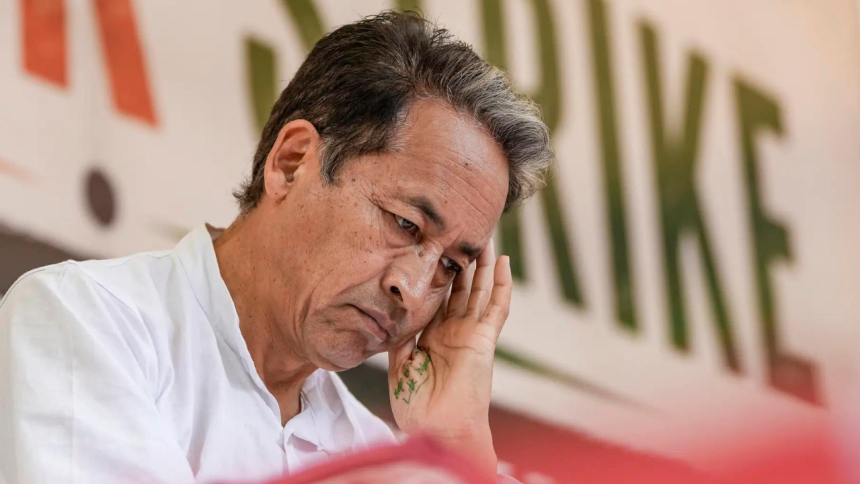
Amidst the fervent debate over climate change and social reform, a quiet yet powerful voice has emerged in the form of Sonam Wangchuk, the renowned educator and climate activist. Wangchuk has been on a hunger strike since June 16, calling upon the Indian government to take immediate action on climate change and pressing for a nationwide campaign to promote sustainable living. However, in a surprising move, Wangchuk has rejected being hailed as a ‘modern Gandhi’ or a hero, citing that he is merely an ordinary citizen doing his part.
Breaking Free from the Hero Complex
Wangchuk’s stance on not being a hero is a refreshing departure from the usual expectations from activists and social leaders. In an era where many look up to charismatic figures to lead the charge against social injustices, Wangchuk’s humility is a breath of fresh air. He believes that people should not be waiting for someone else to save them or lead them to a better future. Instead, he urges Indians to take responsibility for their own lives and to strive for positive change.
Wangchuk’s message is clear: he is not a messiah or a savior, but an ordinary citizen who is doing his part to create a better world. His actions are not meant to draw attention to himself, but to inspire others to take action and make a difference in their own lives. By rejecting the ‘hero complex’, Wangchuk is encouraging Indians to break free from the notion that someone else will fix their problems, and to instead become their own heroes.
The Power of Individual Action
Wangchuk’s emphasis on individual action is rooted in his belief that collective change begins with individual responsibility. He believes that every small action counts, and that by making conscious choices in our daily lives, we can collectively create a significant impact. Whether it’s reducing our carbon footprint, conserving water, or promoting sustainable living, Wangchuk urges Indians to take ownership of their actions and to strive for a better future.
His message is not just limited to environmental issues; it’s a broader call to action that encompasses all aspects of life. Wangchuk wants Indians to take responsibility for their education, their health, and their relationships. He wants them to become self-sufficient, to think critically, and to make informed decisions that benefit themselves and their communities.
A Call to Action
As Wangchuk’s hunger strike enters its second week, his message is more relevant than ever. In a country where many are waiting for someone else to lead the way, Wangchuk’s call to self-liberation is a powerful reminder that we all have the power to create change. By taking responsibility for our lives, we can become our own heroes and create a brighter future for ourselves and for generations to come.
Wangchuk’s hunger strike may be a dramatic gesture, but it’s a necessary one. It’s a call to action that challenges Indians to think beyond their own limitations and to strive for a better world. As we watch Wangchuk’s determination and conviction, we are reminded that even the smallest actions can have a profound impact when taken collectively.