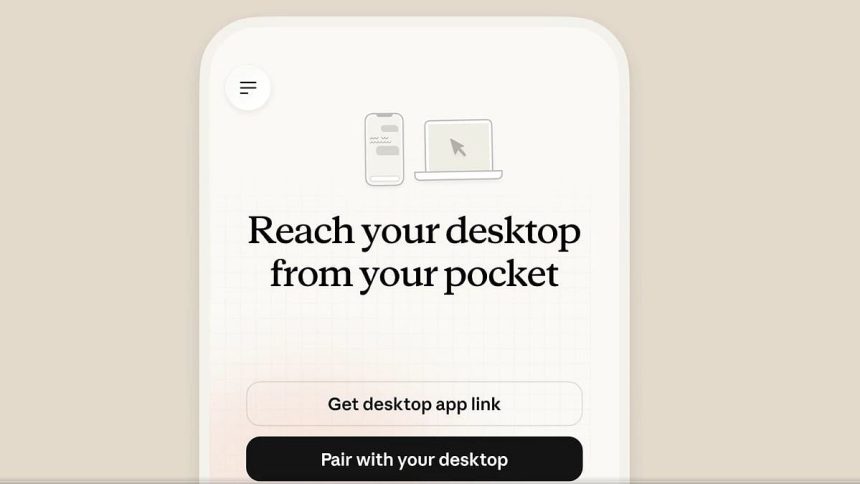
The future of remote work just got a whole lot more interesting. Imagine being able to leave your desk, grab a cup of coffee, or take a walk outside while your computer continues to work on tasks for you. Sounds like science fiction, right? Well, it’s not. Anthropic’s latest update to its Claude AI platform now allows users to control their Mac computers remotely, using natural language to assign tasks and get work done while they’re away.
How it Works
The new feature, available in research preview for Pro and Max users, uses Cowork and Code modes to enable Claude to take control of your Mac. This means the AI can move the mouse, type, and navigate apps on your behalf, all while you’re not physically present. But don’t worry, Claude isn’t going to start sending emails or making purchases without your permission. The AI will always request permission before executing any actions, giving you complete control over what it can and can’t do.
One of the most impressive aspects of this update is the use of natural language to assign tasks. Users can simply tell Claude what they need to be done, and the AI will take care of it. This could be anything from scheduling appointments to sending emails or even coding. The possibilities are endless, and it’s exciting to think about how this technology could revolutionize the way we work.
Implications and Applications
The potential implications of this technology are vast. For remote workers, it means being able to take breaks or attend to personal matters without having to worry about falling behind on work. For businesses, it could mean increased productivity and efficiency, as tasks can be completed quickly and accurately without the need for human intervention. And for individuals with disabilities, it could be a game-changer for accessibility, enabling them to interact with their computers in ways that were previously impossible.
But it’s not all smooth sailing. There are also concerns about security and data protection. As with any AI technology, there’s a risk of errors or misunderstandings, which could lead to unintended consequences. And then there’s the question of accountability – if Claude makes a mistake, who’s responsible? These are all important questions that need to be addressed as this technology continues to evolve.
Future of Work
So what does this mean for the future of work? It’s clear that AI is going to play an increasingly important role in our professional lives, and Claude’s Mac control is just the beginning. As the technology continues to improve, we can expect to see more advanced features and capabilities, from automated data analysis to virtual assistants that can anticipate our needs.
But it’s not just about the technology itself – it’s about how we choose to use it. Will we use Claude and other AI tools to augment our abilities, or will we rely on them too heavily? The key is to find a balance between human intuition and AI-driven efficiency, and to ensure that we’re using these tools to enhance our work, rather than replace it. As we move forward into this brave new world of remote work and AI-powered productivity, one thing is certain: the future is going to be very interesting indeed.
The possibilities are endless, and it’s exciting to think about how this technology could change the way we work and live. With great power comes great responsibility, and it’s up to us to ensure that we’re using these tools in ways that benefit everyone. As we continue to explore the potential of AI and remote work, we must also consider the potential risks and challenges, and work to create a future that is both productive and equitable for all. With Claude’s Mac control, we’re taking a significant step forward into that future, and it will be fascinating to see where it takes us.