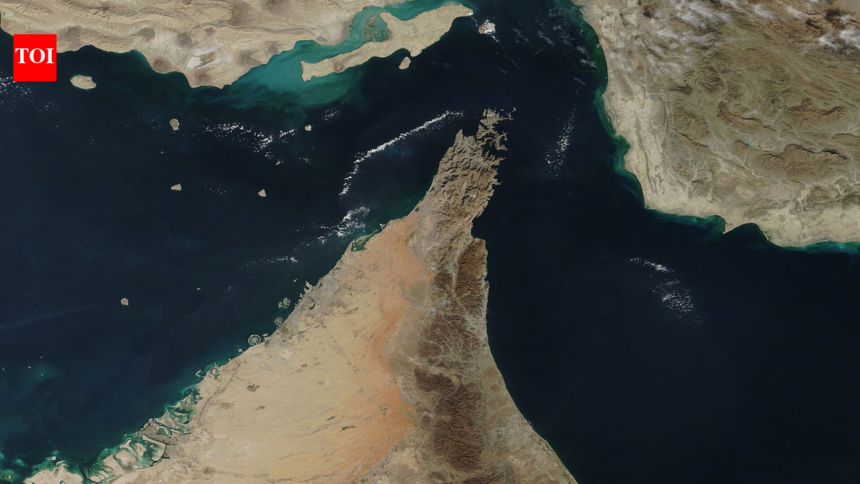
The reopening of the Strait of Hormuz is set to unleash a potentially devastating ecological disaster upon the world’s oceans, as over 1,500 commercial ships, laden with alien marine species, prepare to set sail once more. These ships, which have been sitting idle in the Persian Gulf for months, have inadvertently become giant petri dishes, allowing dense layers of marine organisms to accumulate on their submerged hulls. The implications are dire, with marine scientists warning of an unprecedented global invasion of non-native species that could irreparably harm the delicate balance of our planet’s ecosystems.
The Ecological Threat
The Strait of Hormuz, a critical waterway connecting the Persian Gulf to the Arabian Sea, has been closed for months, resulting in a massive buildup of commercial ships waiting to pass through. This prolonged period of inactivity has created a perfect storm for the accumulation of marine organisms on the ships’ hulls, with species such as barnacles, mussels, and algae thriving in the stagnant waters. As these ships begin to move once more, they will inevitably disperse these alien species to new and unsuspecting environments, potentially outcompeting native species for resources and habitat.
The sheer scale of this ecological threat is unprecedented, with the potential for hundreds of non-native species to be introduced to new ecosystems around the world. The consequences of such an event could be catastrophic, with the potential for entire ecosystems to be disrupted, and even collapsed. The economic and social implications are also significant, with the potential for damage to fisheries, tourism, and other industries that rely on healthy and balanced ecosystems.
The Science Behind the Threat
Marine scientists have long been aware of the risks associated with the transfer of non-native species through human activity, such as shipping and boating. However, the situation in the Strait of Hormuz is unique, due to the sheer number of ships involved and the prolonged period of inactivity. The species that have accumulated on the ships’ hulls are not just limited to those that are visible to the naked eye, but also include a vast array of microscopic organisms, such as bacteria and plankton, that can also have a significant impact on ecosystems.
Researchers are working tirelessly to understand the full extent of the threat, and to develop strategies for mitigating its impacts. This includes the development of new technologies and techniques for removing alien species from ships’ hulls, as well as the implementation of stricter regulations and guidelines for the management of ballast water and other potential vectors for the transfer of non-native species.
A Global Response
The reopening of the Strait of Hormuz and the potential invasion of alien marine species is a global issue, requiring a coordinated and collaborative response from governments, industries, and individuals around the world. The International Maritime Organization (IMO) has already begun to take steps to address the issue, including the development of new guidelines and regulations for the management of invasive species. However, more needs to be done, and quickly, to prevent the potentially disastrous consequences of this ecological threat.
As the ships begin to move once more, and the alien species they carry start to disperse to new environments, it is imperative that we take immediate action to mitigate the impacts of this invasion. This includes supporting research and development of new technologies and techniques, as well as implementing stricter regulations and guidelines for the management of non-native species. Only through a concerted and sustained effort can we hope to prevent the devastating consequences of this ecological disaster, and protect the delicate balance of our planet’s ecosystems for future generations.