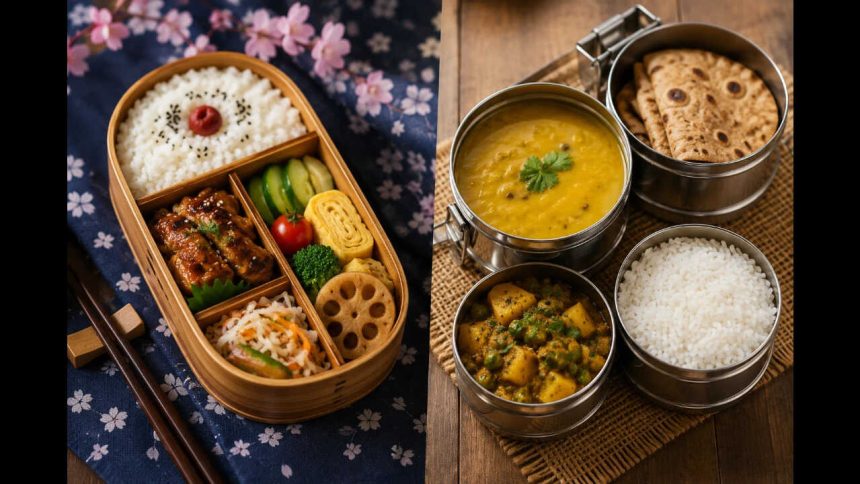
The quiet, methodical click of bento boxes opening is a familiar sound in Japanese offices and classrooms at noon. It’s a moment of transition, when workers and students take a break from the morning’s activities to refuel and recharge. But for many Japanese, lunch is more than just a meal – it’s an art form. Each carefully arranged bento box is a testament to the country’s enduring love of beauty and balance.
Japanese Bento: A Delicate Dance of Flavors and Textures
At its heart, a traditional Japanese bento is a harmonious union of flavors, textures, and presentation. A perfect bento might include a delicate grain of rice, a grilled piece of fish, a sprinkle of pickled vegetables, and a rolled omelette, each component placed with care in its own designated space. The result is a meal that is both nourishing and visually stunning. But the art of bento-making is not just about aesthetics – it’s also about the pursuit of balance. A good bento is one that balances the five flavors of Japanese cuisine (sweet, sour, salty, bitter, and umami), as well as the five colors (red, green, yellow, white, and black).
For many Japanese, the art of bento-making is a lifelong pursuit. From childhood, they learn the importance of presentation and the delicate balance of flavors. It’s a skill that requires patience, attention to detail, and a deep understanding of the natural world. And yet, despite the complexity of this art form, bento-making remains a beloved and accessible tradition. Many Japanese companies and schools provide bento boxes as part of their meal program, ensuring that workers and students have access to this beautiful and nutritious food.
Indian Tiffins: Comfort Food with a Personal Touch
Across the globe in India, lunchtime is a time for comfort food and personal connection. In many Indian families, the midday meal is a time for bonding and sharing, when loved ones gather together to break bread and share stories. The Indian tiffin, a humble meal of rice, lentils, and vegetables, is at the heart of this tradition. A tiffin is often made with love and care, with each component prepared with attention to detail and a dash of personal flair.
For many Indians, the tiffin is more than just a meal – it’s a symbol of love and connection. When a family member takes the time to prepare a tiffin, it’s a sign that they care and are thinking of one another. And in a country where family ties are strong and community is prized, the tiffin is a powerful reminder of the importance of relationships. Whether it’s a humble meal of rice and lentils or a more elaborate spread of curries and breads, the tiffin is a testament to the enduring power of food to bring people together.
The Global Significance of Lunch Traditions
So what can we learn from these two lunch traditions? For one, they remind us of the importance of balance and harmony in our daily lives. Whether it’s the delicate balance of flavors in a traditional Japanese bento or the comforting familiarity of an Indian tiffin, these meals remind us that food is not just sustenance, but a way to connect with others and find meaning in our lives.
Moreover, these traditions highlight the significance of personal connection and community in our daily lives. Whether it’s the quiet click of a bento box opening or the warm, welcoming atmosphere of an Indian tiffin, these meals remind us of the power of food to bring people together and create lasting bonds.
At its heart, the art of lunch is a reflection of our values and priorities as a society. By embracing the beauty and balance of traditional Japanese bento and the comfort and connection of Indian tiffins, we can find new ways to nourish our bodies and souls, and create a more harmonious and compassionate world.