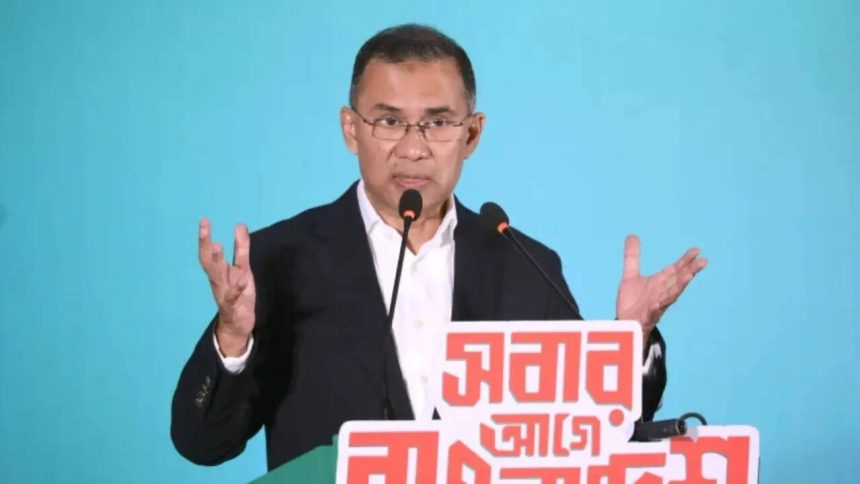
The streets of Dhaka and other major cities in Bangladesh have witnessed a surge in surprise street processions over the past few weeks, leaving many wondering what’s behind the sudden and seemingly defiant public display of support for the Awami League, a party that has been under intense scrutiny from the government. The Tarique Rahman-led administration, which had been cracking down on the party and its supporters under anti-terrorism laws, has now unexpectedly announced that Awami League members will be allowed to contest the upcoming local government elections as independents. This sudden shift in policy has left many in the country questioning the government’s intentions and the true nature of this unexpected concession.
Government’s Motives Behind the Move
The decision to allow Awami League members to contest the elections as independents is seen as a significant move by the government, which had been determined to suppress the party’s influence ahead of the polls. Analysts believe that the government may be trying to co-opt the support of Awami League members, who are widely seen as a powerful force in Bangladesh’s politics. By allowing them to contest the elections as independents, the government may be trying to dilute their influence and prevent them from presenting a unified front.
However, many Awami League supporters are skeptical of the government’s motives and fear that this move may be a ploy to divide and weaken their party. They point out that the government’s anti-terrorism laws are still in place, and that the decision to allow Awami League members to contest the elections as independents may be a way to keep them under surveillance and control. As one Awami League supporter noted, ‘We will not be fooled by this move. We will continue to resist the government’s efforts to suppress our party and our people.’
Impact on Local Elections
The decision to allow Awami League members to contest the local government elections as independents is likely to have a significant impact on the polls. The Awami League has a strong presence in many parts of the country, particularly in rural areas where the party has a long history of supporting local communities. By contesting the elections as independents, Awami League members may be able to tap into this support and potentially win seats in the local government. This could give them a significant foothold in the local politics and potentially enable them to challenge the government’s control in the future.
However, the decision also raises questions about the integrity of the electoral process. If Awami League members are allowed to contest the elections as independents, it may create confusion among voters and undermine the legitimacy of the polls. Furthermore, the decision may also lead to allegations of vote-rigging and other forms of electoral malpractice.
Concerns Over Human Rights
The decision to allow Awami League members to contest the local government elections as independents has also raised concerns about human rights in Bangladesh. The country has a poor record on human rights, and the government’s crackdown on the Awami League and its supporters has been widely criticized by human rights groups. The decision to allow Awami League members to contest the elections as independents may be seen as a way to legitimize the government’s actions and undermine the work of human rights activists.
Human rights groups have called on the government to respect the rights of Awami League supporters and to allow them to contest the elections as part of a unified party. They have also expressed concern about the impact of the decision on the overall human rights situation in the country. As one human rights activist noted, ‘This decision is a step in the wrong direction. It undermines the rights of Awami League supporters and perpetuates a culture of repression in Bangladesh.’
The decision to allow Awami League members to contest the local government elections as independents has sparked a heated debate in Bangladesh. While some see it as a significant concession by the government, others view it as a ploy to divide and weaken the party. As the country prepares for the polls, one thing is clear: the outcome of the elections will have a significant impact on the future of Bangladesh and its politics.