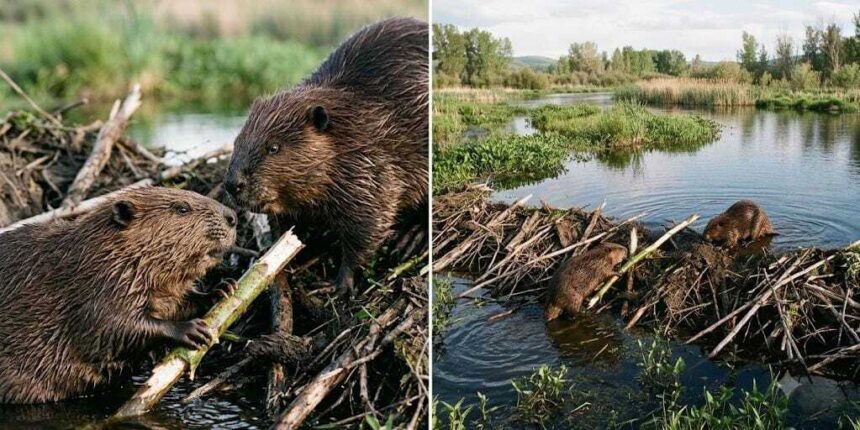
Deep in the heart of North America’s forests, an unlikely hero has been quietly reshaping the landscape for centuries. Beavers, those rotund, furry rodents, have long been known for their remarkable engineering skills. Weighing in at a mere 20 kilograms, these creatures have been using their powerful teeth, branches, stones and mud to construct intricate dams that slow rivers, create wetlands and transform dry valleys into thriving ecosystems. But their impact doesn’t stop there. Beavers are also playing a crucial role in the fight against climate change, raising groundwater levels, locking away carbon and creating habitats for countless other species.
Building with Branches: The Beaver’s Masterpiece
The beaver’s dam-building prowess is a testament to their ingenuity and adaptability. Using sticks, branches and other plant material, they construct dams that can stretch for hundreds of feet, creating a series of ponds, lakes and wetlands that support an incredible array of plant and animal life. These wetlands, known as beaver ponds, provide a haven for fish, amphibians, birds and mammals, and help to filter out pollutants from the water, making it cleaner and healthier for local wildlife.
But the beaver’s impact doesn’t stop at the water’s edge. Their dams can also help to raise groundwater levels, reducing the risk of drought and flooding, and creating a more stable and resilient ecosystem. In fact, studies have shown that beaver dams can increase groundwater levels by up to 30%, providing a vital source of water for plants and animals during times of drought.
Carbon Lockers: Beavers’ Role in the Fight Against Climate Change
Beavers are also playing a crucial role in the fight against climate change. By building dams and creating wetlands, they are helping to lock away carbon in the form of sediment and organic matter. This process, known as carbon sequestration, is essential for mitigating the effects of climate change and reducing the amount of greenhouse gases in the atmosphere.
But that’s not all. Beavers are also helping to create habitats for other species that play a crucial role in the carbon cycle, such as trees and other plants that absorb carbon dioxide from the atmosphere. By creating these habitats, beavers are effectively amplifying their own impact on the environment, helping to create a positive feedback loop that benefits both the ecosystem and the climate.
Ecological Engineers of the Wild: The Beaver’s Impact on the Landscape
Beavers are often referred to as ecological engineers, due to their remarkable ability to modify their environment in order to suit their needs. But their impact goes far beyond their own species. By creating wetlands, raising groundwater levels and locking away carbon, beavers are helping to create a more resilient and sustainable ecosystem, one that can support a wide range of plant and animal life.
As we continue to grapple with the challenges of climate change, beavers offer a powerful example of how even the smallest creatures can make a big impact. By learning from these remarkable animals and harnessing their power, we may be able to create a more sustainable and resilient future, one that benefits both people and the planet.