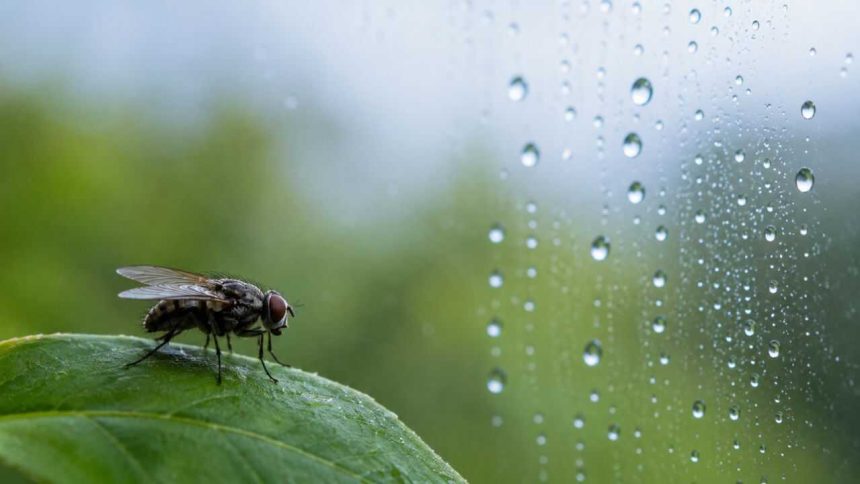
For decades, scientists have believed that light and temperature are the primary environmental cues that regulate the internal biological clocks of insects, influencing their daily activities such as feeding, movement, and rest. However, a recent groundbreaking discovery has revealed that humidity plays a crucial role in controlling these internal clocks, challenging the long-held assumption that light and temperature are the sole drivers of insect circadian rhythms. This finding has significant implications for our understanding of insect behavior, ecology, and potentially, the development of novel pest management strategies.
The Importance of Environmental Cues
Insects, like many other living organisms, have evolved internal biological clocks that enable them to synchronize their activities with the 24-hour day-night cycle. These circadian rhythms are essential for survival, as they allow insects to optimize their behavior, such as foraging and mating, during the most favorable times of the day. Light and temperature have long been recognized as the primary environmental cues that regulate these internal clocks, with the daily cycles of sunrise and sunset, as well as changes in temperature, providing the necessary signals for insects to synchronize their activities.
However, the recent discovery that humidity also plays a critical role in controlling insect biological clocks has significant implications for our understanding of insect ecology and behavior. Researchers have found that changes in humidity can influence the expression of clock genes in insects, which in turn affects their circadian rhythms. This suggests that humidity is not just a secondary cue, but rather an integral component of the environmental signals that regulate insect biological clocks.
Implications for Insect Ecology and Behavior
The discovery that humidity influences insect biological clocks has far-reaching implications for our understanding of insect ecology and behavior. For example, changes in humidity can affect the timing of insect activities, such as feeding and mating, which can have significant consequences for their survival and reproduction. Additionally, the fact that humidity can regulate insect circadian rhythms suggests that changes in humidity patterns, such as those associated with climate change, may have significant impacts on insect populations and ecosystems.
Furthermore, the recognition of humidity as a key environmental cue for insect biological clocks may also inform the development of novel pest management strategies. For instance, manipulating humidity levels could be used to disrupt the circadian rhythms of insect pests, making them more vulnerable to control measures. This approach could provide a more targeted and sustainable alternative to traditional pest control methods, which often rely on broad-spectrum pesticides that can harm non-target organisms.
Future Directions and Applications
The discovery that humidity influences insect biological clocks opens up new avenues for research and applications. For example, scientists may investigate how different insect species respond to changes in humidity, and how these responses vary across different environments and ecosystems. Additionally, researchers may explore the potential for using humidity as a tool for manipulating insect behavior, such as developing humidity-based traps or lures for insect pests.
The recognition of humidity as a key environmental cue for insect biological clocks also highlights the importance of considering the complex interactions between insects and their environment. As scientists, we must continue to explore and understand these interactions, as they hold the key to developing more effective and sustainable strategies for managing insect populations and ecosystems. By embracing this new understanding of insect biology, we may uncover novel solutions for some of the most pressing challenges in agriculture, conservation, and public health.