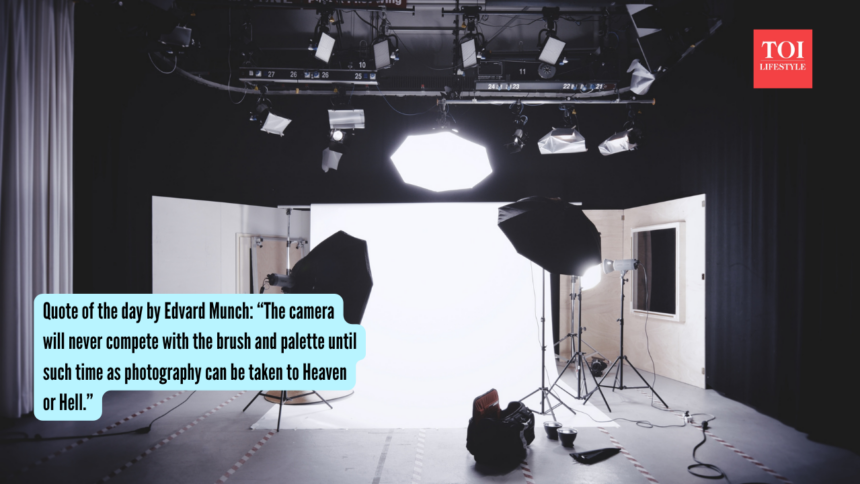
The quote by Edvard Munch, a Norwegian artist renowned for his iconic piece ‘The Scream’, underscores the profound difference between various forms of artistic expression. Munch’s statement, ‘The camera will never compete with the brush and palette until such time as photography can be taken to Heaven or Hell,’ highlights the unique ability of certain art forms to capture and convey the depth of human emotions, fears, and desires. This distinction is not merely about the technical capabilities of different mediums but about their capacity to tap into the inner life of human experience, often leaving photography and other visual arts to simply scratch the surface.
The Expressive Limitations of Photography
Photography, with its ability to capture reality with precision and accuracy, often finds itself limited in its capacity to express the full spectrum of human emotions. While a photograph can convey joy, sorrow, or anger through the subjects it captures, it rarely manages to delve into the complexities and nuances of human feeling in the way that painting or literature can. This is not to say that photography is incapable of being deeply moving or thought-provoking; rather, its strengths lie in its ability to document the world around us and to preserve moments in time with clarity and fidelity.
The limitations of photography become particularly apparent when attempting to capture abstract concepts or inner states. A photograph of a serene landscape, for instance, may evoke feelings of peace and tranquility, but it cannot fully convey the intricate web of emotions, thoughts, and experiences that underlie such feelings. In contrast, a painting or a piece of music can often evoke a more profound and personal response, touching upon aspects of the human experience that lie beyond the reach of the lens.
The Inner Life of Art
Art forms like painting, sculpture, and literature have a unique capacity to explore the inner life of human experience. These mediums allow artists to express not just what is visible on the surface but to bring forth the underlying emotions, fears, and desires that shape our lives. A novel, for example, can transport readers into the inner world of its characters, allowing them to experience life from a multitude of perspectives and to gain insight into the human condition. Similarly, a painting can capture not just the physical appearance of its subject but the essence and spirit that animates it, speaking to viewers on a deeply emotional and often unconscious level.
This ability to tap into the inner life of human experience is what gives art its enduring power and relevance. Regardless of the medium, true art has the capacity to transcend time and circumstance, speaking to fundamental aspects of the human condition that remain constant despite the changing world around us. It is this quality that makes art not just a form of entertainment or decoration but a vital means of expression and communication, allowing us to connect with others across cultures, histories, and personal experiences.
The Timeless Appeal of Creative Expression
The appeal of art lies in its ability to capture and convey the complexity and richness of human emotion. Whether through the brushstrokes of a painter, the words of a writer, or the notes of a composer, art provides a window into the inner life of human experience, offering insights, reflections, and connections that enrich our understanding of ourselves and the world around us. In an age dominated by visual media and instant communication, the value of art as a means of expressing and exploring the human condition has never been more pertinent.
As we navigate the challenges and opportunities of our modern world, the importance of preserving and promoting the arts cannot be overstated. By supporting and engaging with various forms of creative expression, we not only ensure the continuation of a rich cultural heritage but also foster a deeper understanding of ourselves and our place within the broader human experience. In doing so, we tap into the timeless power of art to inspire, to educate, and to connect us on a level that transcends the superficial, speaking directly to our hearts, minds, and souls.