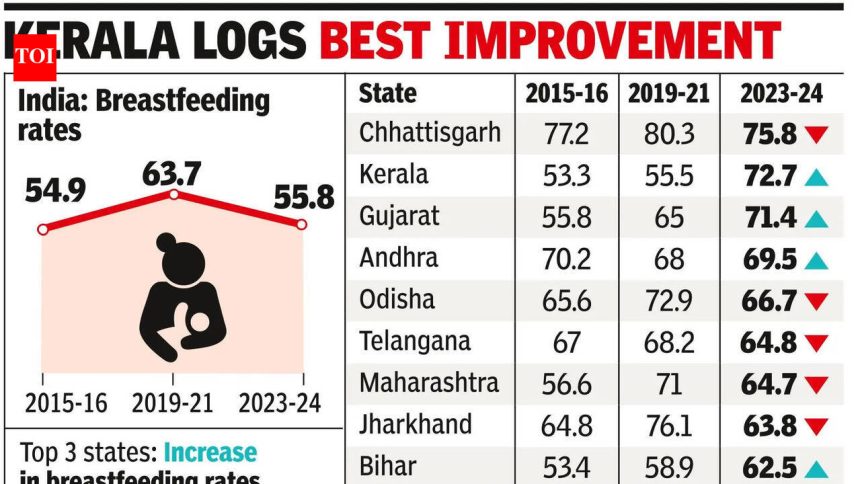
The latest data from the National Family Health Survey-6 has sent shockwaves through public health and nutrition circles, with a stark decline in exclusive breastfeeding rates for infants over the past few years. The proportion of babies being exclusively breastfed for the first six months has dropped from a commendable 64% in 2019-21 to a concerning 56% in 2023-24, a trend reversal that has left experts scrambling for answers. This reversal is particularly disheartening given the decade-long ascent of breastfeeding rates, which had shown sustained growth since the early 2000s.
Causes of the Decline
Experts point to a multitude of factors contributing to this decline, including the resurgence of formula feeding, increased mobility and changing lifestyles, and a lack of awareness and support for breastfeeding mothers. Moreover, the COVID-19 pandemic, which had already disrupted healthcare systems worldwide, further exacerbated the issue, with many hospitals and healthcare facilities struggling to provide adequate support and resources for new mothers. The economic burden of formula feeding, which can be prohibitively expensive for many families, also plays a significant role in the decline of breastfeeding rates.
The National Family Health Survey-6 highlights the need for targeted interventions to promote breastfeeding, including better support for lactating mothers, increased awareness of the benefits of breastfeeding, and more effective policies to encourage breastfeeding in public spaces. Moreover, there is a pressing need for healthcare providers to address the specific challenges faced by breastfeeding mothers, including those related to workplace support, access to lactation facilities, and social stigma surrounding breastfeeding.
Long-term Consequences
The implications of this decline in breastfeeding rates are far-reaching and have significant long-term consequences for both mothers and babies. Exclusive breastfeeding for at least six months is widely recognized as the most cost-effective nutrition intervention, with lifelong benefits for mothers, including reduced risk of breast cancer, ovarian cancer, and type 2 diabetes. Additionally, breastfeeding has been shown to have a positive impact on cognitive development, immune system function, and overall health outcomes for infants.
The decline in breastfeeding rates has significant implications for public health policy and practice, with experts calling for a renewed focus on promoting breastfeeding and supporting lactating mothers. This requires a multifaceted approach, involving healthcare providers, policymakers, and community leaders, to address the complex challenges facing breastfeeding mothers and promote a culture of support and acceptance.
Way Forward
The recent decline in breastfeeding rates serves as a clarion call for action, highlighting the need for targeted interventions, increased awareness, and more effective policies to promote breastfeeding. By working together, we can reverse this trend and ensure that all mothers have access to the support and resources they need to breastfeed their babies successfully. The benefits of breastfeeding are too significant to ignore, and it is imperative that we take immediate action to address this critical public health issue.
In the face of this alarming trend, it is essential that we prioritize the needs of breastfeeding mothers and work towards creating a more supportive and inclusive environment for all. By doing so, we can ensure that our children and future generations reap the rewards of breastfeeding, including improved health outcomes, stronger immune systems, and a lifelong appreciation for the power of human milk.