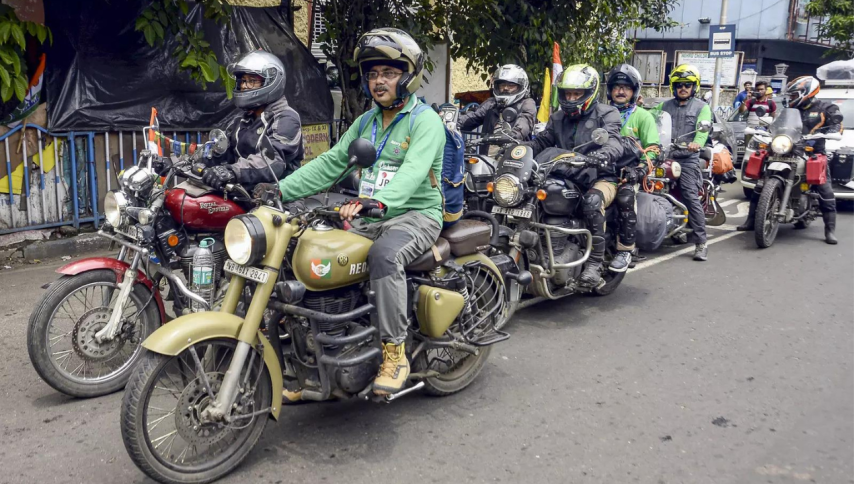
The Calcutta High Court has strongly criticized the Election Commission for imposing a 48-hour restriction on motorbikes in Kolkata and South 24 Parganas, deeming it an abuse of power. The court’s decision comes after the EC announced the ban from 6pm on April 27, citing concerns over potential disturbances during the election period. The move was seen as a drastic measure, affecting the daily lives of countless individuals who rely on motorbikes for their commute and livelihood. The HC’s ruling highlights the need for a balance between maintaining law and order and respecting the fundamental rights of citizens.
Background and Implications
The EC’s decision to restrict motorbikes was reportedly aimed at preventing potential violence and intimidation during the election period. However, the court argued that such a blanket ban was not justified and would cause undue hardship to the public. The HC also questioned the EC’s authority to impose such restrictions, suggesting that it had overstepped its bounds. The ruling is likely to have significant implications for the upcoming elections, as it sets a precedent for the limits of the EC’s power to impose restrictions on citizens.
The court’s decision was welcomed by many, who saw the motorbike ban as an overreach of authority. The opposition parties also hailed the ruling, stating that it was a victory for the people and a reminder that the EC must act within its constitutional limits. However, the EC has yet to respond to the court’s ruling, and it remains to be seen how it will proceed in the matter. The situation is being closely watched, as it has the potential to impact the outcome of the elections and the overall democratic process.
Legal and Political Ramifications
The HC’s ruling has sparked a heated debate about the limits of the EC’s power and its ability to impose restrictions on citizens. The court’s decision highlights the importance of checks and balances in the democratic system, ensuring that no single institution or authority can act unilaterally. The ruling also raises questions about the EC’s preparedness and ability to handle the election process, particularly in sensitive areas. The opposition parties have demanded greater transparency and accountability from the EC, arguing that it must be more proactive in addressing concerns and engaging with stakeholders.
The legal implications of the ruling are also significant, as it sets a precedent for future cases involving the EC and its powers. The court’s decision may be cited in other cases where the EC has imposed similar restrictions, and it could potentially limit the EC’s ability to act unilaterally in the future. The ruling also underscores the importance of judicial oversight and the role of the courts in protecting the rights of citizens.
Way Forward and Future Elections
The Calcutta HC’s ruling is a significant development in the ongoing election process, and it is likely to have far-reaching consequences. The EC must now re-evaluate its strategy and approach, taking into account the court’s ruling and the concerns of the public. The opposition parties have called for greater engagement and dialogue with the EC, arguing that it is essential for ensuring the integrity and credibility of the election process. The ruling also highlights the need for greater transparency and accountability in the democratic system, ensuring that institutions act within their constitutional limits and respect the rights of citizens.
The future of the election process remains uncertain, and it is unclear how the EC will respond to the court’s ruling. However, one thing is clear: the Calcutta HC’s decision has set a significant precedent, reminding institutions of the importance of respecting the rights of citizens and acting within their constitutional limits. As the election process continues, it is essential that all stakeholders engage in a constructive and respectful dialogue, prioritizing the integrity and credibility of the democratic system.