The Arctic is the canary in the coal mine, a stark warning of the devastating impact of climate change on our planet. As the Earth’s frozen north continues to melt at an alarming rate, a new study published in Science Advances has sounded the alarm on a potentially catastrophic consequence: the transformation of the Arctic’s vast frozen carbon stores from absorbers to emitters by the 2050s. This shift, triggered by the deep thawing of permafrost, poses a daunting threat to the global carbon budget and will have far-reaching implications for our planet’s ecological and economic well-being.
Permafrost: The Hidden Carbon Bomb
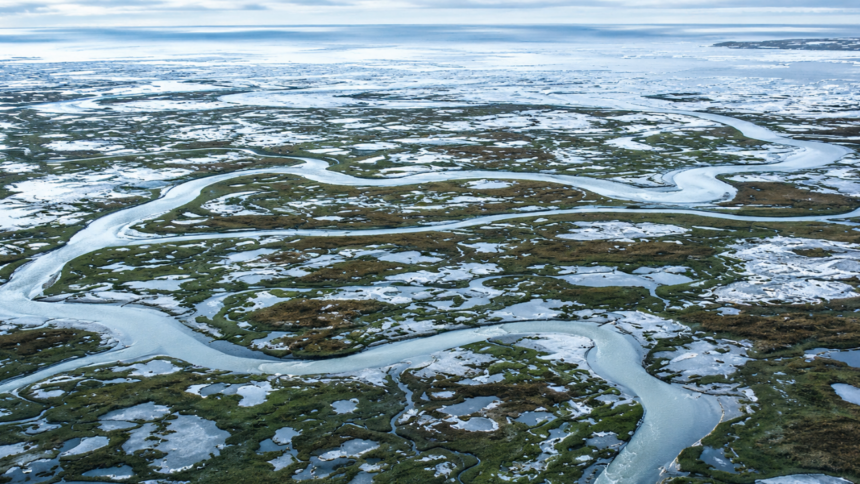
Permafrost, the frozen soil and rock that underlies nearly 20% of the Northern Hemisphere, holds an estimated 1.5 trillion metric tons of carbon – roughly 50 times more than the world’s atmospheric carbon dioxide levels. For centuries, this frozen carbon has been locked away, preventing it from contributing to the greenhouse gas emissions that drive climate change. However, as the Arctic warms at a rate twice as fast as the global average, this frozen fortress is showing signs of cracking.
The research, which analyzed soil temperature and carbon storage data from the past 30 years, reveals that permafrost is beginning to thaw at an unprecedented rate. This thawing is not just a natural process, but is being accelerated by human-induced climate change, which is projected to increase global temperatures by 3.2°C by the end of the century. As the permafrost thaws, the carbon stored within it is released into the atmosphere, where it can contribute to the very problem it was meant to mitigate.
The Tipping Point: 2050 and Beyond
So, when exactly can we expect this critical shift in the Arctic’s carbon dynamics? The study suggests that northern soils above 30°N, including vast areas of permafrost, may switch from absorbing carbon to releasing it around the 2050s when deep frozen carbon is taken into account. This is a critical timeline, as it coincides with the projected peak of global carbon emissions and the point at which we must begin to see significant reductions to avoid catastrophic climate change.
The implications of this shift are far-reaching and profound. A world where the Arctic’s frozen carbon stores are releasing rather than absorbing carbon dioxide would exacerbate climate change, leading to more frequent and severe heatwaves, droughts, and storms. The economic consequences would be staggering, with estimates suggesting that the total economic damage from climate change could reach $178 trillion by 2100.
Averting the Unthinkable
So, what can we do to prevent this ticking carbon clock from striking midnight? The answer lies in immediate and sustained action to reduce greenhouse gas emissions and protect the world’s remaining carbon sinks. This requires a fundamental transformation of our energy systems, a shift towards renewable energy sources, and a global commitment to preserving and restoring natural ecosystems that absorb carbon dioxide.
The Arctic is a canary in the coal mine, a warning of the devastating impact of climate change on our planet. It’s time to take heed of this warning and act decisively to avert the unthinkable consequences of a world where the Arctic’s frozen carbon stores are releasing rather than absorbing carbon dioxide.