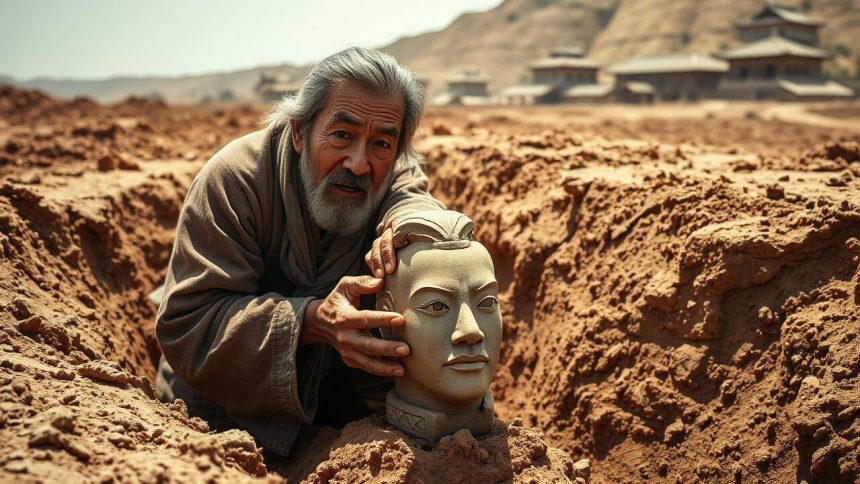
The year was 1974, and a severe drought had gripped the rural province of Shaanxi, China. Desperate to find a source of water, a group of farmers set out to dig a well in the dry earth. But what they unearthed was far more incredible than they could have ever imagined – the remains of a massive underground mausoleum, hidden beneath the ground for over 2,000 years. As they dug deeper, the farmers stumbled upon the first of the life-sized terracotta soldiers, their intricate details and lifelike poses a testament to the ingenuity of ancient Chinese craftsmen.
Uncovering the Legacy of Qin Shi Huang
The discovery of the Terracotta Army was a groundbreaking moment in the field of archaeology, shedding new light on the life and reign of China’s first emperor, Qin Shi Huang. The army, which consists of over 8,000 terracotta soldiers, along with 130 chariots and 670 horses, was buried with the emperor to protect him on his journey into the afterlife. The sheer scale and precision of the army’s construction is a testament to the advanced engineering and artistic skills of the ancient Chinese.
The Terracotta Army is a window into the past, offering a glimpse into the daily life and culture of ancient China. The soldiers, each one unique and meticulously crafted, are a testament to the ingenuity and creativity of the ancient Chinese people. From the intricate details of their clothing and hairstyles to the subtle expressions on their faces, the terracotta soldiers are a remarkable example of ancient Chinese artistry.
The Archaeological Significance of the Discovery
The discovery of the Terracotta Army has been hailed as one of the most significant archaeological finds of the 20th century. The army’s remains have provided a wealth of information about the ancient Chinese, their culture, and their way of life. The discovery has also shed new light on the reign of Qin Shi Huang, revealing a more complex and nuanced view of the emperor’s life and legacy.
The excavation of the Terracotta Army has been a painstaking and laborious process, with archaeologists working tirelessly to uncover and preserve the delicate remains. The site has been carefully restored, and many of the terracotta soldiers have been relocated to a nearby museum for safekeeping and display. The site remains a popular tourist destination, attracting visitors from all over the world who come to marvel at the ancient army and the ingenuity of its creators.
The Enduring Legacy of the Terracotta Army
Today, the Terracotta Army stands as a testament to the power and sophistication of ancient Chinese civilization. The army’s discovery has not only shed new light on the past but has also inspired countless artists, architects, and engineers. The site remains a powerful reminder of the ingenuity and creativity of the human spirit, and a testament to the enduring legacy of one of history’s greatest civilizations.
As we gaze upon the life-sized terracotta soldiers, we are reminded of the incredible achievements of our ancestors and the enduring power of human creativity. The Terracotta Army is a shining example of the ancient Chinese’s ingenuity and artistry, and a testament to the enduring legacy of one of history’s greatest civilizations.