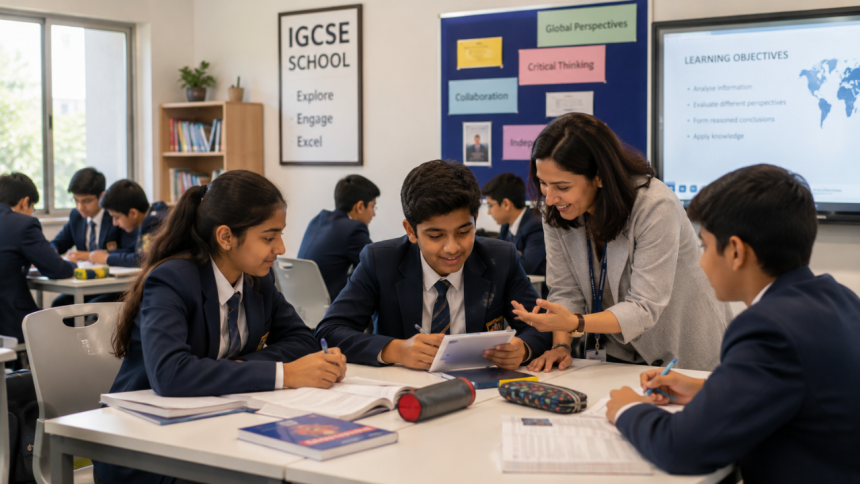
In a country where education is paramount, parents in India face an increasingly complex decision when it comes to choosing a school board for their child’s academic journey. Gone are the days when CBSE (Central Board of Secondary Education) and ICSE (Indian Certificate of Secondary Education) were the only options available. The International General Certificate of Secondary Education (IGCSE) has emerged as a popular alternative, leaving parents wondering what sets it apart from its Indian counterparts. In this article, we aim to provide a comprehensive overview of IGCSE and help parents make an informed decision for their child’s future.
First Section: What is IGCSE and How Does it Differ from CBSE and ICSE?
IGCSE is an internationally recognized qualification offered by the University of Cambridge International Examinations. It provides a broad and balanced curriculum for students aged 14 to 16, covering a wide range of subjects including languages, sciences, mathematics, and humanities. One of the key differences between IGCSE and CBSE/ICSE is its global recognition. IGCSE is accepted by top universities worldwide, making it an attractive option for students who plan to pursue higher education abroad. In contrast, CBSE and ICSE are primarily recognized within India and a few other countries. Another significant difference is the assessment method. IGCSE uses a grading system, with grades ranging from 9 to 1, whereas CBSE and ICSE follow a percentage-based system.
IGCSE also offers a more flexible curriculum, allowing students to choose from a wide range of subjects and tailor their learning to their interests and strengths. This flexibility is particularly beneficial for students who may not excel in traditional subjects or have a passion for arts, music, or vocational skills. Additionally, IGCSE encourages critical thinking, problem-solving, and independent learning, preparing students for the challenges of the 21st century.
Second Section: Factors Parents Should Consider Before Choosing IGCSE for Their Child
While IGCSE offers numerous benefits, parents must carefully consider several factors before deciding if it’s the right fit for their child. One crucial aspect is the cost. IGCSE is a more expensive option compared to CBSE and ICSE, primarily due to the international recognition and the need for specialized teaching and resources. Parents must weigh the additional costs against the potential benefits, such as increased opportunities for higher education and career prospects. Another important consideration is the availability of IGCSE schools in their area. While IGCSE is gaining popularity, it’s still not as widespread as CBSE and ICSE. Parents must research local schools that offer IGCSE and assess their credibility, teaching quality, and infrastructure.
Parents should also consider their child’s personality, learning style, and academic goals. IGCSE is suitable for students who are independent, self-motivated, and enjoy learning at their own pace. However, students who require more structure and support may find CBSE or ICSE more suitable. Furthermore, parents must evaluate their child’s interests and strengths to ensure that IGCSE aligns with their future aspirations. For instance, students who excel in mathematics and sciences may find IGCSE’s more comprehensive curriculum beneficial, while students with a passion for languages may prefer the more specialized approach of CBSE or ICSE.
Third Section: The Future of Education in India
As India’s education landscape continues to evolve, the demand for international qualifications like IGCSE is on the rise. This shift reflects the growing global interconnectedness and the need for students to be equipped with skills that are valuable in the modern world. While CBSE and ICSE will continue to be popular options, IGCSE is set to play an increasingly important role in shaping the future of Indian education. As parents, it’s essential to stay informed and adaptable, weighing the pros and cons of each option to make the best decision for their child’s academic and personal growth.
In conclusion, the decision to choose IGCSE for one’s child is not a straightforward one. It requires careful consideration of various factors, including cost, availability, curriculum, and individual needs. By understanding the differences between IGCSE, CBSE, and ICSE, parents can make an informed decision that sets their child on the path to success.