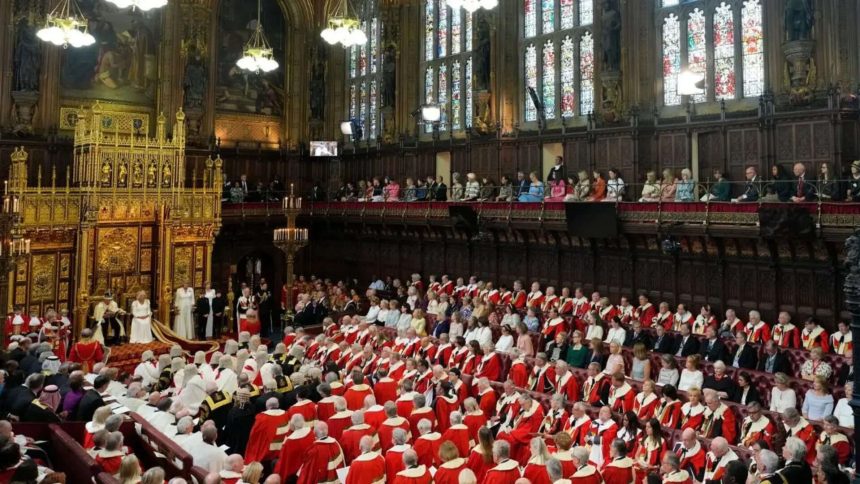
The Church of England is set to issue a formal apology for its role in historical forced adoptions, a dark chapter in the nation’s history that has left thousands of families shattered and broken. For decades, unwed mothers were coerced into giving up their babies, often with threats of imprisonment or social isolation. The pain and trauma inflicted on these families are a testament to the Church’s complicity in this heinous act, and a new era of accountability is finally underway.
Survivors Speak Out: ‘We Were Made to Scrub Floors’
Dozens of survivors have come forward, sharing their harrowing stories of being forced to give up their children. One woman, who wishes to remain anonymous, recalls being taken to a Church-run home where she was subjected to physical labor and emotional abuse. ‘We were made to scrub floors, do endless chores, and pray for forgiveness,’ she says, her voice trembling with emotion. ‘But the true sin was taking our children away from us. It’s a pain that’s never healed.’
Another survivor, who was adopted out to a family in the 1960s, remembers the Church’s role in her adoption. ‘My mother was told she was a bad person, that she wasn’t fit to raise me,’ she explains. ‘The Church’s actions were a form of social control, designed to punish women for their perceived sins. It’s a stain on the Church’s conscience that will never be washed away.’
The Church’s Role in Forcing Adoptions
The Church of England has long been aware of its role in forced adoptions, but it has only recently begun to acknowledge the gravity of its actions. In 2014, the Church’s General Synod voted to issue an apology, but it was met with resistance from some bishops who claimed that the Church was not responsible for the actions of its clergy. However, a new report by the Church’s own investigations team has found that Church officials did indeed play a significant role in coercing women into giving up their children.
The report highlights the Church’s use of ‘mother and baby homes’ – institutions where unmarried women were sent to give birth and then coerced into giving up their babies. The homes were often run by Church officials, who used a combination of threats and emotional manipulation to persuade women to give up their children. The report also reveals that some Church officials even went so far as to forge signatures on adoption documents, making it impossible for women to contest the adoption.
A New Era of Accountability
The Church of England’s apology is a major step towards accountability, but it is just the beginning. Survivors are calling for further action, including compensation and access to their adoption records. The Church has promised to provide this information, but many are skeptical. ‘We’ve heard promises before, but nothing has changed,’ says one survivor. ‘Until we see real action, we’ll never be able to heal.’
The Church’s apology is a long-overdue acknowledgment of its role in historical forced adoptions. While it is a step in the right direction, it is just the first in a long journey towards justice and healing for the families affected. As one survivor puts it, ‘We’re not just asking for an apology – we’re demanding justice. We deserve to know the truth about our past, and we deserve to be treated with dignity and respect.’