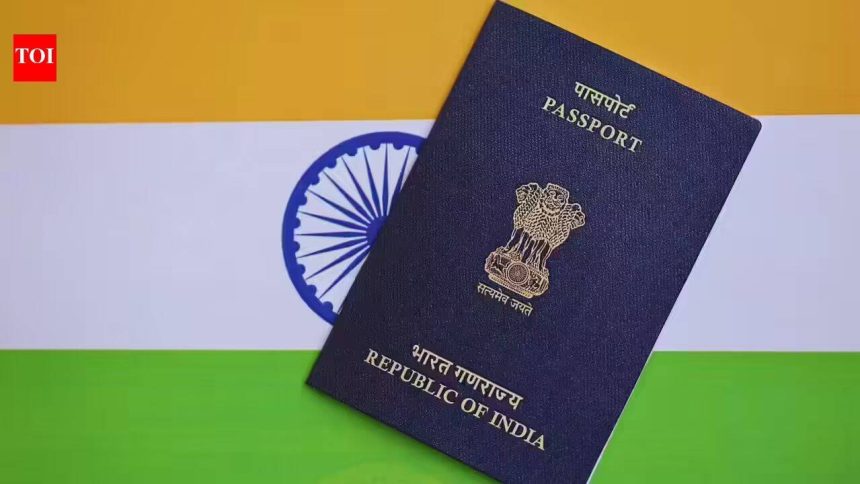
The 14th Passport Seva Divas marked a significant milestone in the expansion of passport services across India, with the government announcing plans to further augment the network of passport seva kendras (PSKs) and post office passport seva kendras (POPSKs). Amidst the celebrations, a senior official from the Ministry of External Affairs (MEA) emphasized a crucial distinction that often gets blurred in the public discourse: a passport is not a proof of citizenship, but a travel document that facilitates international travel.
Separating the Hierarchy of Documents
The MEA official pointed out that while a passport is essential for traveling abroad, it is merely a travel document that does not confer citizenship. In fact, the Passport Rules of 1980 clearly state that a passport is a non-negotiable travel document issued by the Indian government to its citizens, but it does not constitute proof of citizenship. This distinction is crucial, as it underscores the difference between a document that enables international travel and one that confirms an individual’s citizenship status.
The official cited the example of individuals who hold Indian passports but have not acquired citizenship. Such individuals may be descendants of Indian citizens who have obtained passports under the provisions of the Citizenship Act or have acquired passports through other means. In these cases, the passport is not a proof of citizenship, but rather a travel document that enables them to travel abroad.
The Citizenship Conundrum
The MEA official’s statement highlights the complexities surrounding citizenship in India. The Citizenship Act of 1955 and its amendments have introduced various provisions for acquiring citizenship, including by naturalization, registration, and descent. However, the process of acquiring citizenship can be lengthy and often involves a labyrinthine process of documentation and verification.
In recent years, there has been a growing concern about the lack of clarity surrounding citizenship in India. The controversy surrounding the National Register of Citizens (NRC) in Assam and the subsequent protests have highlighted the need for a clear and transparent process of citizenship verification. The MEA official’s statement serves as a reminder that a passport is merely a travel document and not a proof of citizenship, and that the two concepts should not be conflated.
The Way Forward
The MEA official’s statement has significant implications for the way we understand and approach citizenship in India. It emphasizes the need for clarity and transparency in the process of citizenship verification and highlights the importance of separating the hierarchy of documents. As the government continues to expand passport services across the country, it is essential that the public is aware of the distinction between a passport and proof of citizenship.
In the context of the Passport Seva Divas celebrations, the MEA official’s statement serves as a timely reminder of the importance of citizenship in our democratic society. As we move forward, it is crucial that we strike a balance between facilitating international travel and ensuring that the process of citizenship verification is transparent, efficient, and fair.
The 14th Passport Seva Divas marks a significant milestone in the expansion of passport services, but it also serves as a reminder of the complexities surrounding citizenship in India. As we look to the future, it is essential that we prioritize clarity, transparency, and efficiency in the process of citizenship verification and remember that a passport is merely a travel document that does not confer citizenship.